scifi space station garden with hydroponic plants
Explore a serene scifi space station garden at dusk with hydroponic plants and post-storm puddles. Find differences among pixel art silhouettes…
About this scene
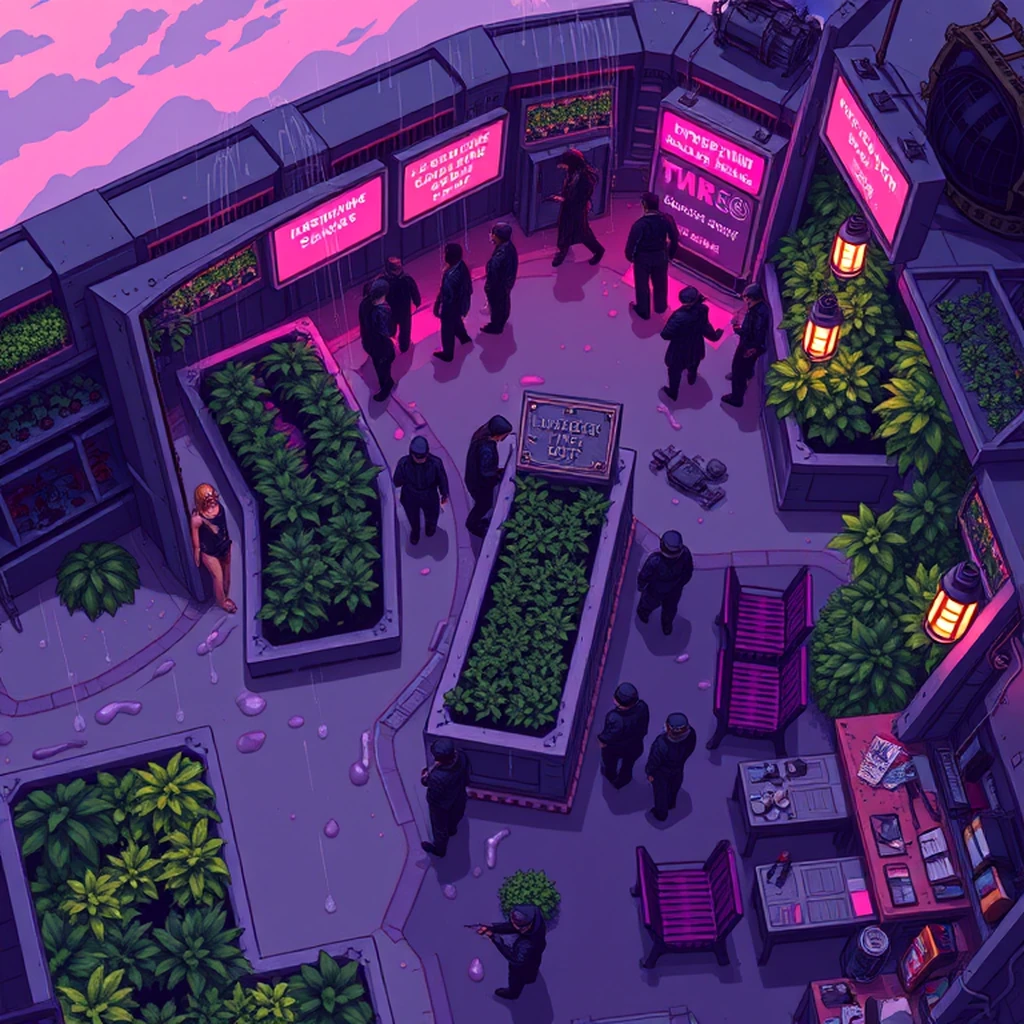
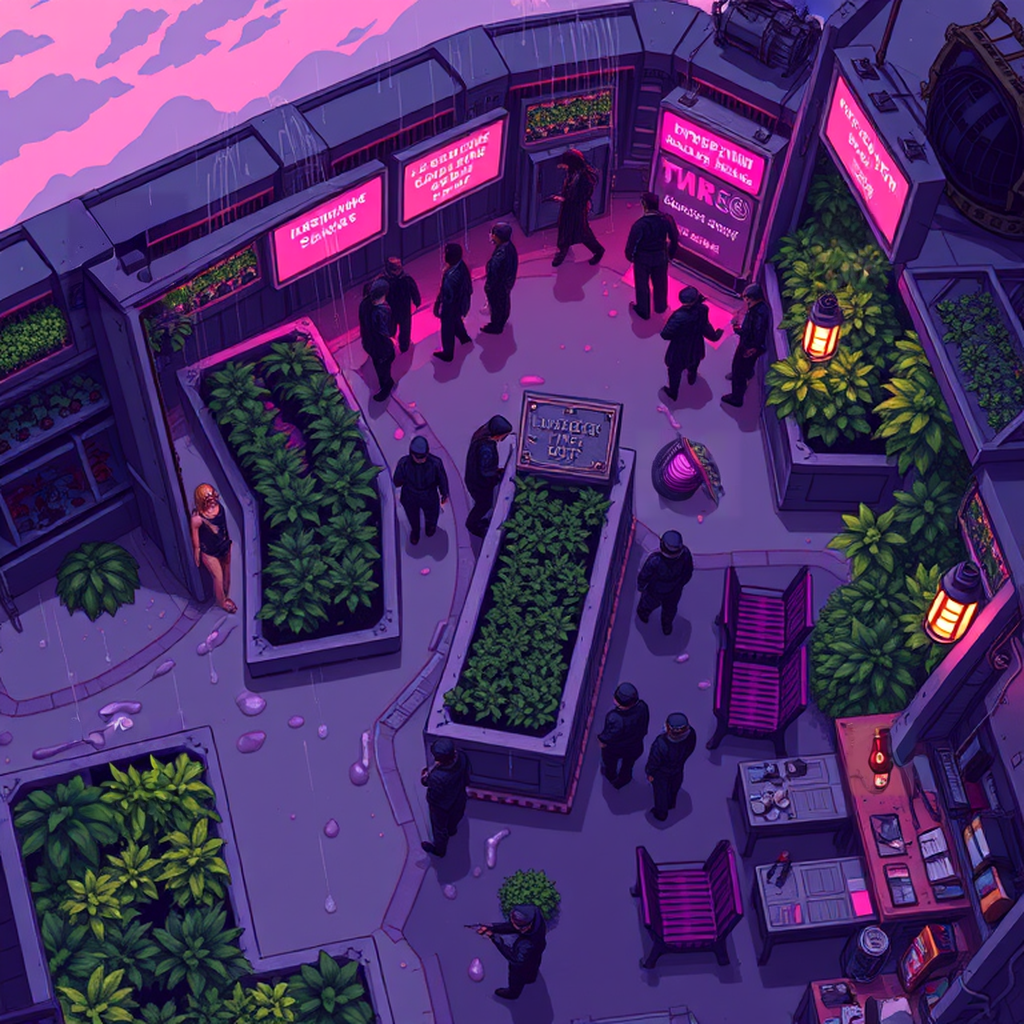
A retro-futuristic space station garden lit by soft pink and lavender hues at dusk, featuring hydroponic plants in various stages of growth. Post-storm puddles reflect the sky's colors on metallic surfaces, creating a serene yet slightly damp atmosphere. The pixel art scene is populated with a busy crowd of silhouettes moving through the area, each figure uniquely detailed within the limited 16-bit palette. A high-tech sprinkler system drips water onto lush greenery, while holographic displays show upcoming events in shimmering magenta and slate gray tones. Small benches line the walkways, covered with raindrops. Unique props include an automated plant care robot, floating lanterns emitting soft light, a weathered metal plaque on a hydroponic rack, discarded gloves near a workbench, and a scattered tool kit next to a partially opened locker door. The scene is set for anticipation just before the start of an event, with pixel art details consistent throughout the frame in a retro 16-bit RPG aesthetic.
The retro-futuristic space station garden is bathed in the soft, ethereal glow of dusk, casting gentle shadows and highlighting the intricate details of hydroponic plants that thrive under the care of high-tech sprinklers. The palette is dominated by a soothing blend of pink and lavender hues, reflecting off metallic surfaces and water puddles left from an earlier storm, creating a serene yet slightly damp atmosphere. The pixel art style brings a nostalgic charm with its 16-bit aesthetic, where each silhouette in the bustling crowd is uniquely detailed despite the limited color range. Holographic displays shimmer in magenta and slate gray tones, announcing upcoming events that add to the anticipation in the air. Small benches line the walkways, their surfaces speckled with raindrops, while an automated plant care robot hums softly nearby. Floating lanterns emit a soft, calming light, casting delicate shadows on hydroponic racks adorned with weathered metal plaques. Discarded gloves and tools near a workbench hint at recent activity, adding to the sense of motion and life within this serene garden. The scene's retro-futuristic charm is amplified by these meticulous details, making it not only visually captivating but also intriguing for those who enjoy spotting subtle differences in pixel art landscapes.
Background
Set in a future era where retro aesthetics and technology blend seamlessly, this pixel-art scene depicts a space station garden that echoes the serene beauty of Earth’s botanical sanctuaries but with a distinctly futuristic twist. The hydroponic system reflects an advanced evolution of urban farming techniques seen in early 21st-century vertical farms, adapted here for zero-gravity environments. Such gardens serve as vital psychological and physical support systems on long-term space missions, providing fresh produce and mental respite from the sterile confines of spacecraft. The pixel art style harkens back to the golden age of console gaming in the late 80s and early 90s, a time when limited graphical capabilities led to imaginative and detailed artwork within strict technical constraints. This nostalgic design choice pays homage to a pivotal era in digital entertainment while integrating it into a futuristic narrative that emphasizes sustainability and connection with nature even as humanity expands its reach beyond Earth. The scene’s retro-futuristic elements, such as holographic displays and automated plant care robots, highlight the ongoing evolution of technology aimed at improving quality of life in space habitats.
Tips for this puzzle
When you're on the hunt for those five differences in today's pixel art space garden scene, keep your eyes peeled for some common hiding spots that can be tricky to spot at first glance. With a top-down view like this, cluttered walkways and benches are great places to start looking since small items or slight discrepancies might get lost among larger details. Shadows from the post-storm puddles and reflections on metallic surfaces could also play tricks on your eyes, so take a moment to scrutinize those areas closely. Additionally, intricate patterns in hydroponic setups or holographic event displays can hide subtle differences if you're not careful. To make sure you don’t miss anything, try scanning the scene systematically by moving from left to right and top to bottom, checking each area thoroughly before moving on to the next. Happy spotting!
How to play
- Two near-identical images are shown side by side.
- Tap or click on the differences before the countdown timer runs out.
- Wrong clicks subtract 5 seconds from the clock.
- Stuck? Spend a hint token to glow one remaining difference.
About this puzzle
This is one of 633+ hand-curated AI-generated spot-the-difference puzzles in the SpotDiff library. Each puzzle has multiple variants — the differences you see on your first play are different from the next. 3 variant(s) for this scene.
SpotDiff is free to play with no signup required, and the library grows daily — roughly 10-30 new puzzles added every day. Hint tokens are earned through daily login, streaks, and referrals — or buy a bundle if you want unlimited hints. Refunds are available within 7 days, prorated by the tokens you haven't used yet.