contemporary japanese minimalist living room with shoji screens and bonsai
Explore the subtle differences in a contemporary Japanese living room at pre-dawn with post-storm puddles and art deco patterns.
About this scene
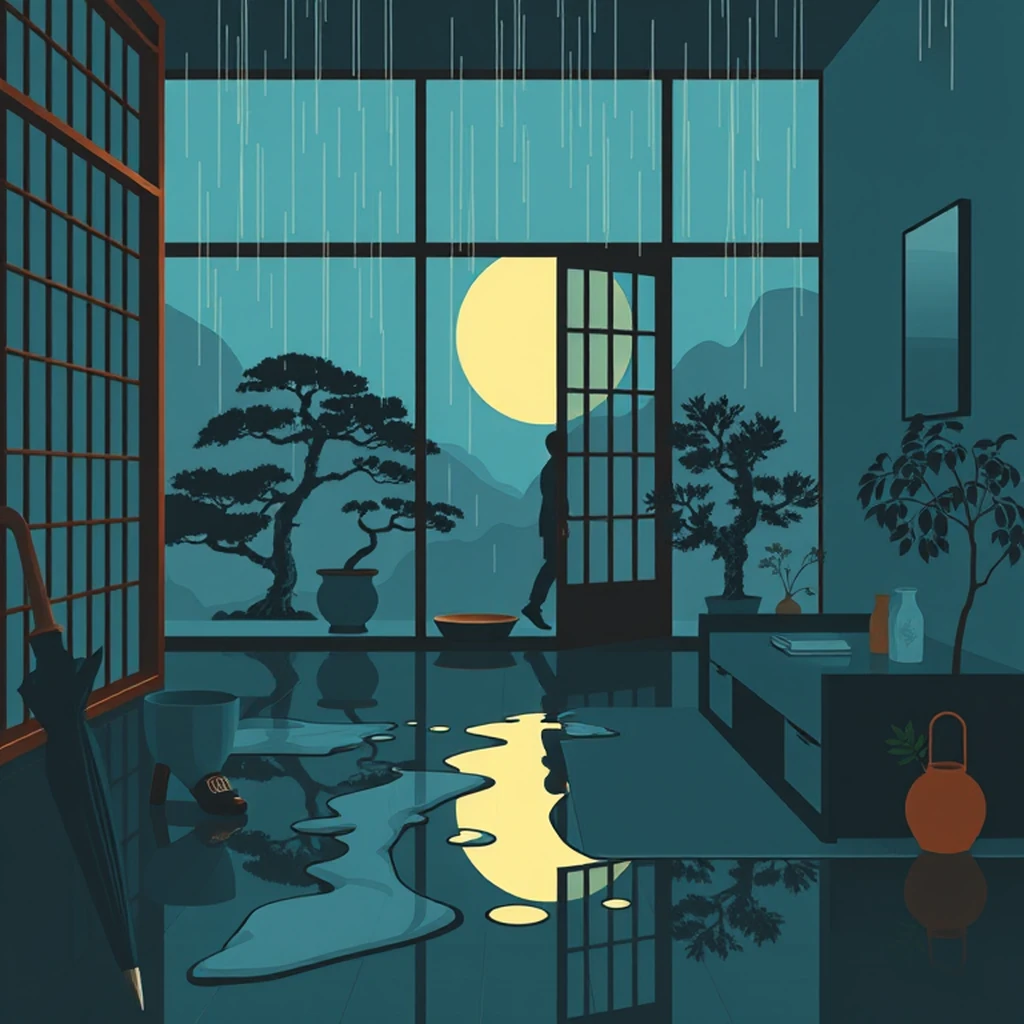
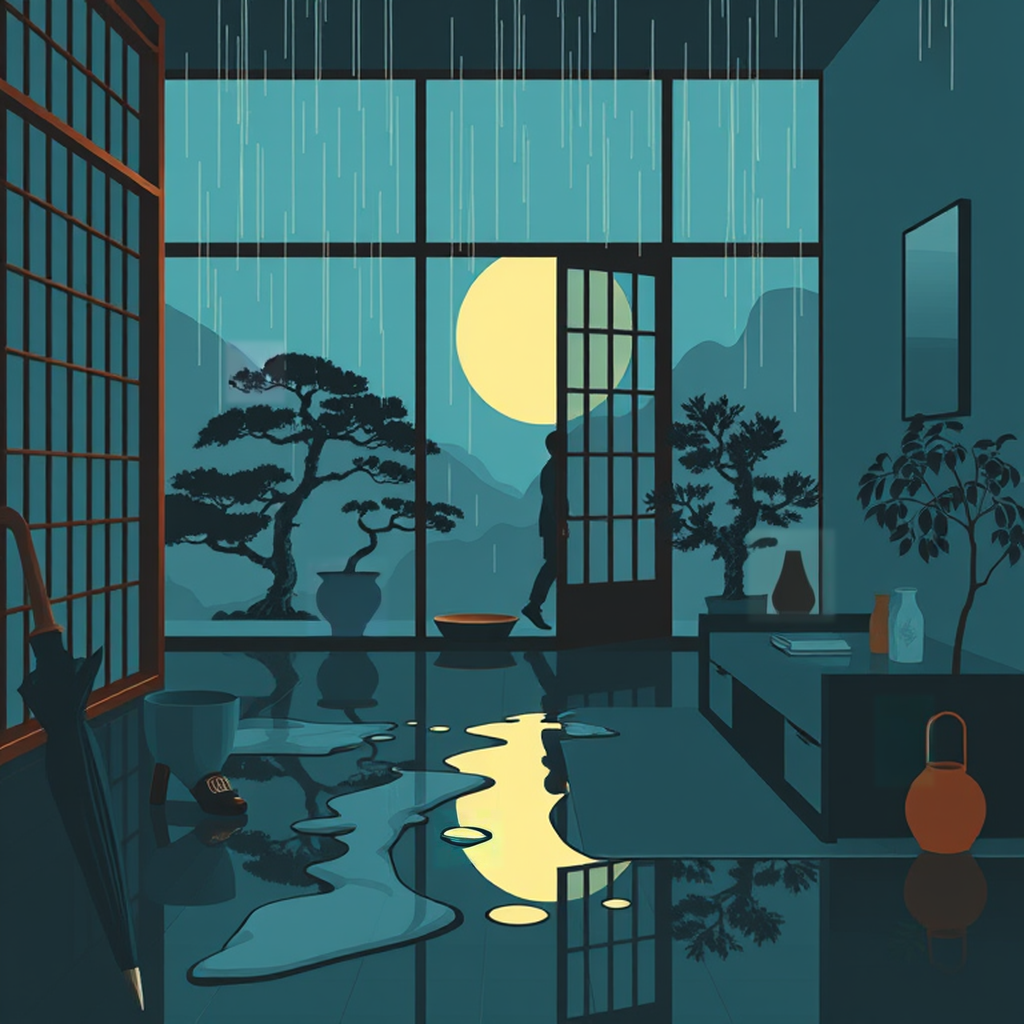
A contemporary Japanese minimalist living room at pre-dawn blue hour, post-storm puddles reflecting the charcoal and copper palette. The deep diagonal corner view captures a single silhouette in the doorway against the backdrop of shoji screens and bonsai trees. Geometric patterns define the art deco style, with limited screenprint colors. Small props include an umbrella by the door, wet shoes lined up neatly, a dripping plant pot near the window, and a fallen branch outside the frame. The mood is mid-rush peak activity as the day begins to stir in this serene yet slightly chaotic moment. soft watercolor illustration, paper texture
The pre-dawn light casts a soft charcoal and copper hue across the contemporary Japanese minimalist living room, where puddles left by an earlier storm mirror the sky's palette in intricate detail. The deep diagonal corner view captures a solitary figure standing at the doorway, their silhouette stark against the backdrop of shoji screens that filter the dim morning light into geometric patterns. Bonsai trees stand sentinel near the windows, their branches still wet from raindrops that glisten like tiny pearls under the pale light. Art deco influences are evident in the room's design, with limited screenprint colors and soft watercolor illustrations adding a layer of nostalgic charm to the space. The paper texture of everything seems almost tangible, as if one could reach out and feel the slight dampness left by the storm. A small umbrella leans against the wall next to the door, its presence a silent testament to the unexpected weather that had interrupted the calm morning routine. Wet shoes are lined up neatly on a mat just inside the entrance, their laces hanging loose as if in anticipation of being tied and worn for the day ahead. A dripping plant pot near the window hints at the continued rainfall beyond the glass, while outside, a fallen branch lies partially obscured by shadow, its leaves still clinging to the stem despite the wind's force. The mood in this serene yet slightly chaotic moment is one of mid-rush peak activity as the day begins to stir. There’s an undercurrent of preparation and readiness, with each object in the room telling part of a story about life within this space. The shoji screens, with their delicate paper textures and geometric patterns, frame not just the outside world but also the inner workings of daily existence. What makes this scene particularly interesting for a spot-the-difference puzzle is how it invites viewers to explore the subtle nuances of everyday life through its carefully curated details and atmospheric lighting.
Background
The contemporary Japanese minimalist living room depicted in this vintage poster-style scene encapsulates the essence of modern Japan’s blend of traditional aesthetics and cutting-edge design philosophy. This particular arrangement is inspired by the principles of wabi-sabi—a worldview that finds beauty in imperfection, simplicity, and transience—and shōmin bunka, or proletarian culture, which emphasizes modest living conditions reflecting a harmonious connection with nature. The pre-dawn setting imbues the space with a serene yet contemplative atmosphere, as if the residents are preparing to greet the day after a storm has passed. The deep diagonal corner view highlights the interplay of light and shadow, typical of Japanese architecture that maximizes natural illumination. Shoji screens, made from translucent washi paper and wood frames, serve both practical and aesthetic purposes by dividing spaces while maintaining openness. These elements are symbolic of the Heian period's influence on interior design, where simplicity and elegance were paramount. The inclusion of a bonsai tree underscores the Japanese art form’s long history, dating back to the 13th century, which is not just about cultivating miniature trees but also embodies Zen Buddhist principles of patience, discipline, and balance. Art deco geometric patterns in limited screenprint colors add a modern twist to this traditional setting, reflecting Japan's absorption and reinterpretation of international design trends from the early 20th century. The scene's soft watercolor illustration with paper texture evokes nostalgia for vintage Japanese prints while capturing the essence of contemporary living spaces that blend old-world charm with modern functionality.
Tips for this puzzle
When you're on the hunt for those five differences in your SpotDiff game featuring a serene yet slightly chaotic contemporary Japanese living room, keep an eye out for cleverly hidden details that might slip by if you’re not careful. With a deep diagonal corner view and intricate shoji screens casting shadows across the floor, it's easy to get lost in the geometric patterns and soft watercolor illustration. Start by scanning from left to right, top to bottom, making sure to double-check areas like the umbrella near the door, wet shoes lined up neatly, and even that fallen branch just outside the frame. Don't forget about those bonsai trees; sometimes differences are tucked away in the leaves or pots. Pay close attention to the reflections of puddles on the floor—they can be tricky spots where subtle changes might hide. Remember, it’s all about being systematic yet observant, so take your time and enjoy the serene beauty of this pre-dawn setting post-storm.
How to play
- Two near-identical images are shown side by side.
- Tap or click on the differences before the countdown timer runs out.
- Wrong clicks subtract 5 seconds from the clock.
- Stuck? Spend a hint token to glow one remaining difference.
About this puzzle
This is one of 696+ hand-curated AI-generated spot-the-difference puzzles in the SpotDiff library. Each puzzle has multiple variants — the differences you see on your first play are different from the next. 3 variant(s) for this scene.
SpotDiff is free to play with no signup required, and the library grows daily — roughly 10-30 new puzzles added every day. Hint tokens are earned through daily login, streaks, and referrals — or buy a bundle if you want unlimited hints. Refunds are available within 7 days, prorated by the tokens you haven't used yet.