Cartographer atelier with old maps compass and quill pens
Spot differences in a cartographer's workshop with old maps and tools.
About this scene
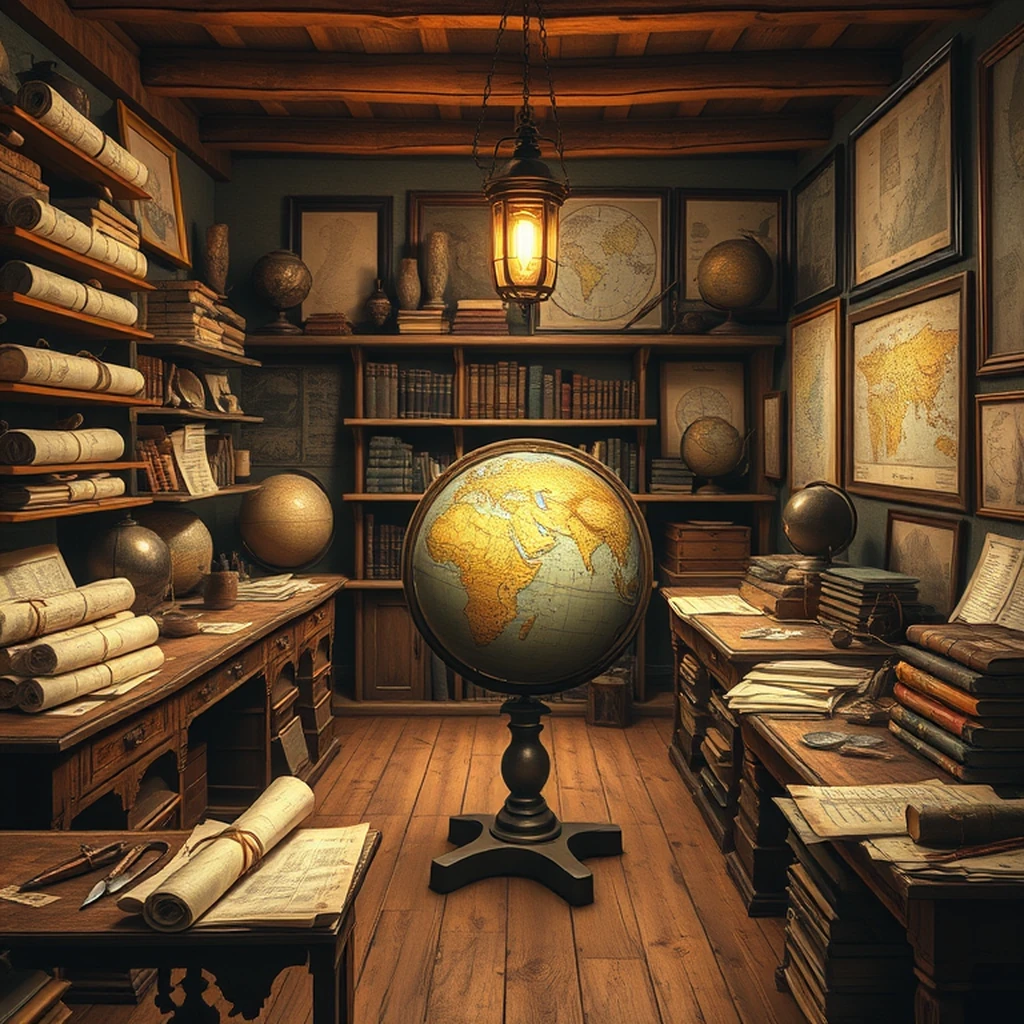
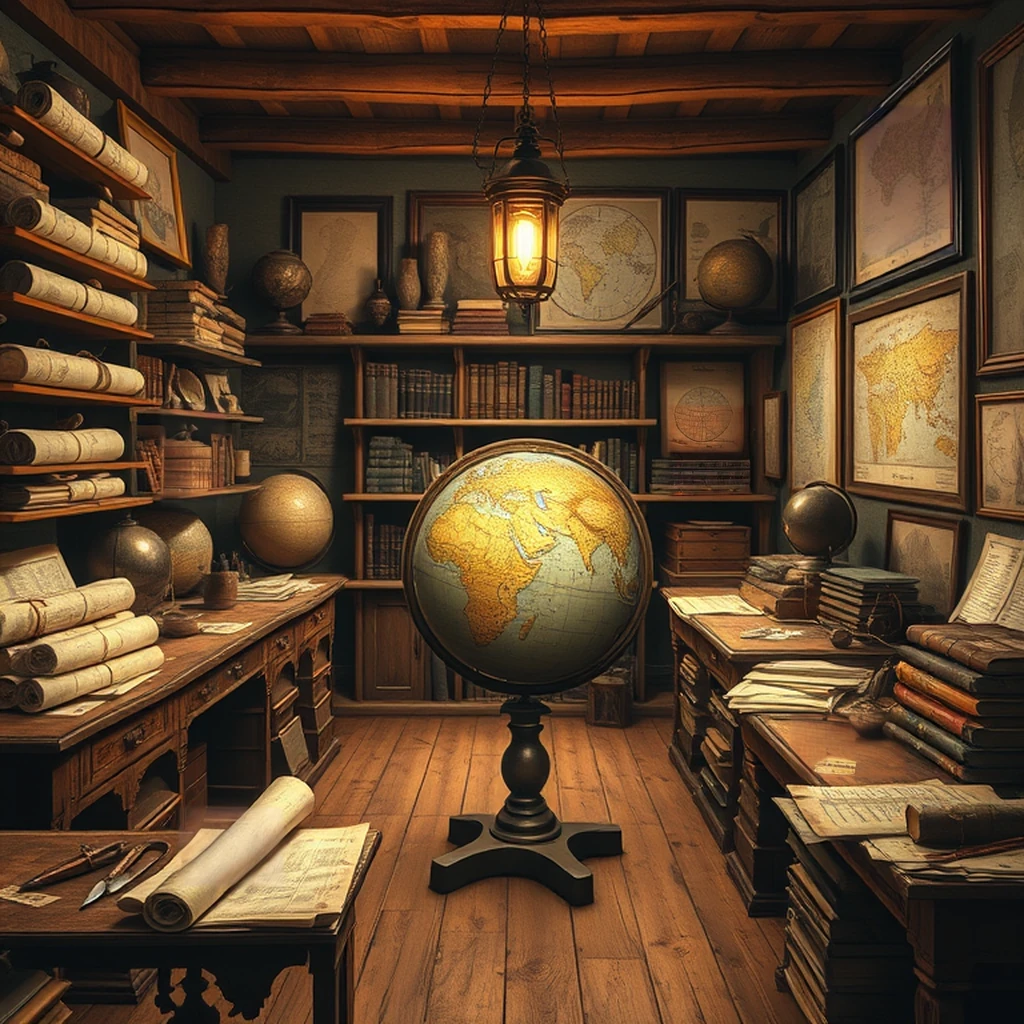
A cozy historical cartographer atelier, filled with antique wooden desks cluttered with rolled-up parchment maps, brass compasses, ink bottles, quill pens, and leather-bound atlases. A large vintage globe stands in the center of the room, surrounded by shelves lined with old globes and nautical charts. Warm golden light from a single hanging oil lamp illuminates the scene, casting soft shadows on wooden floors and walls adorned with framed maps. The air smells slightly musty with age-old paper and ink.
The cozy cartographer atelier exudes an aura of historical charm and scholarly dedication. Antique wooden desks cluttered with rolled-up parchment maps, brass compasses, ink bottles, quill pens, and leather-bound atlases fill the room, each object a testament to the meticulous work of mapmakers past. A large vintage globe stands proudly in the center, its surface dotted with continents and oceans that have long since been explored but never fully known. The shelves lining the walls are lined with an assortment of old globes and nautical charts, their pages yellowed and crinkled from years of use. Warm golden light from a single hanging oil lamp bathes the room in a soft glow, casting gentle shadows on the wooden floors and highlighting the intricate details etched into every corner. The air is filled with a slightly musty scent, a blend of age-old paper and ink that whispers tales of exploration and discovery. In this space, one can almost hear the rustle of parchment as maps are unrolled to reveal their hidden secrets, and imagine the soft scratching sound of quills tracing lines across pages. What makes this scene particularly intriguing for a spot-the-difference puzzle is the myriad of textures and historical artifacts that invite careful observation and curiosity.
Background
The cozy historical cartographer atelier depicted in this scene harks back to the late Renaissance and Baroque periods of Europe, particularly in regions like Italy, France, and England, where mapmaking flourished as a crucial profession. Cartography during these eras was not just an art but also a science that played a pivotal role in exploration, navigation, and territorial claims. The wooden desks cluttered with rolled-up parchment maps, brass compasses, ink bottles, quill pens, and leather-bound atlases are emblematic of the meticulous and labor-intensive process of charting unknown territories. These objects were essential tools for explorers venturing into uncharted waters and lands, helping them navigate safely across seas and document new discoveries with precision. The large vintage globe in the center of the room symbolizes the interconnectedness of the world during an era of rapid geographical exploration. Surrounding shelves lined with old globes and nautical charts further illustrate the cartographer's quest for knowledge and understanding of the Earth’s surface. The warm golden light from a hanging oil lamp, casting soft shadows on wooden floors and walls adorned with framed maps, evokes the intimate and solitary nature of mapmaking, often a pursuit requiring years of dedication and study. The musty scent of age-old paper and ink encapsulates the sense of history and tradition that permeates such an atelier, embodying the cultural significance of cartography in shaping our understanding of the world.
Tips for this puzzle
When you're on the hunt for those five differences in a cozy cartographer's atelier like this one, it pays to be patient and thorough. Look closely around the antique wooden desks that are cluttered with rolled-up parchment maps, brass compasses, ink bottles, and quill pens. Shadows cast by the single hanging oil lamp can hide small details, so keep an eye out for any subtle contrasts or breaks in symmetry there. The warm golden light illuminates the room nicely but also creates soft shadows on the wooden floors and walls with framed maps, which are perfect spots to hide differences. Don’t forget about those shelves lined with old globes and nautical charts—they’re often full of intricate patterns that can obscure small changes. To make sure you don't miss anything, try scanning the scene systematically from left to right or top to bottom, checking each area carefully before moving on to the next. Happy hunting!
How to play
- Two near-identical images are shown side by side.
- Tap or click on the differences before the countdown timer runs out.
- Wrong clicks subtract 5 seconds from the clock.
- Stuck? Spend a hint token to glow one remaining difference.
About this puzzle
This is one of 633+ hand-curated AI-generated spot-the-difference puzzles in the SpotDiff library. Each puzzle has multiple variants — the differences you see on your first play are different from the next. 3 variant(s) for this scene.
SpotDiff is free to play with no signup required, and the library grows daily — roughly 10-30 new puzzles added every day. Hint tokens are earned through daily login, streaks, and referrals — or buy a bundle if you want unlimited hints. Refunds are available within 7 days, prorated by the tokens you haven't used yet.