Antique clock repair workshop with disassembled pocket watches and gears on velvet
Spot the differences in a vintage clock repair workshop filled with tools and gears on velvet drawers. A cozy Victorian setting for a challenging…
About this scene
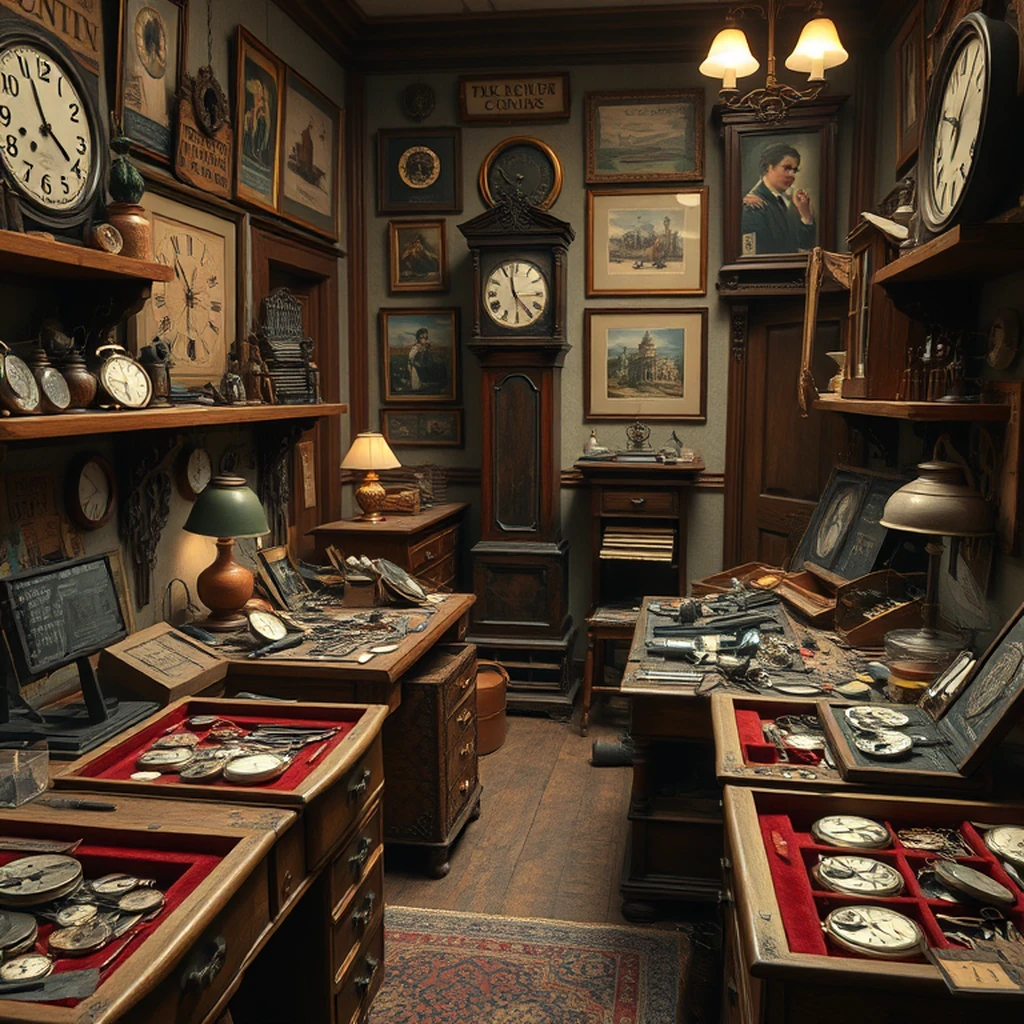
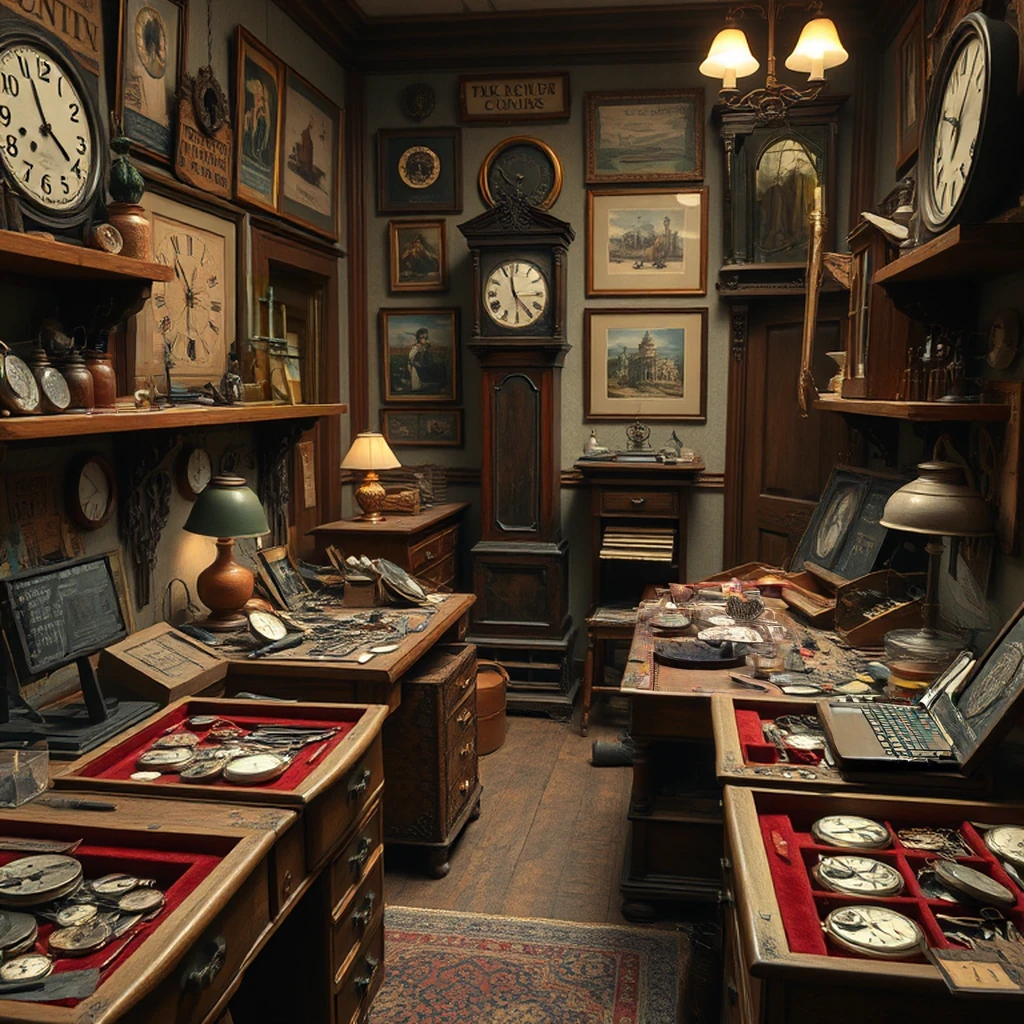
A cluttered antique clock repair workshop in a cozy Victorian house. Wooden workbenches covered in tools and half-disassembled pocket watches are scattered around, surrounded by velvet-lined drawers holding intricate gears and springs. Rustic signs advertising clock repair services hang on the walls, framed prints of old clocks adorn shelves, and small vintage lamps cast soft light across the cluttered workspace. In one corner stands an antique grandfather clock ticking away calmly. The room is filled with the scent of polish and metal filings. photorealistic, coherent composition, evenly lit
The antique clock repair workshop exudes a blend of order and chaos under the soft glow of vintage lamps that cast long shadows across wooden workbenches cluttered with tools and disassembled pocket watches. The air is thick with the scent of polished metal and the faint metallic tang of filings, creating an atmosphere both nostalgic and industrious. Rustic signs advertising clock repair services hang on the walls alongside framed prints depicting intricate timepieces from another era. Velvet-lined drawers brim with delicate gears and springs, their surfaces catching the light in a mesmerizing dance of shadows and reflections. In one corner, an antique grandfather clock stands as a silent sentinel, its steady ticking punctuating the otherwise hushed environment. The color palette is dominated by warm browns and deep reds, with occasional flashes of brass and gold adding a touch of elegance amidst the practicality. This harmonious blend of vintage charm and meticulous craftsmanship invites the observer to linger and explore each nook and cranny, making it an intriguing setting for a spot-the-difference puzzle game where every detail tells a story of time reclaimed and lost moments recaptured.
Background
The antique clock repair workshop captured in this scene evokes the essence of Victorian England during its zenith in the late 19th century. This period was marked by industrial advancements and a burgeoning fascination with precision machinery and intricate craftsmanship. Clock repair workshops like these were common throughout Europe, but they held particular significance in Britain, where timekeeping became an integral part of daily life as society grew increasingly mechanized and regimented. Each element within the workshop—the wooden workbenches cluttered with tools, half-disassembled pocket watches, velvet-lined drawers full of gears and springs—speaks to the meticulous nature required for this profession. Clock repairers were highly skilled artisans who combined technical expertise with an artistic eye for detail, often passing down their knowledge through generations within families or guilds. The rustic signs advertising clock repair services hanging on the walls reflect the social importance of these craftsmen in communities where timepieces not only regulated daily activities but also symbolized status and wealth. Framed prints of old clocks adorned the shelves, illustrating the deep appreciation for horology as both a practical necessity and an aesthetic pursuit. The soft light cast by vintage lamps further enhances the cozy atmosphere, suggesting a space dedicated to preserving tradition amidst rapid change. In this context, the antique grandfather clock standing in one corner is more than just a timekeeper; it represents continuity and heritage. Its steady ticking contrasts with the flurry of activity around it, symbolizing the enduring value placed on craftsmanship despite the encroaching age of mass production and mechanization. Overall, this scene encapsulates a pivotal moment in history when the artistry of clockmaking was transitioning from a handmade craft to an industrial process, yet still held immense cultural significance.
Tips for this puzzle
When you're hunting for those five differences in our antique clock repair workshop scene, it's all about patience and a keen eye. Start by taking your time to really look at each corner of the room because there are so many details packed into this photorealistic setting. Keep an eye out for cluttered shelves and workbenches where tiny tools or parts might be slightly altered between images. Shadows can also play tricks on you, hiding subtle differences in the shadows cast by the vintage lamps or behind intricate gears peeking out from velvet-lined drawers. Don't forget to closely examine the framed prints of clocks hanging on the walls; sometimes artists love to hide small details within these patterns. As you scan through this cozy Victorian workshop, move methodically from one side of the room to the other to make sure you don’t miss any spots. Happy spotting!
How to play
- Two near-identical images are shown side by side.
- Tap or click on the differences before the countdown timer runs out.
- Wrong clicks subtract 5 seconds from the clock.
- Stuck? Spend a hint token to glow one remaining difference.
About this puzzle
This is one of 633+ hand-curated AI-generated spot-the-difference puzzles in the SpotDiff library. Each puzzle has multiple variants — the differences you see on your first play are different from the next. 3 variant(s) for this scene.
SpotDiff is free to play with no signup required, and the library grows daily — roughly 10-30 new puzzles added every day. Hint tokens are earned through daily login, streaks, and referrals — or buy a bundle if you want unlimited hints. Refunds are available within 7 days, prorated by the tokens you haven't used yet.