2010s utrecht bike shop front counter area
Explore the detailed differences within an early evening bike shop front counter area set in a paper cutout collage style. Rust orange hues and…
About this scene
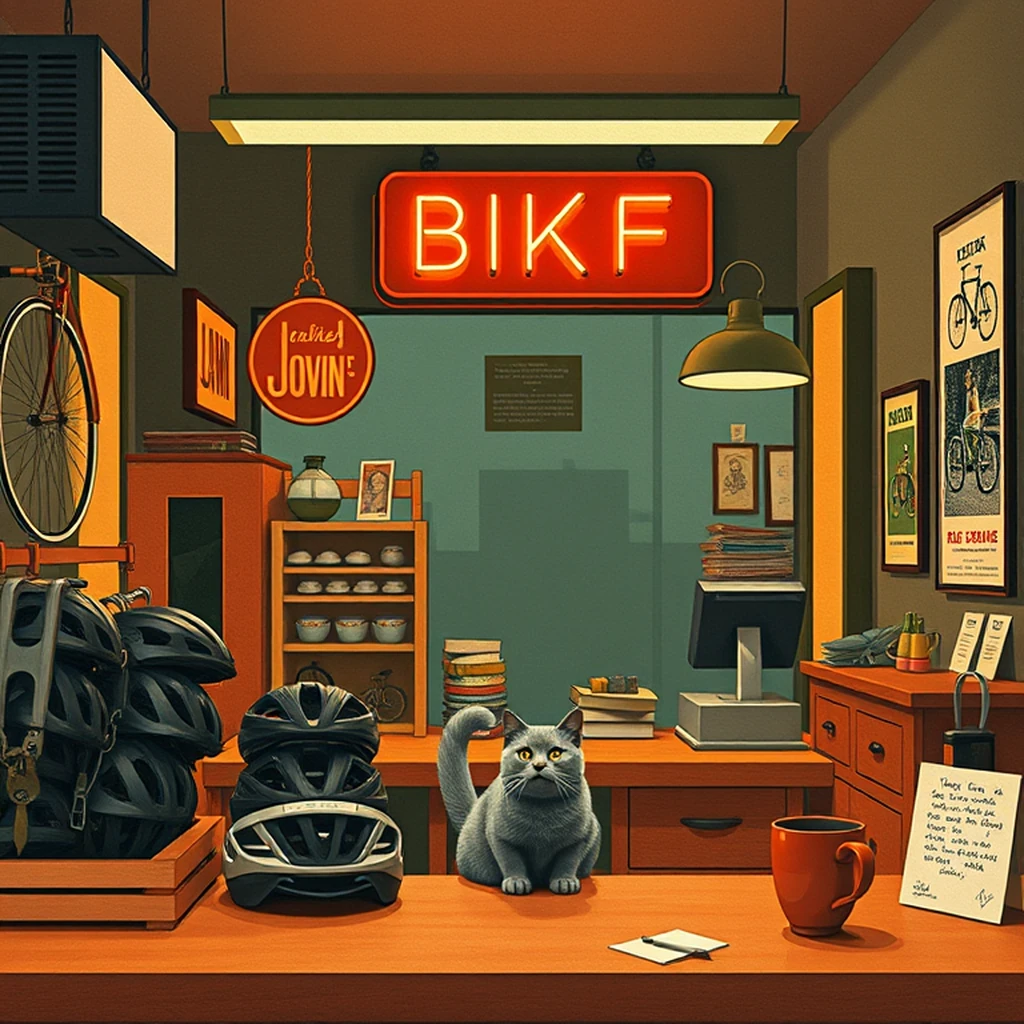
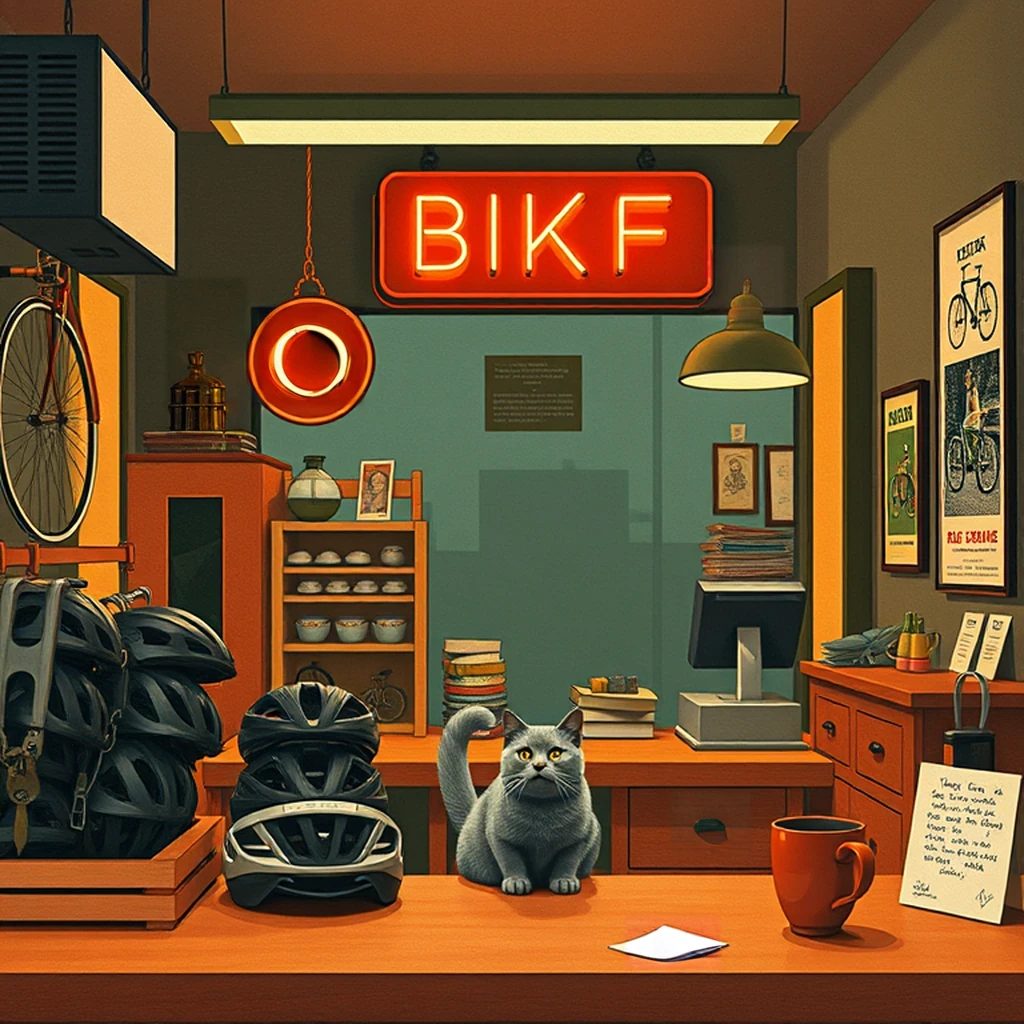
A layered paper cutout collage of an early evening bike shop front counter area in Utrecht during the 2010s, illuminated by fluorescent lights and a thin layer of morning fog outside. The dominant colors are rust orange and olive, evoking a subtle tension as if someone is having a secret meeting inside. An animal companion—a small gray cat—peeks out from behind a stack of bike helmets near the counter. Props include old-fashioned neon signs hanging above the cash register, a row of vintage lock tools on a wooden display rack, framed cycling posters on the walls, and a half-empty coffee mug with a handwritten note beside it.
The early evening light filters through the shop’s window panes, casting a delicate glow over the paper-cut layers of an old bike shop in Utrecht, its hues softened by the gentle mist outside. The fluorescent lights inside hum softly, creating a stark contrast against the muted tones of rust orange and olive that dominate the space. These colors lend the room a sense of quiet urgency, as if the low murmur of conversation or hushed whispers are carried on the air, adding an undercurrent of intrigue to the scene. The wooden display rack along one wall is lined with vintage lock tools, their metal surfaces gleaming slightly from years of use and care. Above the counter hangs a row of neon signs that flicker intermittently, offering a nostalgic glimpse into the past. Framed cycling posters adorn the walls, each one a vibrant reminder of the city’s passion for two-wheeled adventures, capturing moments in time with their bold graphics and dynamic imagery. Beside the cash register lies a half-empty coffee mug, its surface speckled with condensation droplets and a small note scrawled hurriedly on a napkin. A small gray cat, seemingly unbothered by the subtle tension in the air, peeks out from behind a stack of bike helmets near the counter, adding an unexpected touch of warmth to the otherwise tense atmosphere. This paper-cut collage invites viewers to delve into its layers and textures, uncovering tiny details that tell stories about this unique slice of urban life. Each element contributes to the overall mood, making it both intriguing and inviting for anyone curious enough to look closer, seeking out the subtle differences within this meticulously crafted scene.
Background
The scene set in an early evening bike shop front counter area of Utrecht during the 2010s captures a moment steeped in both local and broader European culture. Utrecht's rich cycling heritage is evident through its bustling streets filled with cyclists and its efficient public bicycle system, which has made the city a model for sustainable urban mobility. The bike shop reflects this environment, embodying the practical yet artistic approach to cycling found in Dutch cities. The use of paper cutout style adds a whimsical touch, reminiscent of traditional folk art while also nodding to contemporary design trends that favor simplicity and elegance. The dominant rust orange and olive colors suggest an era marked by industrial materials and a blend of old and new technologies. This period saw a resurgence in vintage aesthetics alongside modern innovations, influencing everything from fashion to interior design. The neon signs above the cash register are throwbacks to earlier decades when such signage was commonplace in small businesses, creating nostalgic visual cues that bridge past and present. Vintage lock tools displayed on a wooden rack speak to the long-standing tradition of craftsmanship and repair within cycling culture. These tools hint at a time when bicycles were not just modes of transport but also objects of care and customization. Framed cycling posters add a layer of cultural history, likely featuring iconic races or local heroes who have contributed significantly to Utrecht's identity as a cycling haven. The small gray cat peeking from behind bike helmets adds a charming personal touch, symbolizing the intimate relationship between humans and their urban spaces. The half-empty coffee mug with a handwritten note beside it offers a glimpse into daily routines, suggesting that this shop is not just a place for transactions but also a community hub where stories unfold quietly throughout the day. Overall, this scene encapsulates the essence of Utrecht in the 2010s: a blend of historical charm and contemporary functionality, all centered around the bicycle as both a practical tool and cultural icon.
Tips for this puzzle
When you're on the hunt for those sneaky differences in a paper-cut collage of an early evening bike shop front counter area in Utrecht from the 2010s, keep your eyes peeled but also give yourself some breathing room. The symmetrical composition and detailed setting can make it tricky to spot changes right away. Shadows cast by the fluorescent lights could hide small details, so take a moment to look closely at where light hits differently on each side of the scene. Cluttered shelves with vintage lock tools or framed cycling posters offer great hiding spots for those tiny discrepancies. The paper-cut style means intricate patterns might blend together unless you give them a careful glance. To stay organized, try scanning systematically from top left corner to bottom right, making sure not to miss any area of the counter, walls, or even that small gray cat peeking out behind helmets near the cash register. Happy spotting!
How to play
- Two near-identical images are shown side by side.
- Tap or click on the differences before the countdown timer runs out.
- Wrong clicks subtract 5 seconds from the clock.
- Stuck? Spend a hint token to glow one remaining difference.
About this puzzle
This is one of 696+ hand-curated AI-generated spot-the-difference puzzles in the SpotDiff library. Each puzzle has multiple variants — the differences you see on your first play are different from the next. 3 variant(s) for this scene.
SpotDiff is free to play with no signup required, and the library grows daily — roughly 10-30 new puzzles added every day. Hint tokens are earned through daily login, streaks, and referrals — or buy a bundle if you want unlimited hints. Refunds are available within 7 days, prorated by the tokens you haven't used yet.