1980s soviet era kolkhoz collective farm dining hall
Mid-morning scene in a Soviet-era collective farm dining hall for spot-the-difference game with soft watercolor illustration, paper texture, and…
About this scene
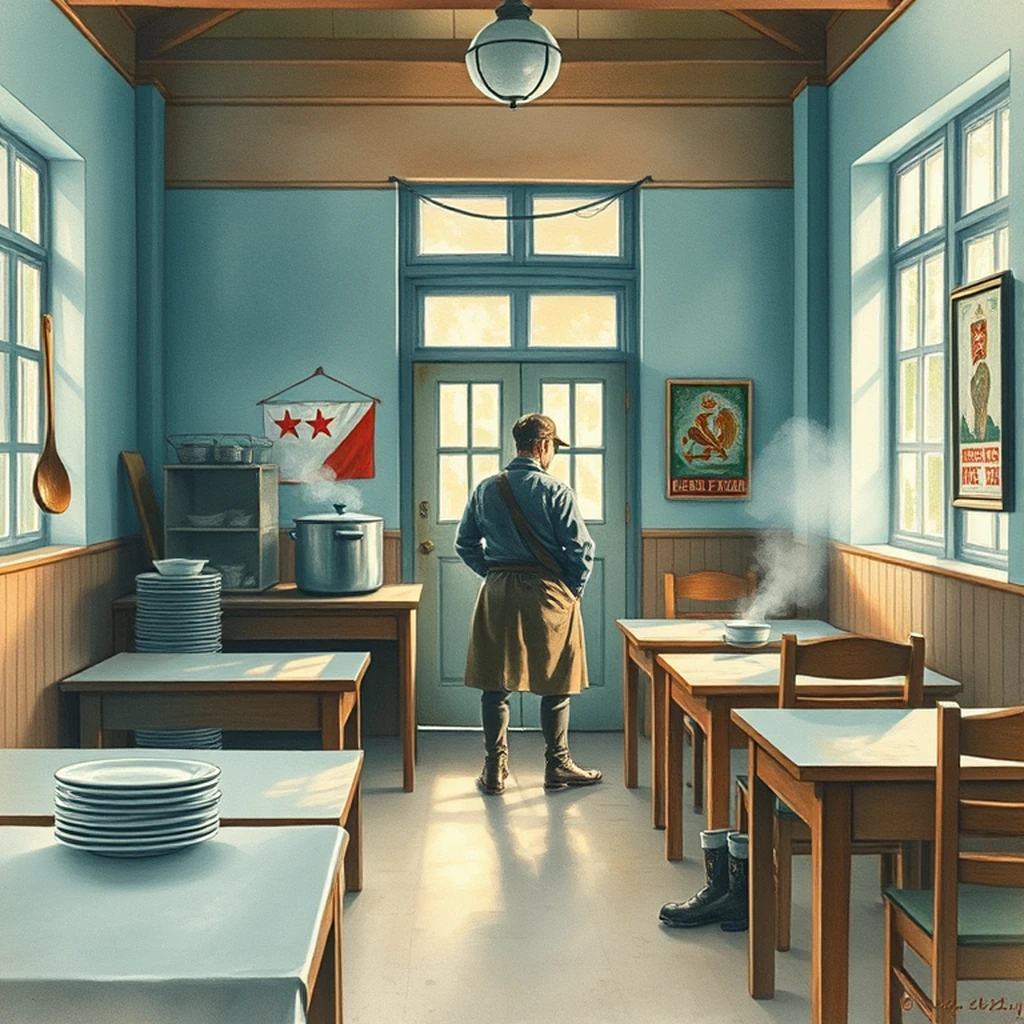
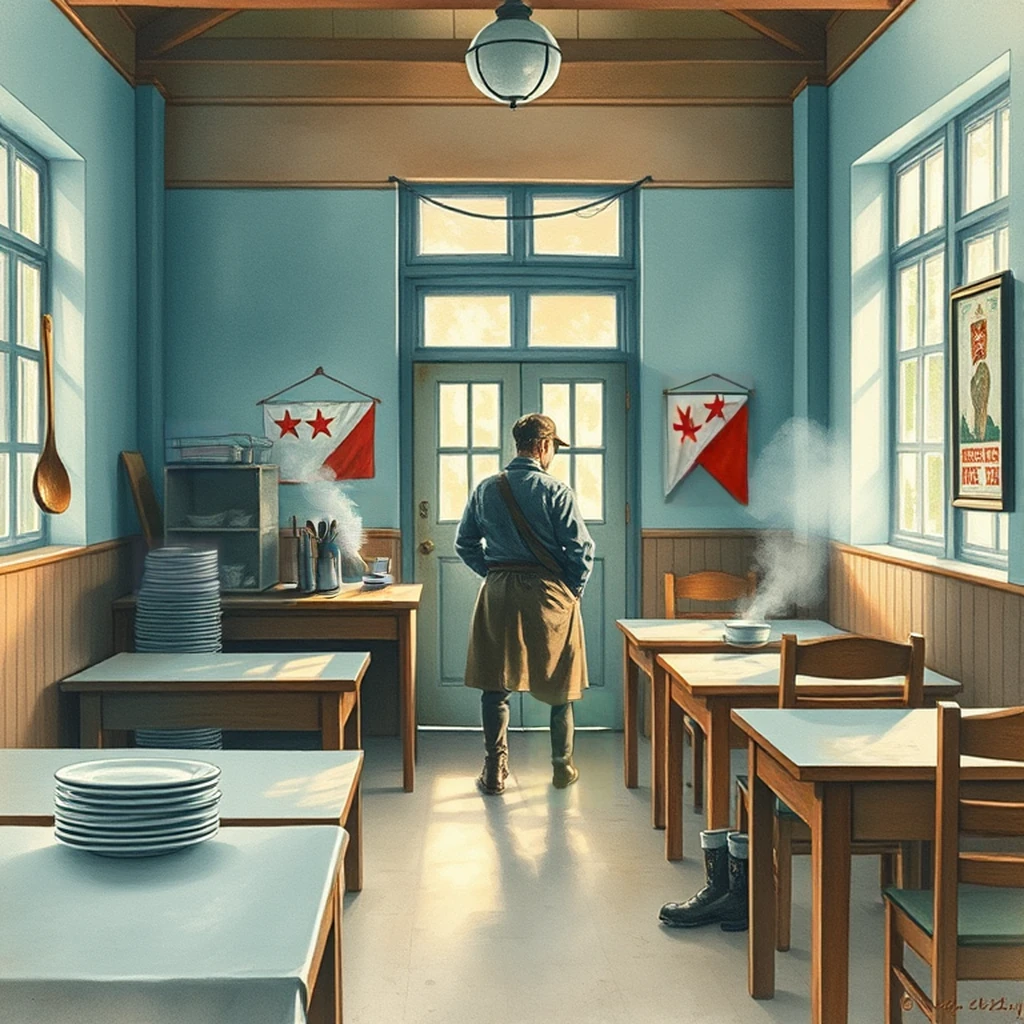
A mid-morning scene in a Soviet-era kolkhoz collective farm dining hall rendered in soft watercolor illustration with delicate washes and paper texture. The space is filled with amber-hued light filtering through large windows, casting deep teal shadows on the walls. A single lone figure stands back-turned near the serving counter, quietly preparing for the day's meal service. Tables are set up but still empty; steam from a nearby pot suggests food preparation underway. Small props include an old wooden spoon hanging on a nail by the door, a faded USSR flag emblem in one corner, a stack of chipped enamel plates next to the figure, a pair of worn rubber boots by the entrance, and a string of Soviet-era propaganda posters on the wall behind the figure. The air is crisp, with visible breath puffs around the lone worker, setting an atmosphere of quiet anticipation before the bustling day begins.
The soft watercolor hues of the Soviet-era kolkhoz collective farm dining hall in mid-morning cast an amber glow over the space, filtering through large windows to paint deep teal shadows on the walls. The air is crisp and cool, with faint traces of steam rising from a nearby pot hinting at a day’s meals soon to come. A lone figure stands near the serving counter, back turned as they quietly prepare for the morning rush, their breath visible in wisps that dance in the chill air. Tables are set up but empty; wooden chairs sit neatly beside them, awaiting the arrival of workers and their daily sustenance. An old wooden spoon hangs on a nail by the door, its surface worn smooth from years of use. In one corner, a faded USSR flag emblem catches the light, its once-vibrant colors now dulled with age. A stack of chipped enamel plates rests beside the figure, each piece holding stories of countless meals served and days passed. Worn rubber boots by the entrance speak to the hard labor endured here, while Soviet-era propaganda posters line the wall behind the serving area, their bold messages a relic of another time. This scene is particularly intriguing for a spot-the-difference puzzle due to its rich textures and subtle details that invite closer inspection.
Background
The scene unfolds in a Soviet-era kolkhoz dining hall during the mid-morning hours of the 1980s, a period marked by the persistence of collective farm systems established decades earlier under Stalin's forced collectivization policies. Kolkhozes, or collective farms, were integral to the Soviet economy, aiming to consolidate individual peasant land and livestock into large-scale agricultural enterprises. This dining hall is emblematic of rural life in the USSR where communal living extended beyond mere farming to include shared meals and social activities. The watercolor style used here lends a nostalgic and softened view of what was often a stark reality for those involved. Each element within the room, from the faded USSR flag emblem to the Soviet propaganda posters on the wall, speaks to the pervasive state control over daily life and ideological indoctrination. The solitary figure quietly preparing for meal service amidst empty tables underscores both the communal nature of kolkhoz dining and the quiet moments before collective activities commence. Objects like the wooden spoon hanging by a nail or the stack of chipped enamel plates offer glimpses into the practicalities and wear of everyday life in this setting, where resources were often limited and items reused until they wore out completely.
Tips for this puzzle
When you're on the hunt for those five differences in today's Soviet-era kolkhoz dining hall scene, take your time and don’t rush. With watercolor washes and soft lighting casting deep teal shadows, it’s easy to overlook small details hidden in the intricate patterns of worn props like old spoons and rubber boots. Pay special attention to areas where light and shadow meet; that's often where tiny discrepancies can be found. As you scan through the dining hall, move methodically from one corner to another—starting with one side of the room, then moving across to the other, checking every inch along the way. Don’t forget about the walls too, as Soviet-era propaganda posters might have slight variations that are easy to miss at first glance. Remember, the key is patience and a systematic approach, so take your time and enjoy uncovering each difference in this charmingly detailed scene.
How to play
- Two near-identical images are shown side by side.
- Tap or click on the differences before the countdown timer runs out.
- Wrong clicks subtract 5 seconds from the clock.
- Stuck? Spend a hint token to glow one remaining difference.
About this puzzle
This is one of 633+ hand-curated AI-generated spot-the-difference puzzles in the SpotDiff library. Each puzzle has multiple variants — the differences you see on your first play are different from the next. 3 variant(s) for this scene.
SpotDiff is free to play with no signup required, and the library grows daily — roughly 10-30 new puzzles added every day. Hint tokens are earned through daily login, streaks, and referrals — or buy a bundle if you want unlimited hints. Refunds are available within 7 days, prorated by the tokens you haven't used yet.