1980s south african township shebeen with straw mats and homemade brew
Explore the secrets of a bustling South African township shebeen in pre-dawn blue hour, featuring a covert meeting and comic book style art.
About this scene
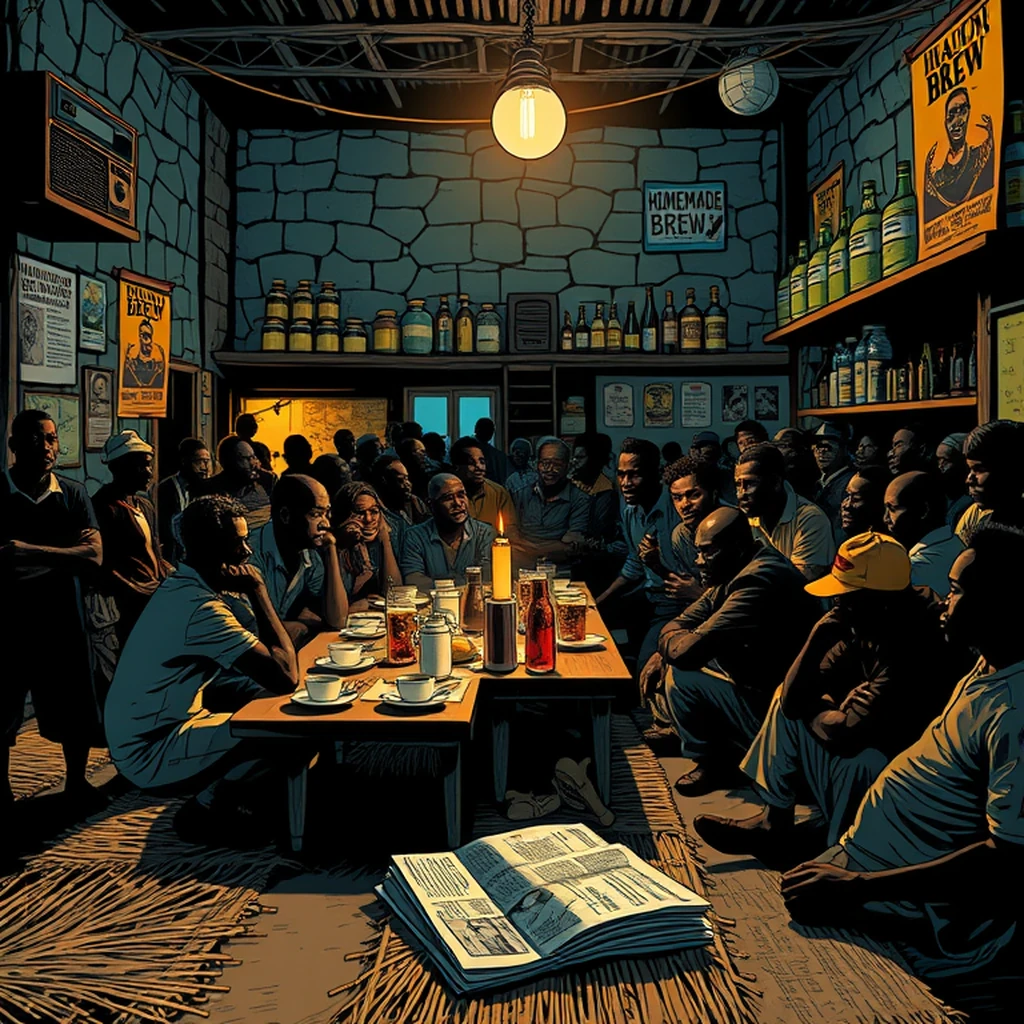
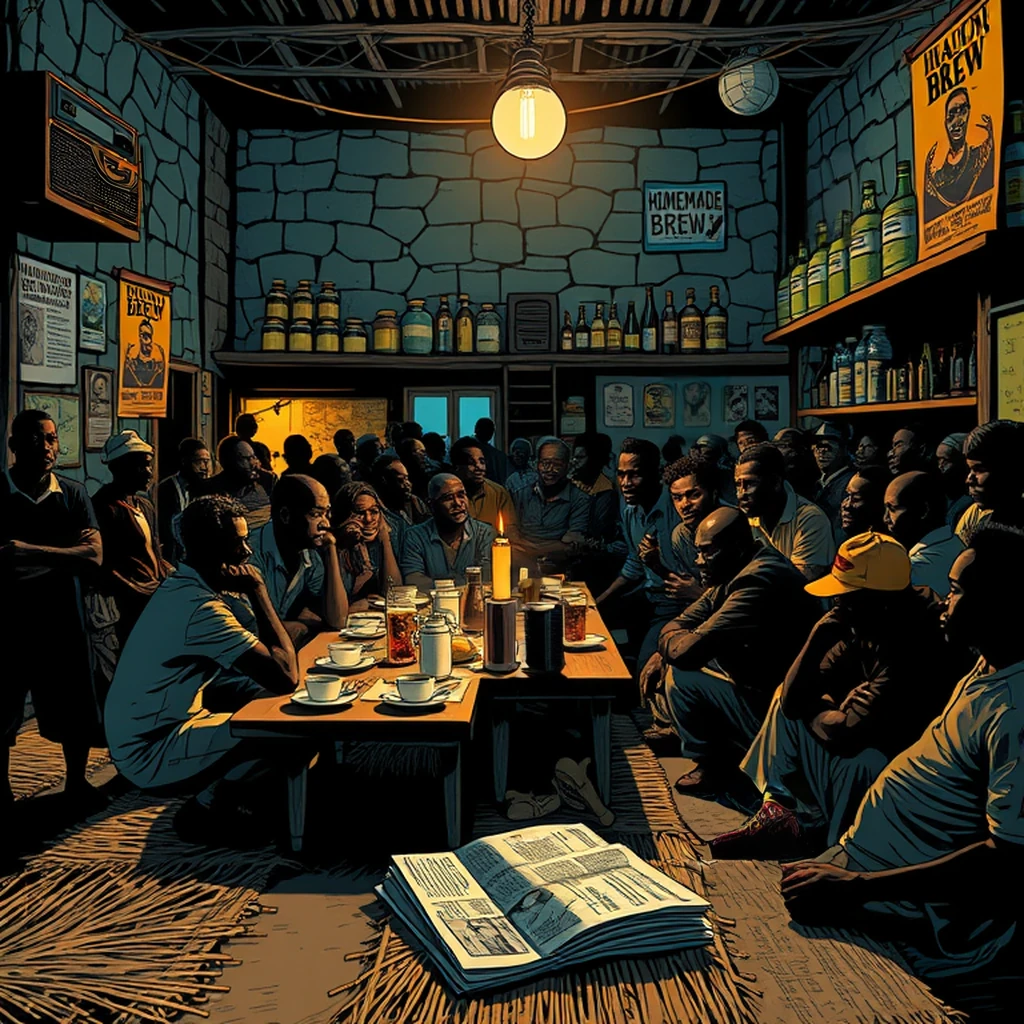
A bustling South African township shebeen at pre-dawn blue hour in the early morning of the 1980s. The scene is lit by a soft glow from a single hanging bulb and a flickering candle, casting long shadows across straw mats scattered on the floor. Inside, a busy crowd of silhouettes engaged in hushed whispers and covert meetings. Walls are adorned with homemade brew posters, makeshift shelves holding various jars and bottles, and a large wooden table cluttered with cups and glasses. The art style is bold comic book panel art with ink linework, halftone shading, and cel colors. Composition features a dutch tilt diagonal perspective to emphasize the tension-filled atmosphere. Secondary props include a small radio playing staticky music, an old newspaper tucked under a straw mat, a half-eaten sandwich on a table corner, a wrapped gift hidden in a cardboard box, and a hand-drawn map tacked to a wall. The color palette is predominantly ivory with oxblood accents.
The pre-dawn light seeps into the South African township shebeen through small cracks in the wooden shutters, mingling with the dim glow of a single hanging bulb and a flickering candle. The soft illumination casts long shadows across the straw mats scattered on the floor, adding to the hushed atmosphere. Inside, silhouettes move quietly around a large wooden table cluttered with cups and glasses, their whispers carrying an air of urgency and secrecy. Walls are adorned with posters for homemade brews, while makeshift shelves hold jars and bottles filled with various concoctions. The scene is rendered in bold comic book art style, featuring cel colors and halftone shading that give it a timeless feel. A small radio plays staticky music, contributing to the eerie ambiance, while an old newspaper tucked under a straw mat hints at recent events. On one corner of the table lies a half-eaten sandwich, its remnants providing a stark contrast against the clean lines of the comic book style. In another corner, a wrapped gift is hidden in a cardboard box, adding a mysterious element to the setting. A hand-drawn map tacked to the wall suggests that the meeting revolves around planning or navigating some kind of journey. The color palette is predominantly ivory, with accents of oxblood creating a striking and memorable visual impact. This scene's unique blend of secrecy, historical context, and comic book artistry makes it an intriguing backdrop for a spot-the-difference puzzle, where each element tells its own story within the larger narrative of pre-dawn meetings in 1980s South Africa.
Background
The scene captures the gritty reality of South African townships during the late 1980s when apartheid was in full swing and resistance against the oppressive regime simmered beneath a veneer of quietude. Shebeens—informal drinking establishments operated by black South Africans—were crucial hubs for community gatherings, political discourse, and cultural expression amid the strict liquor laws imposed on non-white communities. These clandestine venues served as safe spaces where individuals could meet without fear of surveillance or police interference to share news, strategize, and uplift each other's spirits. The setting is a shebeen in pre-dawn hours when the soft glow from a single hanging bulb and candlelight create an intimate atmosphere that contrasts sharply with the harsh realities outside. The walls adorned with homemade brew posters reflect the ingenuity of those who found ways to circumvent restrictions through informal trade networks and community support systems. Comic book panel art, with its bold linework and cel colors, adds a layer of storytelling that transcends mere visual appeal, encapsulating the dynamic narrative of resilience and resistance in an era defined by struggle. The comic style also evokes the spirit of underground publications like SASO’s "Mayibuye" magazine or the satirical cartoons featured in newsletters distributed within black communities. These clandestine channels provided a voice for marginalized groups and helped disseminate information critical to their survival against state repression. The Dutch tilt composition adds depth, emphasizing the tension inherent in these meetings where every conversation carries potential danger alongside hope for change. In this context, props like the small radio playing staticky music symbolize how communities sought connections beyond their immediate surroundings through limited technology available under apartheid's strict control measures. An old newspaper tucked beneath a straw mat highlights the precarious balance between accessing news and avoiding detection by authorities who monitored such activities closely. Each element in the shebeen—right down to the half-eaten sandwich, wrapped gift, and hand-drawn map pinned to the wall—contributes to a vivid tableau of life under apartheid’s shadow, where everyday objects become imbued with layers of meaning and significance beyond their immediate function.
Tips for this puzzle
When you're searching for differences in a bustling scene like this South African township shebeen from the '80s, it pays to look closely at all those shadows and cluttered corners where details can easily get lost. With a dutch tilt composition, expect to find some hidden among the diagonal angles that add drama and depth. Look closely around homemade brew posters on walls or amidst the jars and bottles stacked haphazardly on shelves—they're perfect spots for subtle changes. Don’t overlook the flickering candlelight; shadows cast by it can conceal small differences too. Keep your eyes peeled near any intricate patterns, like hand-drawn maps or newspaper edges peeking out from under mats. To make sure you don't miss anything, try scanning systematically, moving methodically across the scene. This way, you'll catch every detail and spot those five differences hidden in this retro comic book panel art.
How to play
- Two near-identical images are shown side by side.
- Tap or click on the differences before the countdown timer runs out.
- Wrong clicks subtract 5 seconds from the clock.
- Stuck? Spend a hint token to glow one remaining difference.
About this puzzle
This is one of 633+ hand-curated AI-generated spot-the-difference puzzles in the SpotDiff library. Each puzzle has multiple variants — the differences you see on your first play are different from the next. 3 variant(s) for this scene.
SpotDiff is free to play with no signup required, and the library grows daily — roughly 10-30 new puzzles added every day. Hint tokens are earned through daily login, streaks, and referrals — or buy a bundle if you want unlimited hints. Refunds are available within 7 days, prorated by the tokens you haven't used yet.