1980s chinese tea house in san francisco with intricate carvings
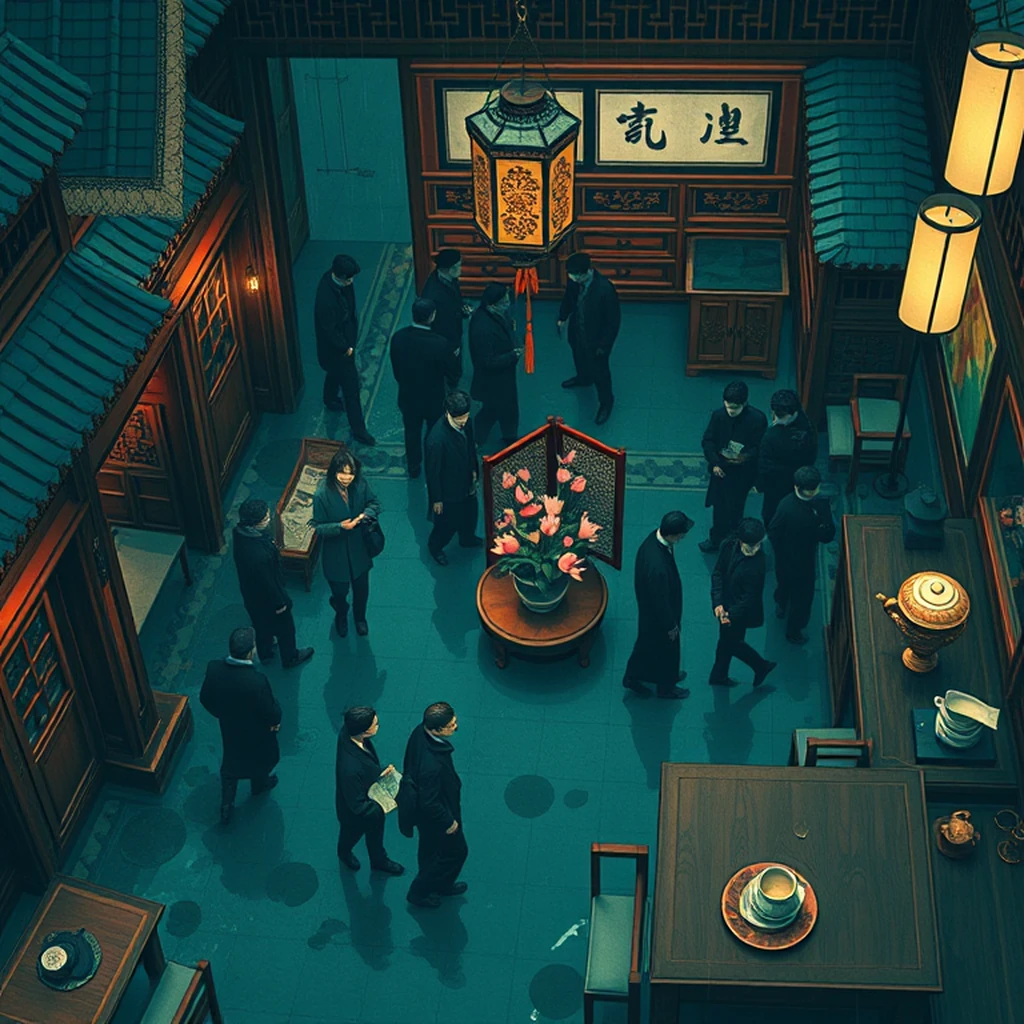
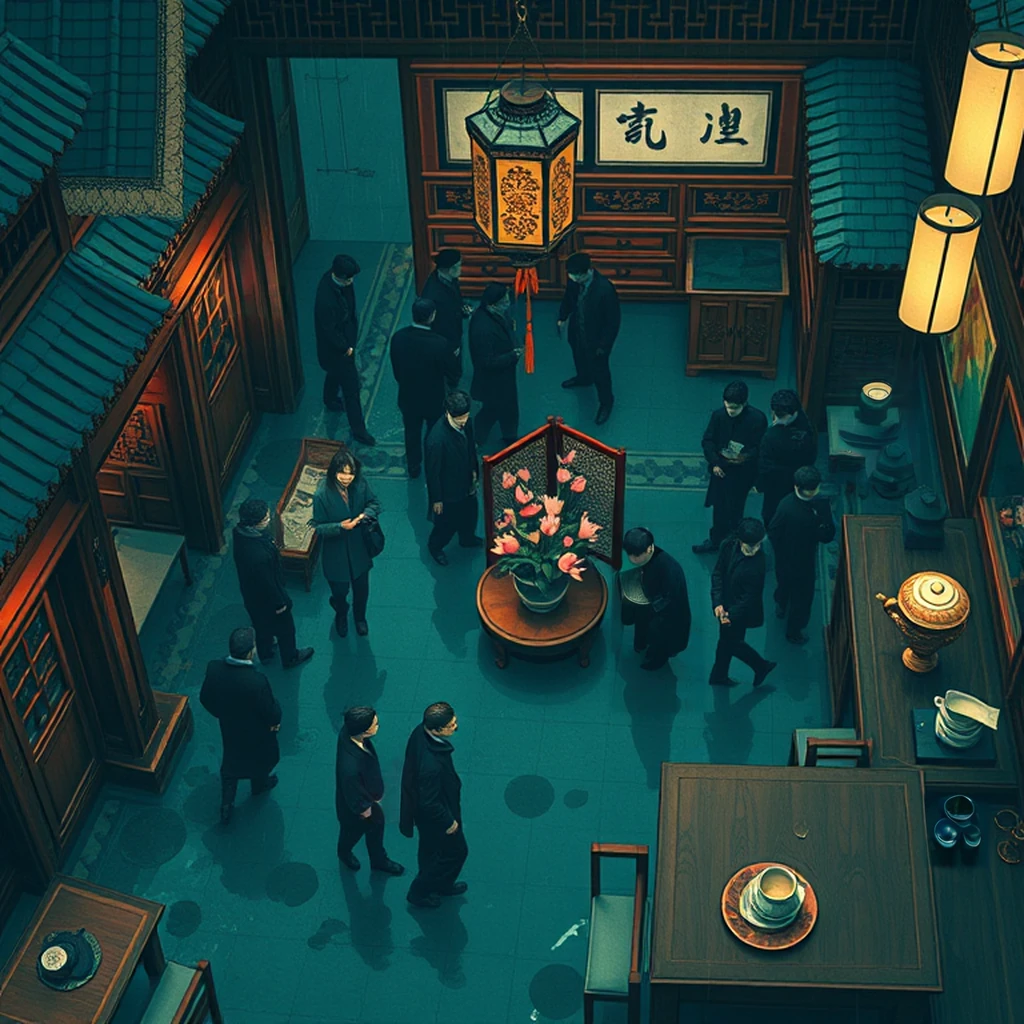
A quiet pre-dawn scene of a bustling 1980s Chinese tea house in San Francisco, viewed from an overhead perspective. Intricate carvings and wooden…
About this scene
A pre-dawn blue hour scene of a bustling 1980s Chinese tea house in San Francisco, viewed from an overhead perspective, revealing intricate carvings and wooden furnishings in amber and deep teal hues. The floors are wet with post-storm puddles, reflecting the ambient light. A busy crowd of silhouetted figures move quietly around, preparing for the day's opening. Small props include a traditional folding screen, a lantern hanging from the ceiling dripping rainwater, an ornate vase filled with wilting lotus flowers, and a stack of teacups on a nearby table. The scene has a soft ukiyo-e woodblock print style, flat colors with decorative outlines.
The pre-dawn blue hour blankets the bustling 1980s Chinese tea house in San Francisco, casting long shadows and soft hues over the intricate carvings and wooden furnishings. The amber and deep teal tones of the room shimmer with the wet sheen left by a recent storm, as rainwater puddles on the floor reflect the ambient light that seeps through the partially opened door. A hush falls over the tea house, yet it remains alive with the quiet movements of silhouetted figures preparing for the day's opening. Their actions are delicate and purposeful; the folding screen is carefully positioned, a lantern swings slightly from its hook on the ceiling as rainwater drips intermittently onto the floor below. An ornate vase sits nearby, filled with wilting lotus flowers whose petals droop sadly in the cool air. On a nearby table, a stack of delicate teacups waits patiently for their turn to be used, each one bearing intricate designs that hint at the cultural richness and history of this establishment. The flat colors and decorative outlines characteristic of ukiyo-e woodblock prints lend an artistic charm to the scene, making it seem as if it has been plucked from a storybook or cherished memory. What makes this scene particularly interesting for a spot-the-difference puzzle is how subtly each element reflects the tea house's unique blend of cultural heritage and everyday life in 1980s San Francisco.
Background
The scene depicts a bustling Chinese tea house in San Francisco during the vibrant and transformative era of the 1980s. This period was marked by significant cultural exchange as China began to re-emerge on the global stage after years of isolation under Mao's rule, leading to an influx of Chinese immigrants into American cities like San Francisco. The setting is a pre-dawn moment in the life of this tea house, where traditional practices blend seamlessly with modern urban dynamics. The interior of the tea house is richly adorned with intricate carvings and wooden furnishings that reflect the elegance and craftsmanship associated with East Asian design aesthetics. These elements are reminiscent of classical Chinese architecture and artistry, which has a long history dating back to imperial times but continues to evolve through cultural migration and adaptation in diaspora communities. The ukiyo-e style, characterized by its flat colors and decorative outlines, adds a layer of nostalgia and cultural resonance to the scene. Originating from Japan during the Edo period (1603-1868), this art movement gained international fame for its vivid depictions of everyday life and nature, often featuring woodblock prints that were both affordable and accessible to the masses. In this context, the ukiyo-e style bridges cultural gaps, connecting the intricate carvings and ornate furnishings of the tea house with a broader tradition of artistic expression in East Asia. The small props within the scene—such as the traditional folding screen, the hanging lantern dripping rainwater, and the vase filled with wilting lotus flowers—serve not only as decorative elements but also carry symbolic meanings deeply rooted in Chinese culture. For instance, the lotus flower is a symbol of purity and enlightenment, while the lanterns often signify guidance and protection in Chinese folklore. These objects encapsulate the tea house's role in social gatherings where people come together to enjoy tea, engage in conversation, and share stories—a tradition that has remained an integral part of Chinese culture despite centuries of change and adaptation.
Tips for this puzzle
When you're tackling today's SpotDiff puzzle set in a bustling Chinese tea house from the early '80s in San Francisco, remember to look closely at areas where details might be easily overlooked. With its top-down flat lay composition and intricate woodblock print style, common hiding spots include cluttered corners like shelves stacked with teacups or vases filled with wilting lotus flowers. Shadows cast by hanging lanterns dripping rainwater can also conceal differences, so take a moment to study those dark patches carefully. The ornate carvings on furniture and walls are another treasure trove of subtle discrepancies. To scan systematically without missing anything, start from one side of the image and work your way across or down methodically, comparing each element as you go. Keep an eye out for any small inconsistencies that might be cleverly hidden in plain sight amidst all this early morning hustle and bustle.
How to play
- Two near-identical images are shown side by side.
- Tap or click on the differences before the countdown timer runs out.
- Wrong clicks subtract 5 seconds from the clock.
- Stuck? Spend a hint token to glow one remaining difference.
About this puzzle
This is one of 633+ hand-curated AI-generated spot-the-difference puzzles in the SpotDiff library. Each puzzle has multiple variants — the differences you see on your first play are different from the next. 3 variant(s) for this scene.
SpotDiff is free to play with no signup required, and the library grows daily — roughly 10-30 new puzzles added every day. Hint tokens are earned through daily login, streaks, and referrals — or buy a bundle if you want unlimited hints. Refunds are available within 7 days, prorated by the tokens you haven't used yet.