1980s chinese restaurant kitchen with wok stoves and fortune cookies
Explore the cozy yet melancholic ambiance of a late-night Chinese restaurant kitchen, illuminated by flickering candles and filled with burgundy…
About this scene
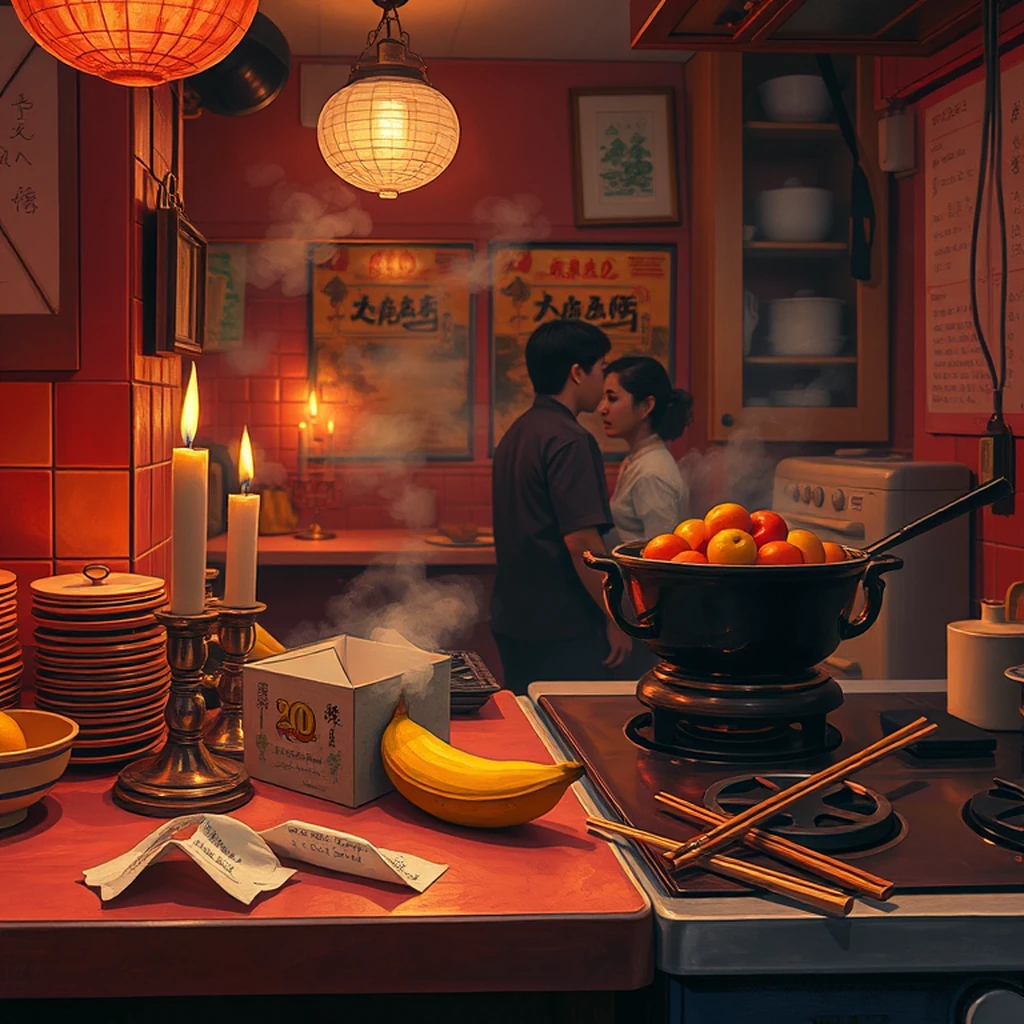
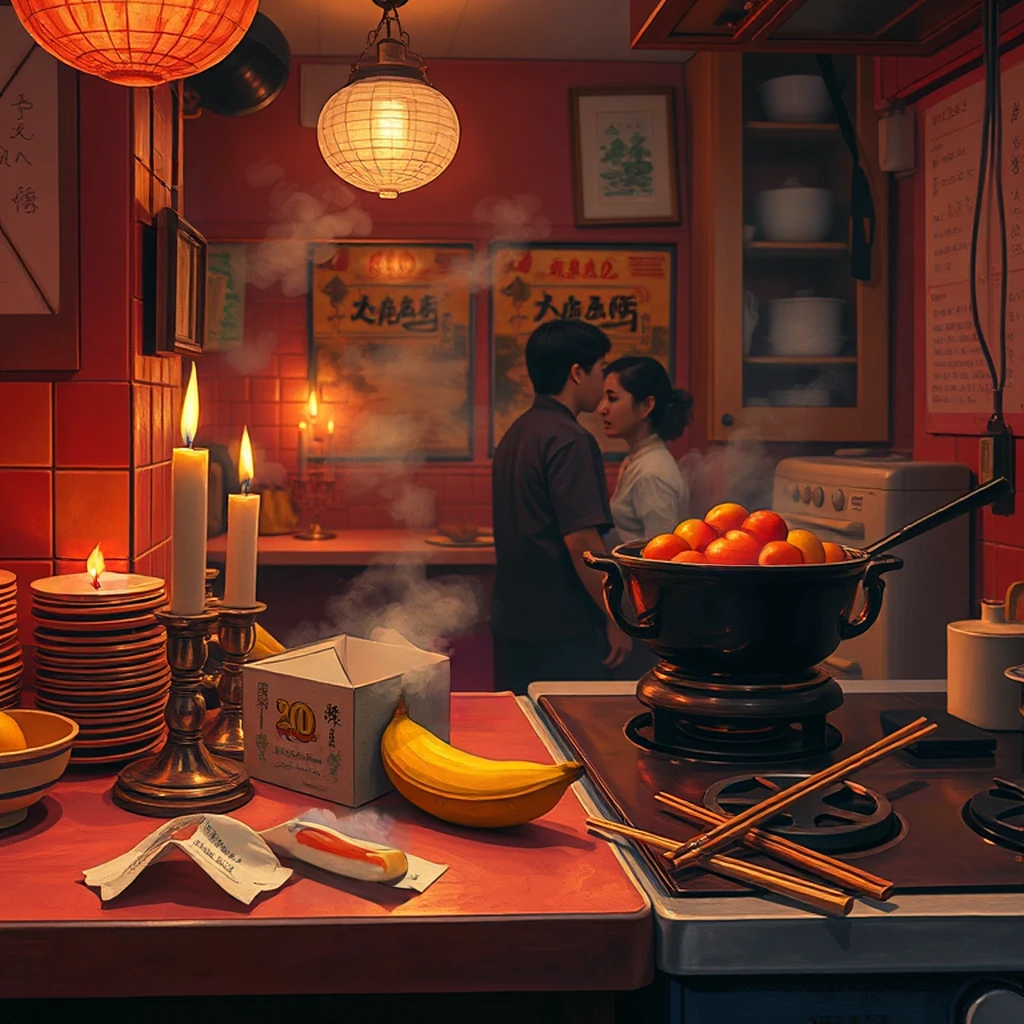
An extreme close-up of the cluttered kitchen area in a 1980s Chinese restaurant during midnight, illuminated solely by flickering candles. The scene is dominated by flat, saturated colors in burgundy and cream, reflecting the opulent yet nostalgic decor of the era. Crisp cold breath is visible around the two people in the background mid-conversation, adding to the melancholic ambiance of the late-hour wind-down. Props include an open fortune cookie box on a counter, a partially peeled banana sitting next to an overflowing bowl of fruit, and a few spare chopsticks neatly arranged beside a wok stove. The image is an opaque gouache illustration with a paper texture that captures every minute detail in the rich color palette.
The evening has long since given way to the quiet hours of midnight in an old Chinese restaurant kitchen, where the soft glow of candlelight casts elongated shadows and creates a mesmerizing interplay of light and dark. The walls are adorned with burgundy and cream-colored wallpaper, its patterns reminiscent of opulent times past, now slightly faded but still holding onto their grandeur. Flat-saturated colors dominate the scene, each hue contributing to an atmosphere that feels both melancholic and nostalgic. Visible breath puffs in the cool air as two individuals huddle close, engaged in a quiet conversation behind the counter. The only sounds are the soft crackling of candles and the occasional murmur from the workers. An open fortune cookie box lies near the edge of the countertop, its glossy white exterior slightly marred by finger prints and candle wax drips. Beside it, a partially peeled banana sits next to an overflowing bowl of fruit, suggesting a momentary pause in the kitchen's activities. A wok stove stands ready nearby, its surface cool and matte against the warm tones of the room. Neatly arranged beside it are spare chopsticks, their tips slightly worn from use, echoing the rhythm of countless meals served over the years. The paper texture of this gouache illustration captures every detail with precision, from the subtle patina on metal utensils to the delicate patterns in the wallpaper. This scene invites contemplation about the passage of time and the essence of a place that holds so many stories. For those who take part in SpotDiff's daily challenge, finding the differences here offers not just visual puzzles but a journey through the sensory memories of an era gone by.
Background
The 1980s saw an explosion of Chinese restaurants across North America, a period marked by the cultural fascination and romanticization of East Asian cuisine in Western culture. These establishments often featured interiors that were heavily stylized to evoke a sense of exoticism and nostalgia for ancient China, blending traditional elements with contemporary decor trends. The use of red hues and cream tones was not only visually striking but also symbolically charged, as these colors are traditionally associated with good fortune and prosperity in Chinese culture. Gouache illustrations, like the one depicted here, capture this era's penchant for vibrant, almost theatrical representations of the Orient. The presence of an open fortune cookie box on a counter is particularly emblematic of how Western perceptions of China were often filtered through the lens of popular culture, where items such as these became synonymous with Chinese dining experiences despite not being traditional to Chinese cuisine itself. The partially peeled banana and bowl of fruit suggest a relaxed moment amidst the kitchen's usual bustle, while the neatly arranged chopsticks next to an idle wok stove hint at both order and anticipation for the impending demands of service in a restaurant setting. This scene encapsulates the blend of cultural appropriation and affectionate homage that characterized Chinese restaurants during this period, offering viewers a nostalgic glimpse into a bygone era where dining out was not just about food but also about experiencing a bit of the exotic East right from home.
Tips for this puzzle
When searching for those sneaky differences in an image as detailed as this one from a 1980s Chinese restaurant kitchen, it’s best to take your time and really soak in the scene. With its extreme close-up composition, you’ll want to look closely at every nook and cranny—consider spots like cluttered shelves or shadowy corners where details can easily get lost. The rich color palette of burgundy and cream might make certain items blend into their backgrounds, so pay special attention to areas with intricate patterns or textures, such as the woks or decorative elements around the room. For a systematic approach, start from one corner and work your way across the image methodically, checking each item thoroughly before moving on. And don’t forget about those little touches that might be hiding in plain sight, like the open fortune cookie box, the partially peeled banana, and the neat stack of chopsticks beside the stove. With a bit of patience and keen eyes, you’ll spot all five differences without breaking a sweat!
How to play
- Two near-identical images are shown side by side.
- Tap or click on the differences before the countdown timer runs out.
- Wrong clicks subtract 5 seconds from the clock.
- Stuck? Spend a hint token to glow one remaining difference.
About this puzzle
This is one of 633+ hand-curated AI-generated spot-the-difference puzzles in the SpotDiff library. Each puzzle has multiple variants — the differences you see on your first play are different from the next. 3 variant(s) for this scene.
SpotDiff is free to play with no signup required, and the library grows daily — roughly 10-30 new puzzles added every day. Hint tokens are earned through daily login, streaks, and referrals — or buy a bundle if you want unlimited hints. Refunds are available within 7 days, prorated by the tokens you haven't used yet.