1980s american suburban family den with cable TV and video games
A nostalgic family den at pre-dawn, hazy with dust and melancholic silence. Silhouettes around cable TV and video games, late-night winding down.
About this scene
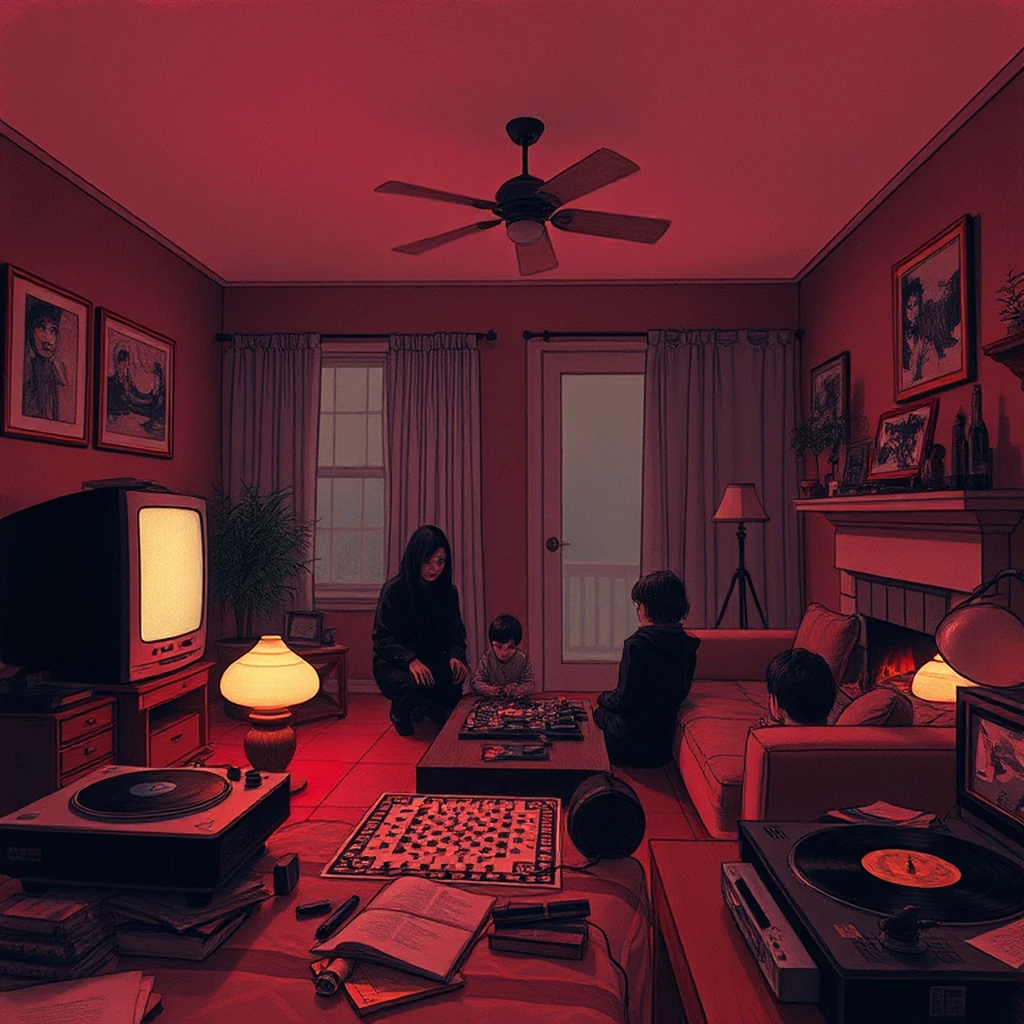
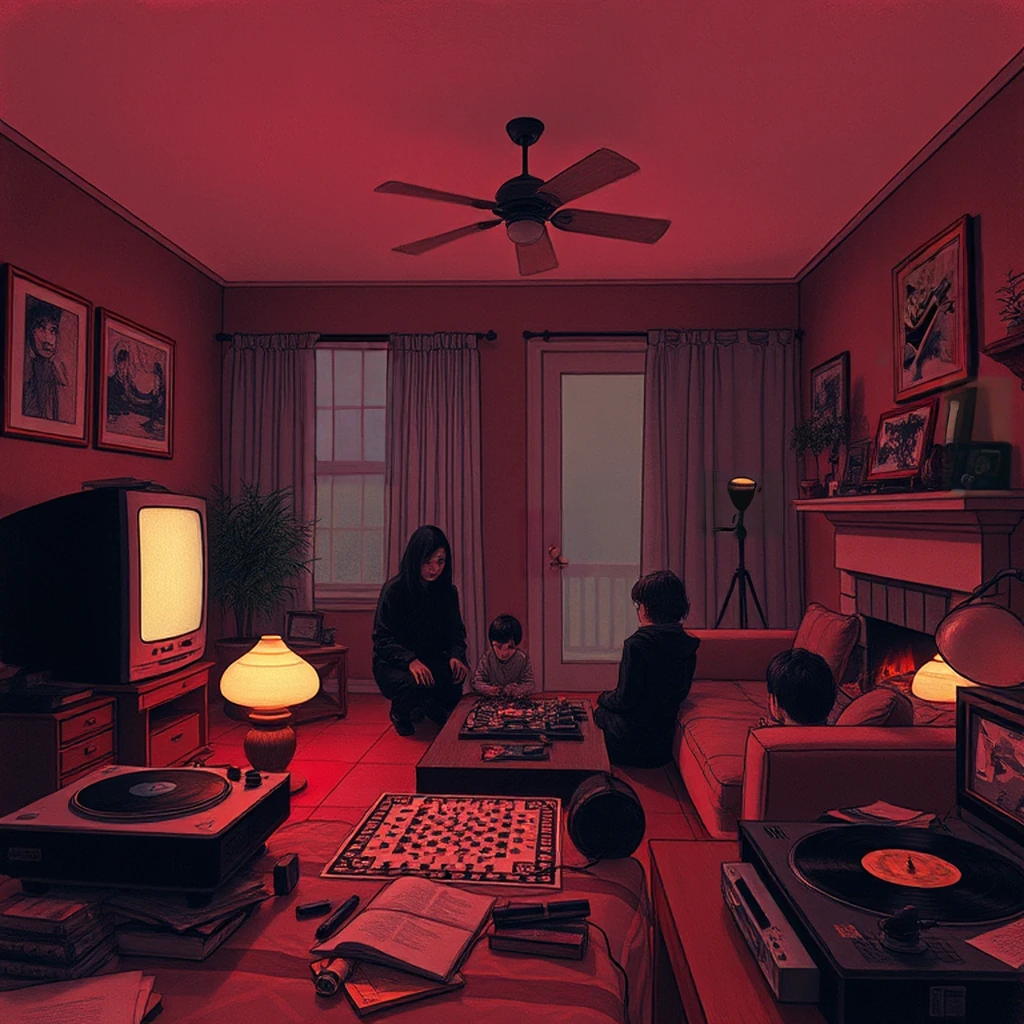
A dimly lit suburban family den in the pre-dawn hours of the late 1980s, captured through an atmospheric graphic novel illustration style with ink wash and selective color. Dusty haze fills the room, casting a melancholic tone on the burgundy and cream palette. The composition is from a low angle worm's-eye view, looking up at various elements. A family of five silhouettes huddles around a cable TV set and an old Atari console, winding down for the night in quiet contemplation. Small props scattered throughout include a vintage lava lamp casting eerie shadows, an open board game spread on the coffee table with scattered pieces, an unlit fireplace flickering slightly from residual heat, a stack of VHS tapes near the television, a vinyl record player sitting idle next to a half-empty glass of soda, and a dusty window frame letting in faint blue light. Soft watercolor illustration, paper texture.
The pre-dawn dimness of the late 1980s suburban family den is cloaked in an eerie haze, where dust particles dance under the faint blue light seeping through a dusty window frame. The room's muted colors of burgundy and cream are tinged with melancholy, as shadows stretch across the surfaces like silent whispers. From this low-angle perspective, everything seems to loom large: the cable TV set, an Atari console, and the silhouettes of five family members huddled around these relics of a bygone era, their forms mere outlines against the soft glow of a vintage lava lamp casting eerie shadows on the walls. The coffee table is strewn with remnants of a night's entertainment—an open board game scattered with pieces that tell tales of unfinished games and midnight snacks. An unlit fireplace flickers slightly from residual heat, hinting at warmth long since gone. Nearby, a stack of VHS tapes nestles beside the TV, each one a treasure trove of memories waiting to be revisited. A vinyl record player sits idly next to a half-empty glass of soda, its surface reflecting the dim light in small, shimmering patches. This scene's quiet contemplation is underscored by the dust that seems to coat every object, giving everything an aged patina. The graphic novel illustration style adds layers of depth and mystery, with ink washes blending seamlessly into watercolor textures. Each element—from the flickering shadows to the idle game console—contributes to a bittersweet nostalgia that lingers in the air like the faint scent of forgotten dreams. What makes this scene particularly intriguing for a spot-the-difference puzzle is its layered atmosphere and details, inviting one to uncover subtle changes hidden within the nostalgic haze.
Background
The scene captures the essence of an American suburban family den in the late 1980s, a period marked by significant cultural shifts and technological advancements. This era saw the emergence of cable television and home video game consoles as central fixtures in family entertainment, reflecting a broader trend towards more privatized forms of leisure and media consumption. The room's dim lighting and cozy layout evoke a sense of nostalgia for simpler times when families gathered around shared screens to unwind after a day’s work or school. The inclusion of an Atari console symbolizes the dawn of home gaming as a popular pastime, while the vinyl record player stands testament to enduring musical traditions in contrast to emerging digital music formats. The graphic novel illustration style employed here, with its ink wash and selective color technique, hints at the influence of this storytelling medium on youth culture during that time. It was an era when comic books and graphic novels began gaining recognition as sophisticated forms of artistic expression beyond their original pulpy origins. This stylistic choice adds a layer of cultural commentary, drawing parallels between the evolving tastes in media consumption and visual artistry prevalent among young Americans at the turn of the 1980s decade.
Tips for this puzzle
Spotting those five differences in your nostalgic '80s family den scene might take a bit of detective work, but it's all about looking closely and systematically. With the graphic novel style and that low angle worm’s-eye view, shadows play a big part, so look for places where light and dark meet, like around the TV or under the lava lamp. Clutter is your friend here too; those VHS tapes and board game pieces might hide subtle differences, especially if they're partially obscured by dust or in deep shadows. Don't forget about intricate patterns on items like throw blankets or the vinyl record player—small changes there can be easy to miss when you’re not looking for them. As you scan, try moving your eyes methodically across each area, breaking it down into smaller sections if needed. And remember, sometimes the differences are right where you wouldn’t expect them, so keep an eye out even as you wind down from your search!
How to play
- Two near-identical images are shown side by side.
- Tap or click on the differences before the countdown timer runs out.
- Wrong clicks subtract 5 seconds from the clock.
- Stuck? Spend a hint token to glow one remaining difference.
About this puzzle
This is one of 633+ hand-curated AI-generated spot-the-difference puzzles in the SpotDiff library. Each puzzle has multiple variants — the differences you see on your first play are different from the next. 3 variant(s) for this scene.
SpotDiff is free to play with no signup required, and the library grows daily — roughly 10-30 new puzzles added every day. Hint tokens are earned through daily login, streaks, and referrals — or buy a bundle if you want unlimited hints. Refunds are available within 7 days, prorated by the tokens you haven't used yet.