1970s japanese karaoke bar in tokyo with neon lights
Explore early evening fluorescent glow and neon lights at a busy Japanese karaoke bar in Tokyo during the 1970s. Spot subtle differences among…
About this scene
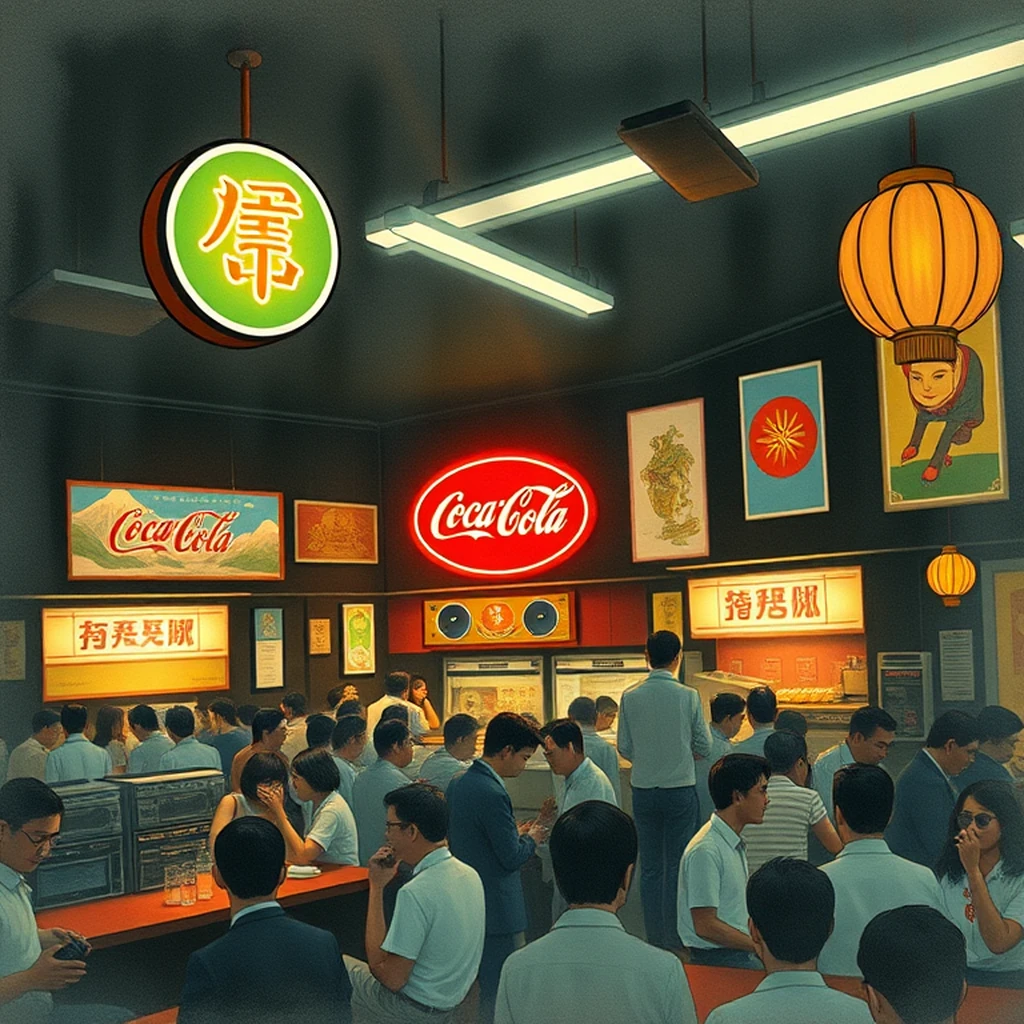
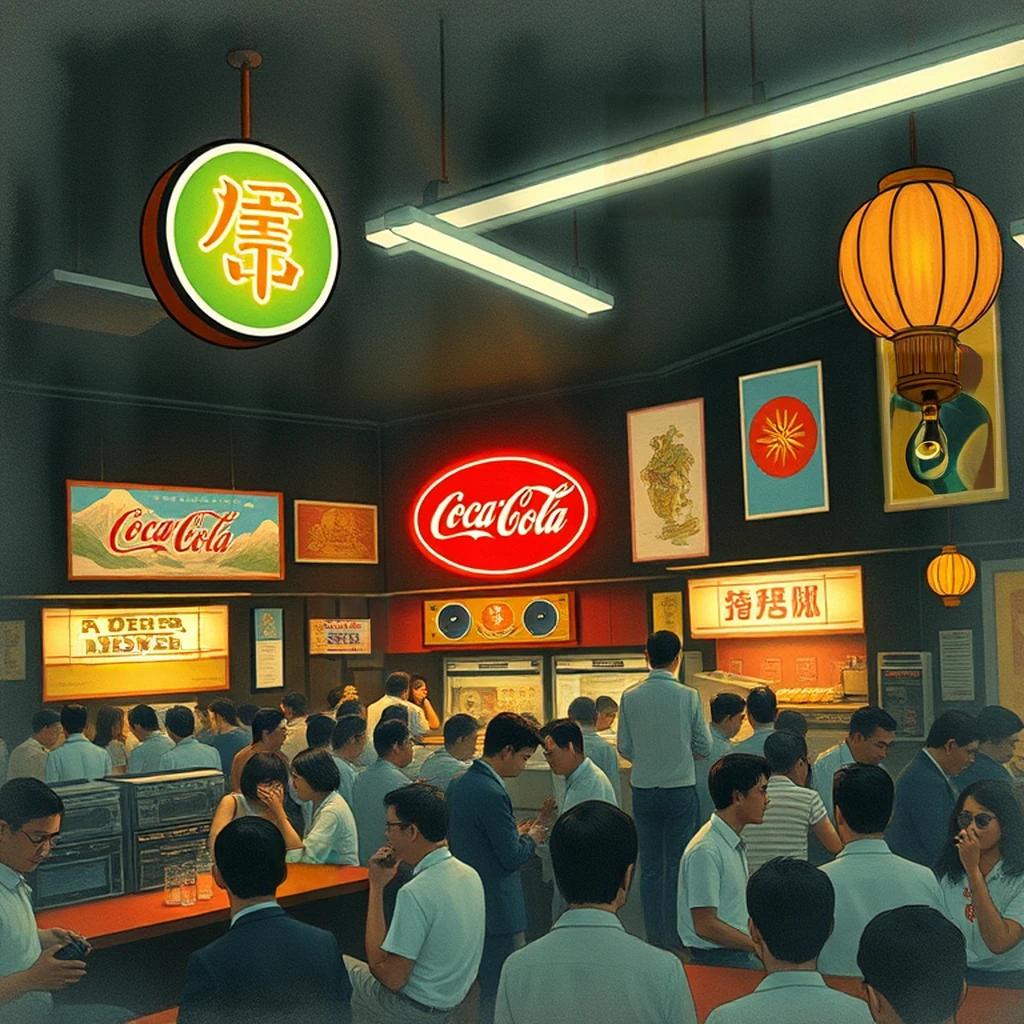
A deep diagonal corner view of a bustling 1970s Japanese karaoke bar in Tokyo at dusk, under the early evening fluorescent lights that cast a hazy glow through dust particles. The scene is bathed in a limited screenprint palette with charcoal and copper hues dominating the space. Neon signs flicker in vibrant colors, creating a retro-futuristic ambiance typical of the era's travel poster illustrations. Small props include vintage boomboxes lining the bar, a neon Coca-Cola sign glowing faintly, ornate wall posters depicting traditional Japanese landscapes, and dangling paper lanterns casting soft light around the crowd. The mood is one of anticipation as patrons gather just before a performance begins. Soft watercolor illustration, paper texture with geometric art deco accents.
The 1970s Japanese karaoke bar in Tokyo is a time capsule where fluorescent lights cast an ethereal glow, illuminating the space with a hazy luminescence that dances around dust particles floating through the air. The deep diagonal corner view provides a cinematic perspective, capturing the essence of this era's retro-futuristic aesthetic. A limited screenprint palette dominates the color scheme, blending charcoal shadows and copper accents to create an atmospheric depth that feels both nostalgic and otherworldly. Neon signs flicker with vibrant hues of red, blue, and green, adding a dynamic energy to the scene as they compete for attention against the soft glow of paper lanterns hanging from the ceiling. Vintage boomboxes line the bar, their rounded edges and pastel displays offering glimpses into the technological aesthetics of the 1970s. A neon Coca-Cola sign glows faintly in the background, casting a warm red hue that contrasts sharply with the cool blue and green tones emanating from other signs scattered throughout the room. Ornate wall posters depicting traditional Japanese landscapes further enhance the cultural ambiance, blending the old world charm of Mount Fuji with the emerging neon glow of city life. The crowd mingles eagerly, anticipating the upcoming performances, their laughter and chatter mingling in a symphony of anticipation. The bar's surface is adorned with a soft watercolor illustration that evokes memories of simpler times, while geometric art deco accents hint at the modernist influences creeping into this retro setting. Each element—from the textured paper lanterns casting shadows on the floor to the intricate details of the vintage boomboxes—adds layers of visual and sensory interest. This scene's unique blend of 1970s Japanese culture with neon-lit futurism creates an intriguing backdrop for a spot-the-difference puzzle, inviting players to uncover subtle nuances hidden within its vivid and nostalgic atmosphere.
Background
The scene captures the essence of a bustling 1970s Japanese karaoke bar in Tokyo, reflecting the city's vibrant cultural milieu during that era. Karaoke, which literally means "empty orchestra," emerged as a social phenomenon in Japan during the late 20th century, blending traditional Japanese aesthetics with modern technological innovation. The deep diagonal corner view of this establishment is reminiscent of vintage travel posters and screenprints from the same period, evoking a retro-futuristic aesthetic that was characteristic of Tokyo's neon-lit streets. This visual style, often associated with geometric Art Deco accents and soft watercolor illustrations, mirrors the city's rapid urbanization and technological advancements during Japan's post-war economic boom known as the "economic miracle." The bar itself is adorned with ornate wall posters depicting traditional Japanese landscapes, alongside dangling paper lanterns that cast a warm glow over the room. These elements reflect a blend of cultural continuity and modernity, showcasing how Japan embraced its heritage while forging ahead into new technological territories. Vintage boomboxes lining the bar and a faintly glowing neon Coca-Cola sign are iconic symbols of the era's global influences on local culture. The combination of these retro-futuristic design elements creates an atmosphere that is both nostalgic and forward-looking, encapsulating the spirit of Tokyo in the 1970s.
Tips for this puzzle
When you're scanning for differences in this vibrant karaoke bar scene from the 1970s Tokyo, keep your eyes peeled for the usual suspects like cluttered shelves or intricate patterns that can easily hide small discrepancies. Given the deep diagonal corner view and vintage poster style, shadows cast by neon signs and flickering lights create perfect hiding spots for subtle changes. Look closely at areas where props like boomboxes and Coca-Cola signs are placed, as these often have details that might differ slightly between images. The ornate wall posters and dangling paper lanterns also offer plenty of intricate patterns to scrutinize. To make your search more systematic, try moving in a pattern across the image—perhaps from left to right, then top to bottom, ensuring you don't miss any potential differences amidst the retro-futuristic ambiance. Happy spotting!
How to play
- Two near-identical images are shown side by side.
- Tap or click on the differences before the countdown timer runs out.
- Wrong clicks subtract 5 seconds from the clock.
- Stuck? Spend a hint token to glow one remaining difference.
About this puzzle
This is one of 696+ hand-curated AI-generated spot-the-difference puzzles in the SpotDiff library. Each puzzle has multiple variants — the differences you see on your first play are different from the next. 3 variant(s) for this scene.
SpotDiff is free to play with no signup required, and the library grows daily — roughly 10-30 new puzzles added every day. Hint tokens are earned through daily login, streaks, and referrals — or buy a bundle if you want unlimited hints. Refunds are available within 7 days, prorated by the tokens you haven't used yet.