1970s cozy neighborhood bookstore with rolling ladder
Dusk falls on a cozy neighborhood bookstore in an intricate ink wash painting style. Explore the peak activity period in this charming puzzle scene.
About this scene
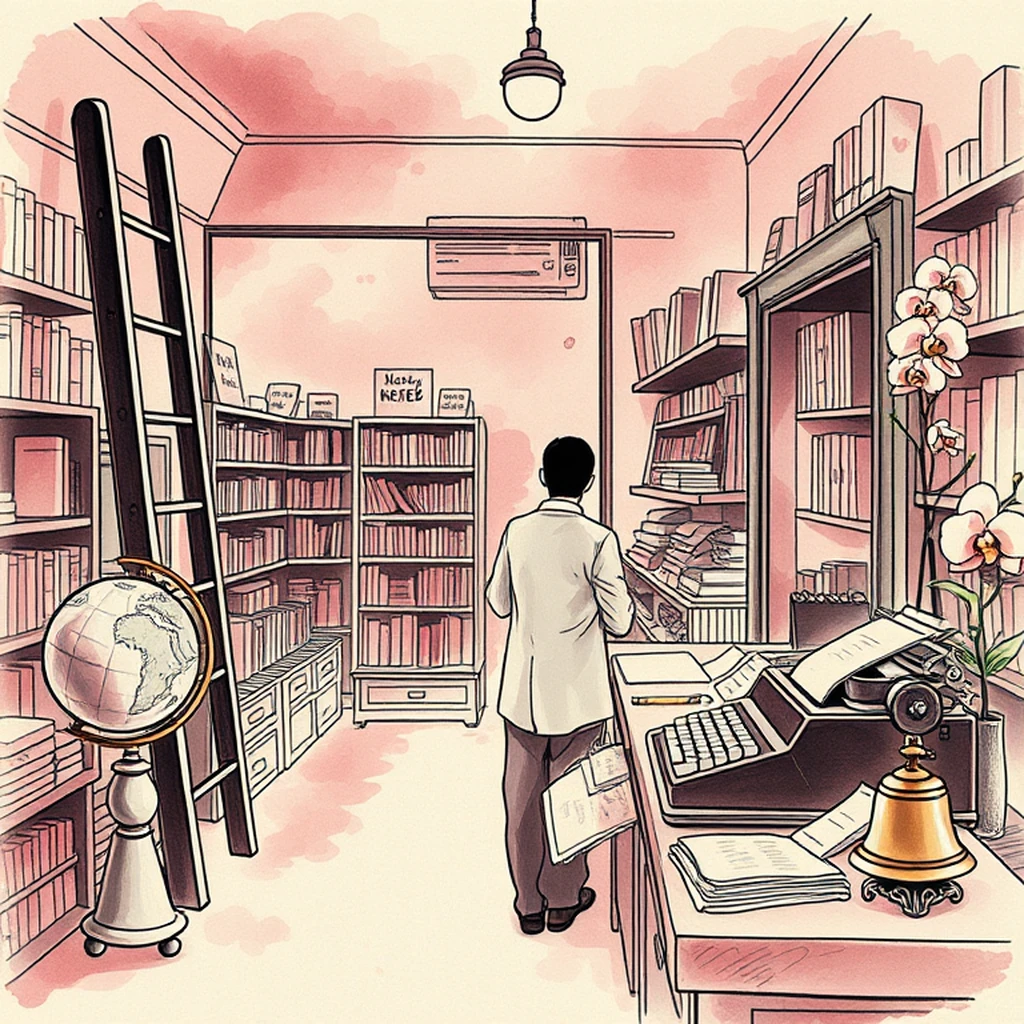
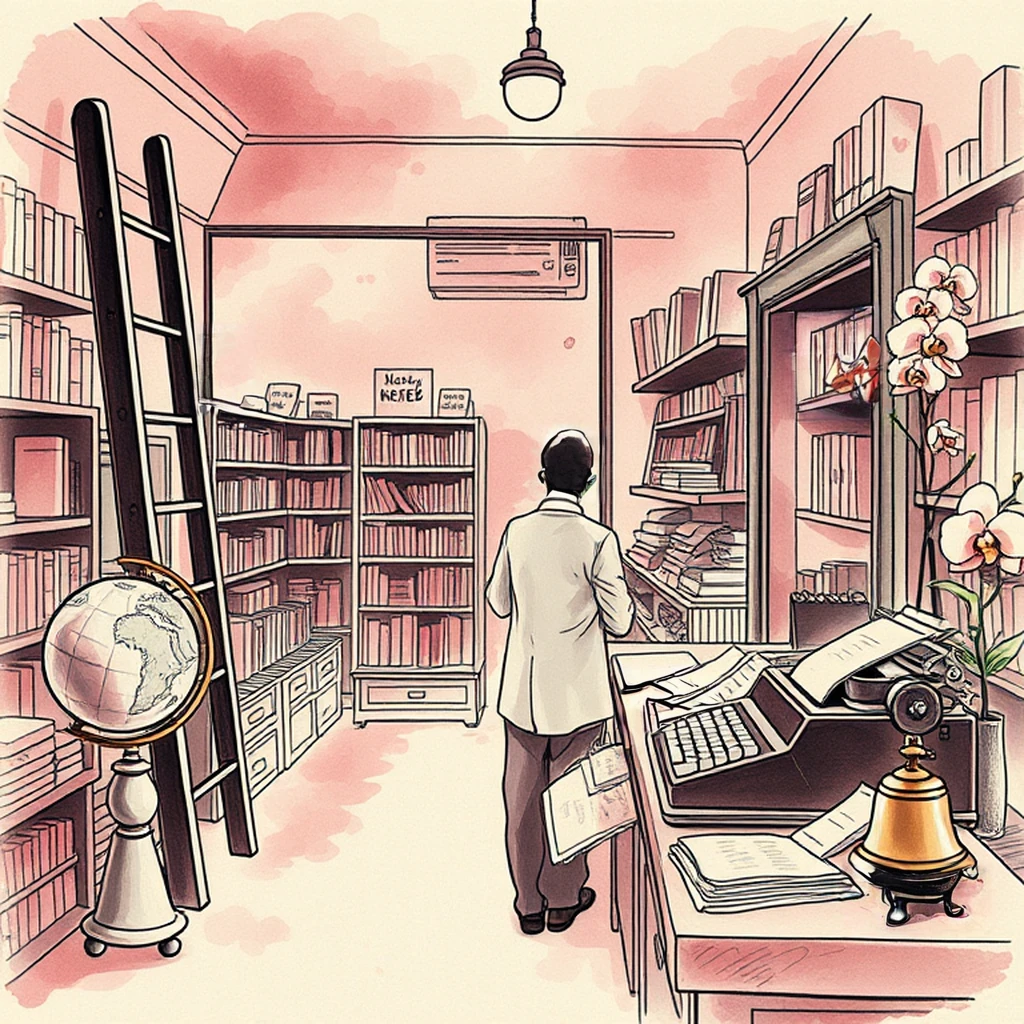
A cozy neighborhood bookstore in the dusky pink and lavender hues of late evening after a rainstorm, capturing the peak activity period when the shop buzzes with patrons browsing books and socializing. The interior is bathed in soft, warm lighting that casts long shadows, reflecting an ivory and oxblood color palette. A lone figure stands at the counter, back turned to the viewer, engrossed in conversation or transaction. The space features a charming rolling ladder against one wall for accessing high shelves. Unique small props include a cracked old globe on a pedestal, a vintage typewriter with open pages, scattered bookmarks and notes on the desk, an ornate brass bell by the door, and a single potted orchid in bloom near the cash register. The scene is rendered in Asian sumi-e ink wash painting style with atmospheric perspective for depth, using dramatic Dutch tilt diagonal framing to emphasize the diagonal layout of bookshelves and furniture.
The cozy neighborhood bookstore glows warmly in the dusky pink and lavender hues of late evening after a rainstorm, its windows framed by soft shadows cast from within. Inside, the air is thick with the scent of old books and damp earth, mingling pleasantly with the faint aroma of coffee brewing behind the counter. The lighting, a blend of natural twilight seeping through fogged glass and artificial lamps casting gentle beams across towering bookshelves, bathes everything in an ivory-and-oxblood palette that highlights the textures of worn leather spines and yellowing pages. A charming rolling ladder leans against one wall, its grooves and rungs catching the light as it ascends toward higher shelves. The atmosphere buzzes softly with the murmur of conversation and the occasional ring of a brass bell near the entrance, signaling another visitor. Amidst this cozy backdrop, a lone figure stands at the counter, their back turned to us, engrossed in what could be either a heated discussion or a quiet transaction, adding an element of intrigue to the scene. Unique props scattered throughout the room tell stories of the shop's history and charm: a cracked old globe sits on a pedestal near the window, its surface marred but still offering glimpses of distant lands. An ornate brass bell hangs by the door, its polished surface reflecting bits of the warm interior lighting. A vintage typewriter with open pages lies atop an antique desk covered in scattered bookmarks and notes, hinting at recent discussions or research sessions. Near the cash register, a single potted orchid blooms gracefully, adding a note of serene beauty amidst the cluttered richness. This scene invites contemplation not only for its nostalgic charm but also for the subtle nuances that make it perfect for a spot-the-difference puzzle, such as the slight angle at which the rolling ladder leans or the exact placement of the open typewriter pages.
Background
The cozy neighborhood bookstore in this scene captures the essence of late 1970s Europe, a time when small, independent bookstores were vibrant centers of community life and intellectual discourse. Nestled in an era where vinyl records competed with cassettes for cultural dominance, these shops were more than just repositories for literature; they were gathering places that fostered a sense of belonging among readers. The ink wash painting style used here is reminiscent of Asian sumi-e techniques, which emphasize the fluidity and expressiveness of brushstrokes to convey mood and atmosphere rather than detailed realism. This artistic choice not only adds an exotic touch but also softens the edges between reality and imagination, inviting viewers into a dreamlike space where time seems to slow down. The rolling ladder against one wall is emblematic of this period's nostalgia for vintage charm and functional design, harking back to earlier eras when such fixtures were standard in libraries and bookstores. The cracked old globe on its pedestal speaks volumes about the era’s fascination with worldliness and exploration, reflecting a time when travel was both an aspiration and a reality for many. Meanwhile, the vintage typewriter with open pages hints at a period before digital communication had fully taken over, underscoring the tactile pleasure of writing by hand. The scene also reflects the design aesthetic of the late 20th century, characterized by warm tones like ivory and oxblood, which were often used to create cozy interiors that felt welcoming and inviting. With its soft lighting and long shadows, the bookstore encapsulates a moment in time when the boundaries between home and community blurred within these spaces, making them not just places to buy books but also to engage in meaningful conversations and form lasting connections.
Tips for this puzzle
When you're hunting for those five differences in a cozy bookstore scene like this one, take your time and look carefully at the details that can easily blend into their surroundings. With an ink wash style and dramatic Dutch tilt composition, shadows and intricate patterns are your biggest allies and adversaries. The rolling ladder against the wall might have subtle changes hiding in its metalwork or on books stacked along shelves. Shadows cast by warm lighting can obscure small differences, so pay special attention to areas where light and dark meet, like around the globe or beneath the potted orchid near the cash register. Don't forget about the desk area – scattered bookmarks and notes provide lots of texture and clutter where things could be altered. Move your eyes slowly across each part of the scene, scanning horizontally then vertically to catch every nook and cranny. And if you're stuck, take a step back for a moment or two; sometimes seeing the whole picture again helps spot something you might have missed initially.
How to play
- Two near-identical images are shown side by side.
- Tap or click on the differences before the countdown timer runs out.
- Wrong clicks subtract 5 seconds from the clock.
- Stuck? Spend a hint token to glow one remaining difference.
About this puzzle
This is one of 633+ hand-curated AI-generated spot-the-difference puzzles in the SpotDiff library. Each puzzle has multiple variants — the differences you see on your first play are different from the next. 3 variant(s) for this scene.
SpotDiff is free to play with no signup required, and the library grows daily — roughly 10-30 new puzzles added every day. Hint tokens are earned through daily login, streaks, and referrals — or buy a bundle if you want unlimited hints. Refunds are available within 7 days, prorated by the tokens you haven't used yet.