1970s american suburban home basement rec room with pinball machine
Explore an abandoned 1970s rec room in the basement of a suburban home, now shrouded in morning fog and dust, with overturned items and nostalgic…
About this scene
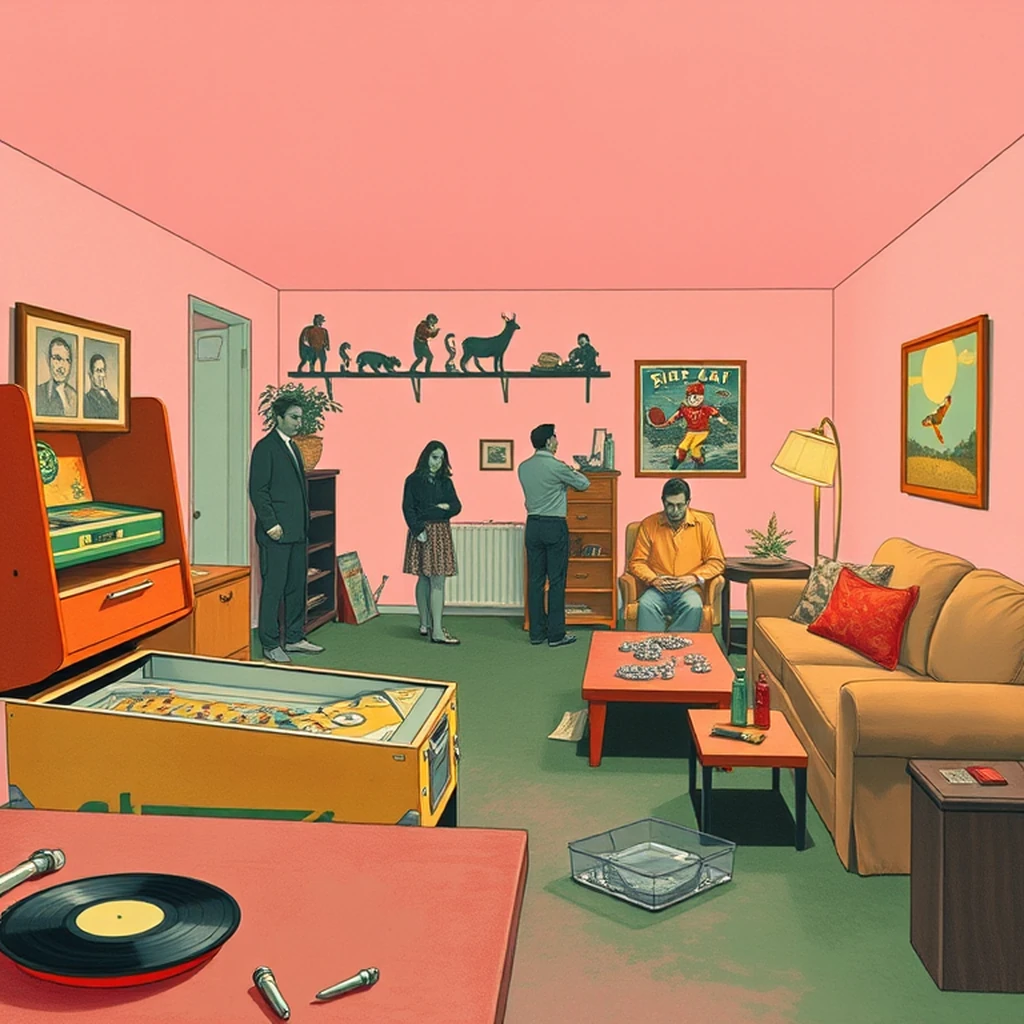
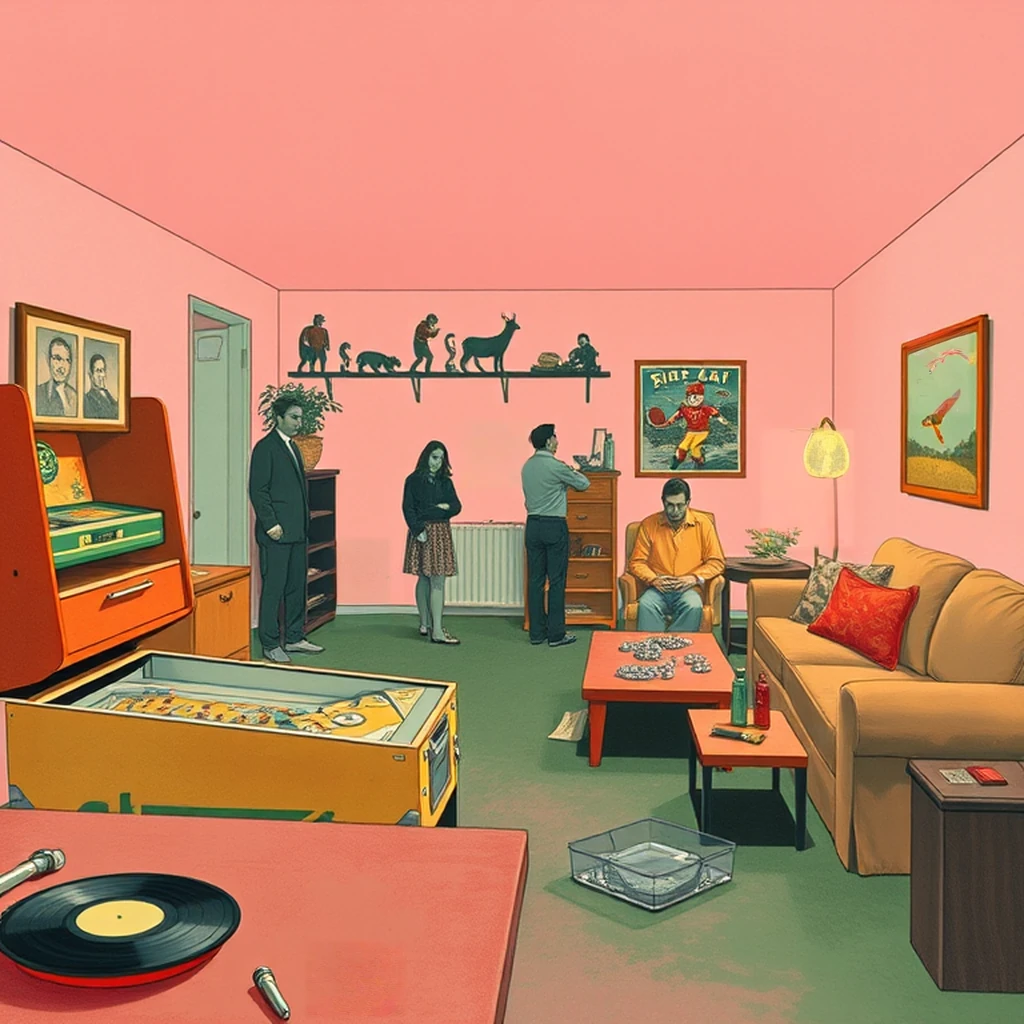
An opaque gouache illustration of a 1970s American suburban home basement rec room at afternoon golden hour in thin morning fog. The scene is framed as a side elevation cross-section cutaway view with flat saturated colors. Dominant hues are dusty pink and forest green, evoking a sense of nostalgia and abandonment. The space features an overturned pinball machine with scattered tokens nearby, suggesting recent chaotic activity. Small props include a cracked vinyl record, a half-open toolbox spilling screws onto the carpet, a partially filled ashtray on a coffee table, and a hanging sports poster above the rec room's seating area. A cluster of silhouetted figures in various poses around the space hint at past lively gatherings, now left to their quiet aftermath. The illustration maintains a soft watercolor-like texture with flat color application, capturing both the warmth and desolation of the setting.
The afternoon light filters through thin morning fog, casting an ethereal glow over the abandoned 1970s suburban home's basement rec room. Dust particles dance in the golden hour sunlight as it slants into the space, illuminating scattered tokens and a toppled pinball machine with their dusty pink and forest green hues. The gouache illustration captures the warmth of faded vinyl records lying cracked on the floor and the soft texture of carpeting strewn with screws from an open toolbox. A partially filled ashtray sits atop a coffee table, its dark contents contrasting against the light pastel tones that surround it. A hanging sports poster above the seating area hints at lively gatherings now long gone, leaving only shadows of figures frozen in various poses around the space, each one telling a silent story of laughter and camaraderie. The flat color application with soft edges brings out both the nostalgia and desolation of this rec room, making it feel like stepping into a memory preserved in time. What makes this scene particularly intriguing for a spot-the-difference puzzle is how its blend of vibrant hues and subtle textures invites players to uncover hidden details amidst the nostalgic charm and eerie quietude.
Background
The image captures the essence of an American suburban home in the 1970s, a decade marked by significant cultural shifts and economic stability for many middle-class families. The setting is a basement rec room, a space that was integral to family life and social gatherings during this period. In the aftermath of World War II, as the United States experienced an unprecedented economic boom, suburban sprawl became rampant across the country, particularly in regions like California and New Jersey. These homes were often equipped with dedicated entertainment areas where families could unwind after a long day at work or school. The overturned pinball machine and scattered tokens are emblematic of the recreational activities favored by teenagers and young adults during this era. Pinball, which had been banned in many cities due to gambling associations but later rehabilitated into an acceptable pastime for all ages, became a staple in arcades and rec rooms alike. The inclusion of these items evokes memories of carefree afternoons spent challenging friends and siblings. The space is also adorned with small props that speak volumes about the era's culture: a cracked vinyl record suggests a love for music, whether it was classic rock, soul, or disco. A half-open toolbox spilling screws onto the carpet hints at do-it-yourself projects popular among homeowners looking to improve their homes on weekends. Meanwhile, an ashtray filled with cigarette butts and a hanging sports poster above the seating area reflect the era's casual attitudes towards smoking and sports fanaticism, especially football or basketball. This illustration, rendered in gouache with soft watercolor-like textures, encapsulates both the warmth of nostalgia and the desolation that comes from abandonment. The dusty pink and forest green hues evoke feelings of isolation and longing, as if time has stood still since the last party when laughter echoed through these rooms.
Tips for this puzzle
When you dive into today's SpotDiff puzzle set in a vintage 1970s American suburban basement rec room, take your time and enjoy the nostalgic atmosphere. With an overturned pinball machine and scattered tokens hinting at past lively gatherings now fallen silent, finding five differences among the cozy clutter can feel like hunting for treasure. Cluttered areas like the toolbox spilling screws or behind the partially filled ashtray often hide subtle discrepancies. Don't overlook shadows cast by the hanging sports poster above the seating area – they make great hiding spots too. To ensure you don’t miss anything, start your search methodically from one corner of the room and work your way around. Keep an eye out for intricate patterns in the carpet or wallpaper that might have slight variations between the two images. Remember, every puzzle is a chance to revisit history through artful details, so savor each moment as you uncover the differences nestled within this charmingly abandoned rec room.
How to play
- Two near-identical images are shown side by side.
- Tap or click on the differences before the countdown timer runs out.
- Wrong clicks subtract 5 seconds from the clock.
- Stuck? Spend a hint token to glow one remaining difference.
About this puzzle
This is one of 633+ hand-curated AI-generated spot-the-difference puzzles in the SpotDiff library. Each puzzle has multiple variants — the differences you see on your first play are different from the next. 3 variant(s) for this scene.
SpotDiff is free to play with no signup required, and the library grows daily — roughly 10-30 new puzzles added every day. Hint tokens are earned through daily login, streaks, and referrals — or buy a bundle if you want unlimited hints. Refunds are available within 7 days, prorated by the tokens you haven't used yet.