1960s scandinavian interior design showroom with minimalist furniture and rugs
Explore early morning melancholy in this rain-soaked Scandinavian showroom with minimalist furniture. Discover subtle differences in a sumi-e ink…
About this scene
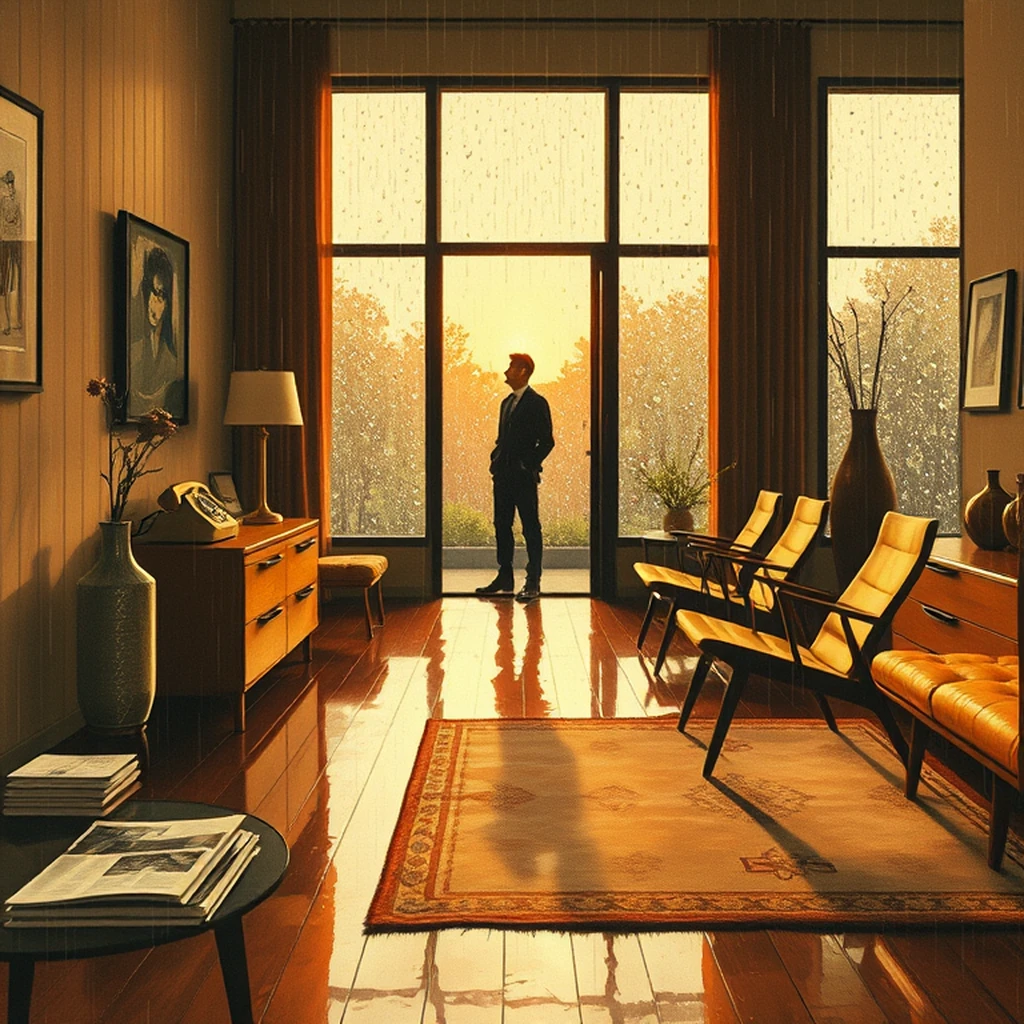
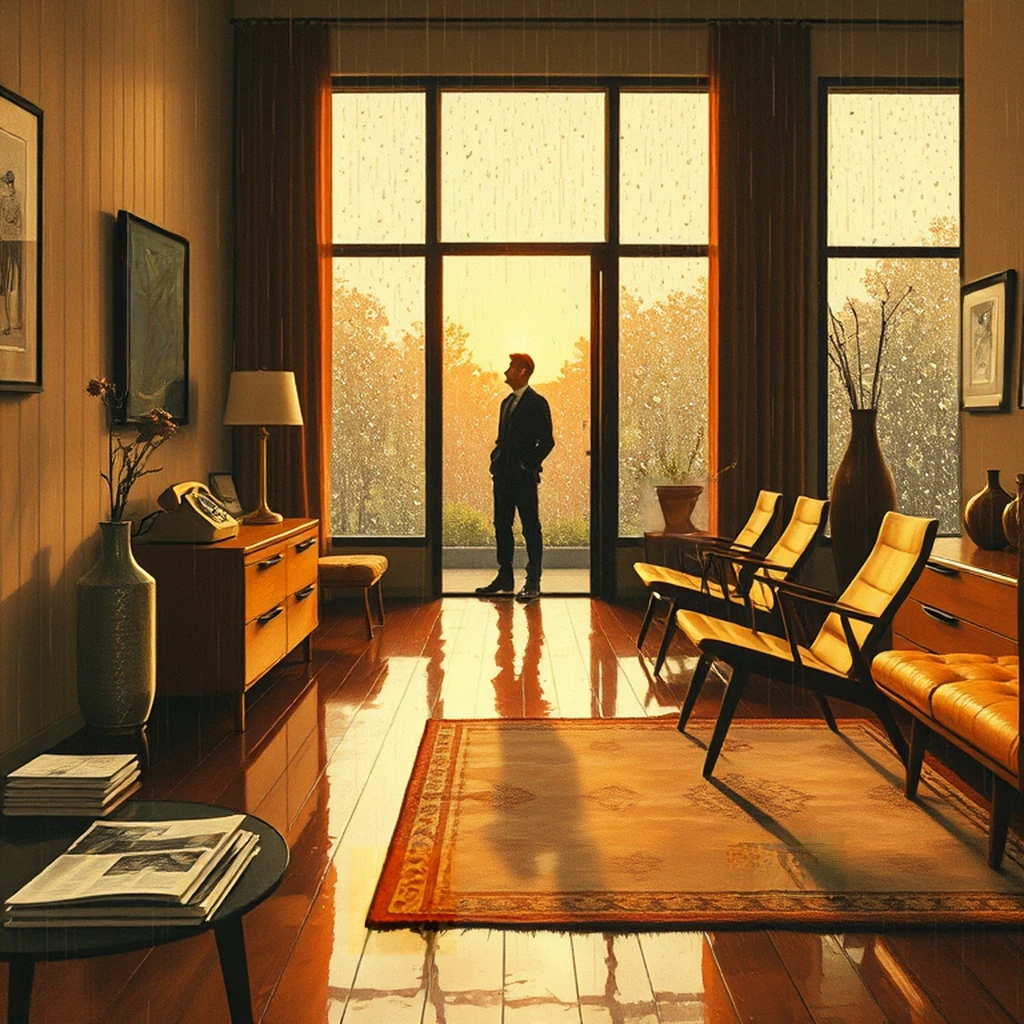
An early morning in a 1960s Scandinavian interior design showroom, painted in the style of Asian sumi-e ink wash painting with atmospheric perspective. Heavy raindrops reflect off the rustic wooden floors and sleek furniture pieces. The room is softly illuminated by the subtle hues of sunrise, casting long shadows through large windows covered in glistening droplets. Dominant colors are rust orange and olive, evoking a sense of nostalgia and melancholy as the day winds down. In the doorway stands a single silhouette, barely visible against the rain-soaked backdrop. Unique props include an old-fashioned rotary phone on a side table, a small stack of magazines with 1960s fashion illustrations, a delicate glass vase filled with wilted flowers, a vintage Danish rug featuring subtle geometric patterns, and a well-worn wooden chair placed near the window for better light exposure. The scene is head-on and flatly symmetrical, capturing every intricate detail in soft tones of rust and olive, evoking a sense of quiet reflection.
The early morning light filters through the large windows of a 1960s Scandinavian interior design showroom, casting elongated shadows across the room and illuminating droplets that cling to the glass like tiny diamonds. The rustic wooden floors glisten under the subtle hues of sunrise, reflecting the raindrops that have recently fallen, each one capturing the essence of the scene with delicate precision. The color palette is dominated by rich tones of rust orange and olive green, evoking a sense of nostalgia and melancholy as if time itself has slowed down within these walls. At the heart of this tranquil space stands sleek furniture arranged in perfect symmetry—tables, chairs, and shelves that speak volumes about minimalist design philosophy. A vintage Danish rug lies spread across one corner, its subtle geometric patterns offering a hint of warmth amidst the cool, muted tones. Near the window sits an old wooden chair, worn yet inviting, where one might imagine curling up with a book or simply observing the quiet transformation outside. In another corner, an antique rotary phone on a side table hints at a bygone era, its black finish contrasting sharply against the pale walls and wood tones. A small stack of fashion magazines from the 1960s rests nearby, their covers adorned with illustrations that seem to whisper stories of elegance and innovation. A delicate glass vase filled with wilted flowers adds an unexpected touch of life to this otherwise serene setting, its beauty in decline a poignant reminder of impermanence. The scene invites contemplation, each element carefully chosen to evoke a sense of quiet reflection and the passage of time. What makes this particular showroom especially intriguing for a spot-the-difference puzzle is how every object and texture contributes to its rich narrative, ensuring that even the most subtle changes will be noticed by keen observers.
Background
The early 1960s marked a pivotal era in Scandinavian design history, characterized by an emphasis on minimalism and functionality that resonated deeply with the post-war desire for simplicity and practicality. This period saw the rise of influential designers such as Arne Jacobsen and Verner Panton who championed clean lines, natural materials, and a harmonious blend of form and function. The Scandinavian interior design showroom depicted in this scene reflects these ideals through its sleek furniture pieces and rustic wooden floors, creating an environment that is both aesthetically pleasing and functional. The ink wash style, or sumi-e, employed to render the image brings a unique cultural touch to the setting. Sumi-e originated in East Asia and emphasizes capturing the essence of subjects with minimal brush strokes, a technique that beautifully complements the minimalist Scandinavian aesthetic by highlighting form over ornamentation. The interplay between these two design philosophies creates an intriguing juxtaposition of Eastern and Western influences. In this specific showroom, elements such as the vintage Danish rug with its subtle geometric patterns and the well-worn wooden chair near the window speak to a deeper appreciation for craftsmanship and enduring quality. Meanwhile, the inclusion of an old rotary phone and fashion magazines from the era provides insights into the daily life and cultural context of that time. The overall scene evokes feelings of nostalgia and contemplation, set against the melancholic backdrop of rain reflecting off polished surfaces, hinting at a quiet yet profound connection between people and their surroundings in this transformative period of design history.
Tips for this puzzle
Finding those five differences in our cozy Scandinavian showroom can be a bit tricky with all its soft tones and reflective surfaces. Remember, the key areas to look at are where shadows play and intricate patterns might hide small changes. The large windows dripping with raindrops could obscure details, so take your time looking around each one carefully. Shadows cast by furniture like that worn-out wooden chair near the window can easily mask tiny tweaks too. Also, pay close attention to any decorative items scattered about; those vintage Danish rugs and delicate glass vases are perfect spots for sneaky differences. To really nail this puzzle, you might want to scan systematically from left to right or top to bottom, making sure not to miss a single spot. And don’t forget to check the silhouette standing in the doorway—it’s easy to overlook but could hide some subtle changes. Happy hunting!
How to play
- Two near-identical images are shown side by side.
- Tap or click on the differences before the countdown timer runs out.
- Wrong clicks subtract 5 seconds from the clock.
- Stuck? Spend a hint token to glow one remaining difference.
About this puzzle
This is one of 633+ hand-curated AI-generated spot-the-difference puzzles in the SpotDiff library. Each puzzle has multiple variants — the differences you see on your first play are different from the next. 3 variant(s) for this scene.
SpotDiff is free to play with no signup required, and the library grows daily — roughly 10-30 new puzzles added every day. Hint tokens are earned through daily login, streaks, and referrals — or buy a bundle if you want unlimited hints. Refunds are available within 7 days, prorated by the tokens you haven't used yet.