1960s italian pasta factory floor with rolling pins and tomato sauce
Explore a quiet late evening scene inside an Italian pasta factory from the 1960s, with warm lamps casting shadows in an opaque gouache…
About this scene
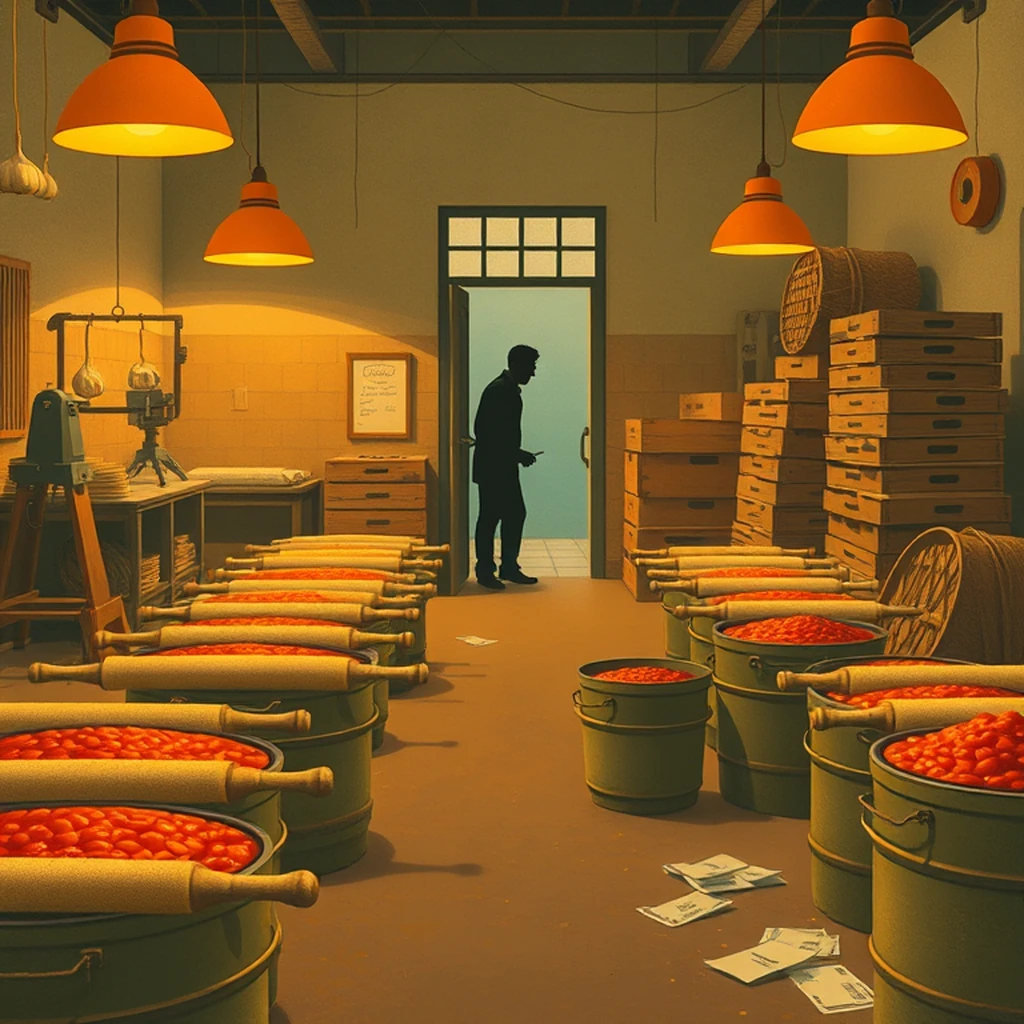
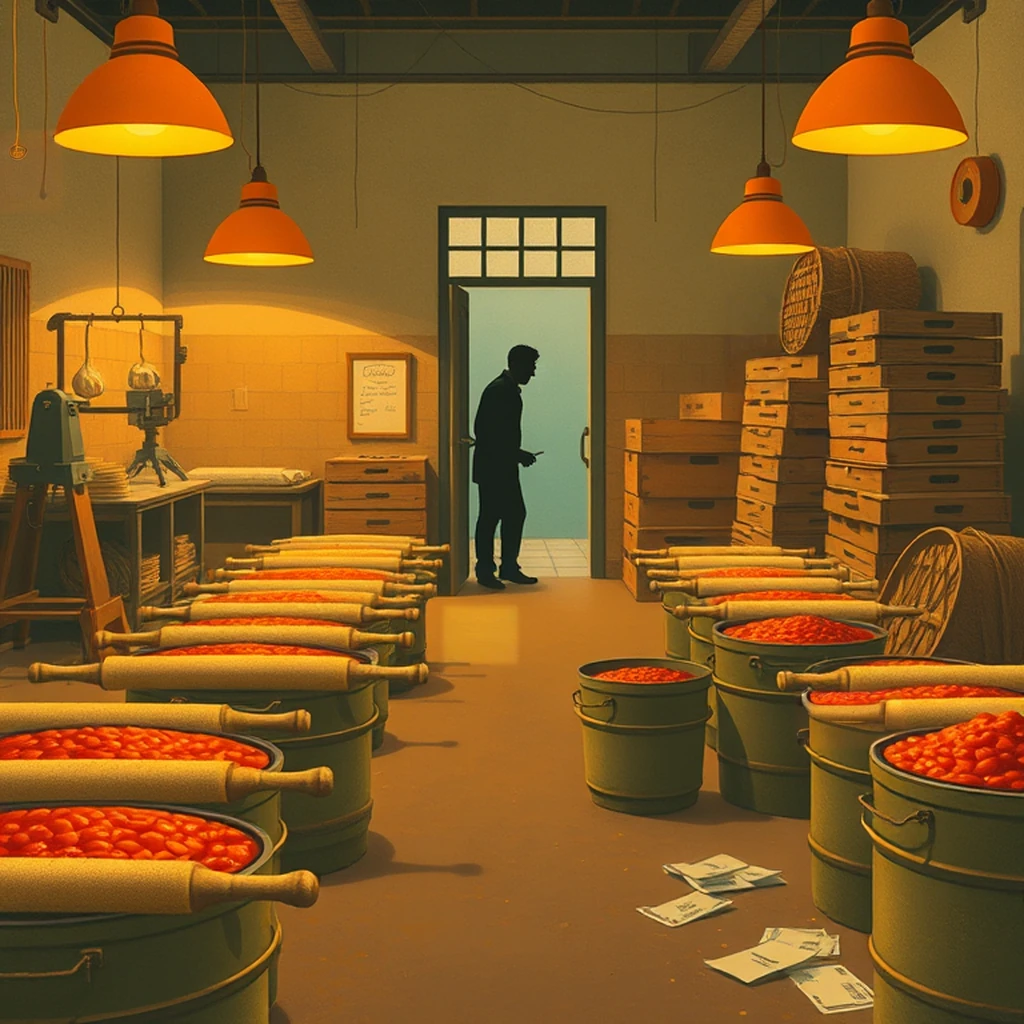
A late evening scene inside an Italian pasta factory from the 1960s, captured in an opaque gouache illustration style featuring flat saturated colors. The composition is a head-on, symmetrical view of the bustling floor, where rolling pins and containers filled with tomato sauce are prominently displayed amidst a warm dust haze. Warm orange lamps cast soft shadows across the rust-orange and olive-colored palette. A single silhouette can be seen through an open doorway in the background, preparing for the quiet pre-opening moments ahead. In this scene, there are specific small props such as hanging strings of garlic bulbs, a roll of twine near the door, old wooden crates stacked with pasta boxes, a dusty window frame letting in dim light, and a pile of discarded paper labels scattered on the floor.
The late evening light filters through the dusty window frame of an Italian pasta factory from the 1960s, casting long shadows across the warm rust-orange and olive-colored floor. The air is thick with a fine layer of flour dust that catches in your throat as you walk closer to the work area. Warm orange lamps flicker softly above, illuminating rolling pins laid out symmetrically on either side of the room like sentinels guarding an artisan's trade. Containers filled with tomato sauce glisten under the dim light, their red hues contrasting vividly against the earthy tones that dominate this space. Hanging strings of garlic bulbs sway gently from the ceiling beams, casting shadows as intricate as lace upon the worn wooden crates stacked with pasta boxes. Near the open doorway in the background, a single silhouette moves quietly, preparing for the coming day while the rest of the factory slumbers on. A roll of twine sits coiled near this door, its loops tangled and waiting to be used once again by hands that know no stranger to hard work. Dust motes dance in the dim light as they catch the last rays of sunlight before it fades completely into night. The floor is littered with small details like discarded paper labels scattered about, each one bearing faded ink from days gone by. The air carries a scent of fresh pasta and aged wood, blending together to create an atmosphere both nostalgic and industrious. This scene, with its warm hues and intricate textures, invites you to explore the subtle differences that hide in plain sight — perhaps a stray label peeking out from beneath a crate or a single garlic bulb hanging askew. Such small details make this spot-the-difference puzzle intriguingly challenging and visually captivating.
Background
The late evening scene inside an Italian pasta factory from the 1960s is a nostalgic glimpse into a time when food production was deeply rooted in local traditions and manual labor. Italy's culinary heritage has long been celebrated for its regional specialties, with pasta being one of the most iconic contributions to global cuisine. During this era, factories like the one depicted played a crucial role in industrializing traditional processes while maintaining the artisanal quality that Italians cherish. The warm hues and flat design characteristic of gouache illustrations evoke the romanticized atmosphere of 1960s Italy, a period marked by economic growth following post-war recovery but still clinging to its rich cultural roots. The symmetrical composition highlights the symmetry often found in Italian factory designs of this era, emphasizing order and efficiency alongside craftsmanship. The presence of rolling pins and containers filled with tomato sauce underscores the handmade nature of pasta production at the time, a stark contrast to modern automated processes. Garlic bulbs hanging from rafters suggest the use of natural ingredients and traditional methods still prevalent then. Old wooden crates stacked with pasta boxes hint at the importance of manual labor in packaging and distribution. This scene encapsulates not just the industrial transformation but also the cultural significance of food production in Italy, where every bite tells a story of family heritage, regional pride, and communal tradition. The dim light filtering through dusty windows speaks to the hard work and long hours behind each batch of pasta, reflecting a time when meals were prepared with care and respect for culinary history.
Tips for this puzzle
When you're tackling this Italian pasta factory scene from the '60s, it's like hunting for needles in a haystack filled with delicious distractions! First off, focus on those warm orange lamps casting soft shadows; differences often hide there where light plays tricks. Also, pay attention to the hanging strings of garlic bulbs and dusty window frames letting in dim light—they're perfect spots for tiny tweaks. Don’t forget about intricate patterns like the wooden crates stacked high with pasta boxes or the pile of discarded paper labels on the floor—these areas can be a real challenge to scan thoroughly. To make sure you don't miss anything, try scanning the scene methodically from left to right and top to bottom, checking each nook and cranny for any changes. With a bit of patience and eagle eyes, spotting those five differences will feel like unraveling an old pasta mystery!
How to play
- Two near-identical images are shown side by side.
- Tap or click on the differences before the countdown timer runs out.
- Wrong clicks subtract 5 seconds from the clock.
- Stuck? Spend a hint token to glow one remaining difference.
About this puzzle
This is one of 633+ hand-curated AI-generated spot-the-difference puzzles in the SpotDiff library. Each puzzle has multiple variants — the differences you see on your first play are different from the next. 3 variant(s) for this scene.
SpotDiff is free to play with no signup required, and the library grows daily — roughly 10-30 new puzzles added every day. Hint tokens are earned through daily login, streaks, and referrals — or buy a bundle if you want unlimited hints. Refunds are available within 7 days, prorated by the tokens you haven't used yet.