1960s chinese new year celebration parade float with lion dancers
Explore a mysterious 1960s Chinese New Year parade float scene in ukiyo-e style with neon glow and smoky atmosphere. Spot the differences in this…
About this scene
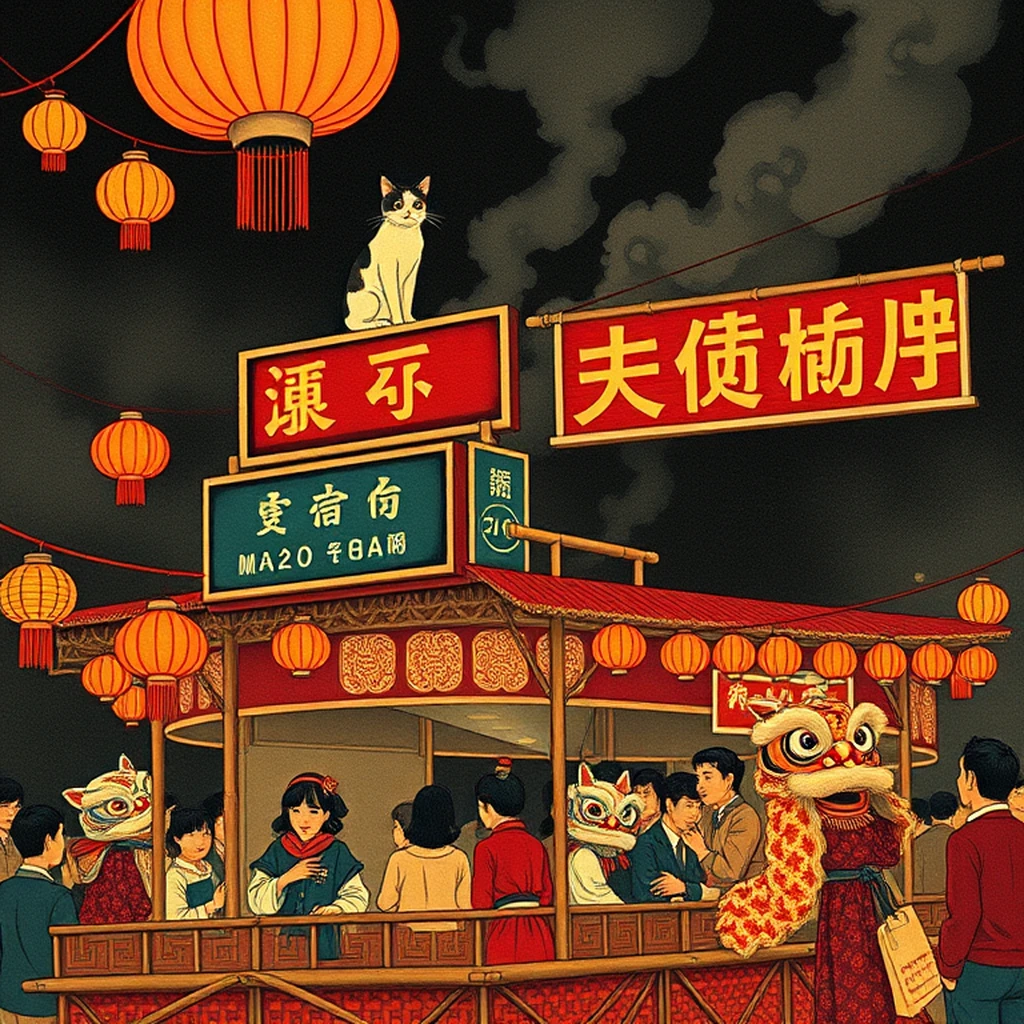
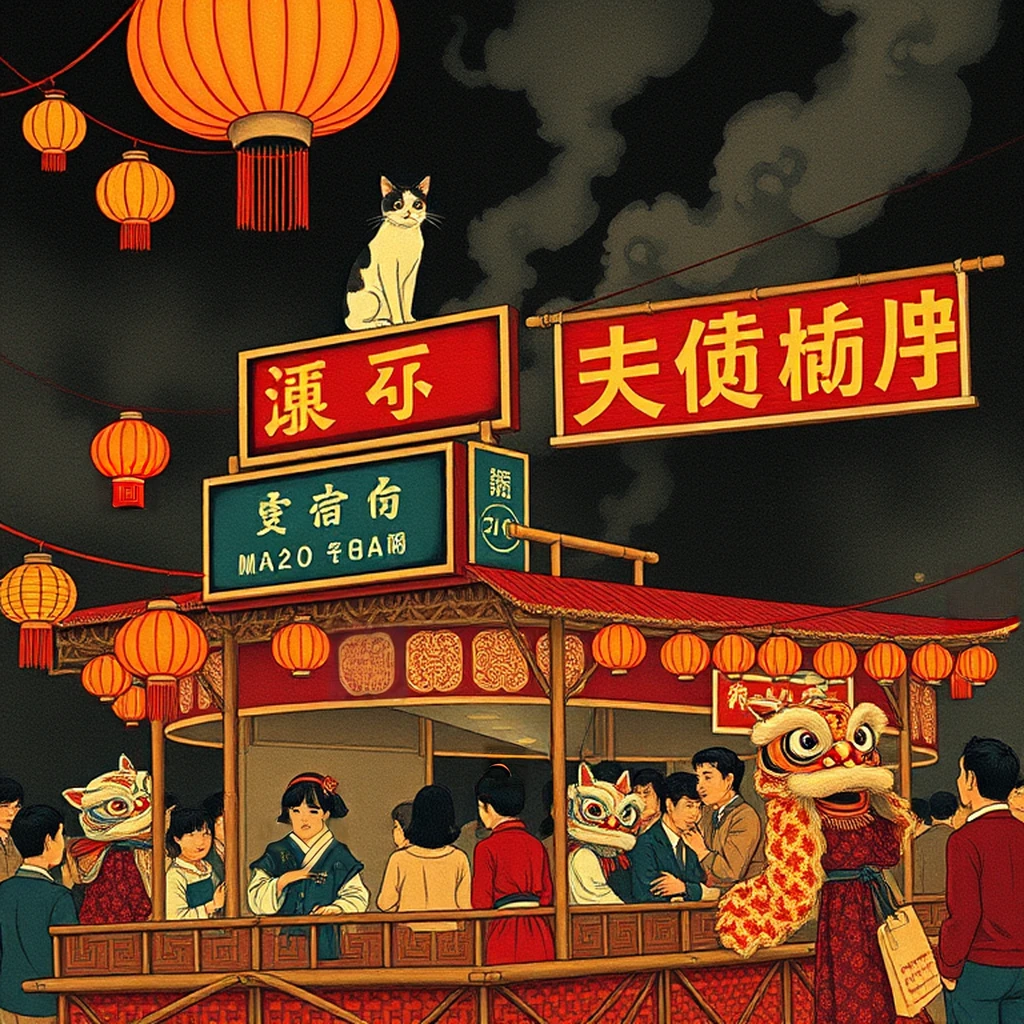
A ukiyo-e woodblock print of a bustling 1960s Chinese New Year celebration parade float under the deep night sky, illuminated by neon lights and glowing lanterns. The atmosphere is smoky with a mysterious edge as figures in vibrant lion dance costumes interact. A tiny cat perches atop one of the floats, peering down at the secret gathering below. Decorative paper cutouts hang from the bamboo scaffolding, while small red and gold lanterns sway gently in the breeze. Neon signs and colorful banners spell out festive greetings in Chinese characters. The scene is bathed in burgundy and cream tones, with a soft woodblock texture adding to the traditional feel of this hidden meeting moment.
The deep night sky blankets the 1960s Chinese New Year celebration parade float in a mysterious aura, its darkness pierced by neon lights and glowing lanterns that cast vibrant hues of red and gold across the bustling scene. A soft woodblock texture envelops everything, lending an ethereal quality to the swirling smoke from lantern fires that drift lazily through the air. Figures clad in traditional lion dance costumes move with a sense of purpose, their bright colors contrasting sharply against the dark backdrop. Perched atop one of the floats is a tiny cat, its fur gleaming softly under the warm glow of the lanterns, as it curiously observes the secretive gathering below. Decorative paper cutouts hang from bamboo scaffolding, dancing gently in the breeze and casting flickering shadows on the ground. Small red and gold lanterns sway rhythmically, adding to the festive atmosphere. Neon signs and colorful banners spell out New Year's greetings in elegant Chinese characters, their vibrant colors pulsating with energy against the creamy tones of the woodblock print. The scene exudes a sense of tradition and celebration intertwined with an undercurrent of mystery, inviting viewers to explore its hidden depths. What makes this scene particularly intriguing is the subtle inclusion of details that might easily go unnoticed but are crucial for discerning players seeking out differences in a spot-the-difference puzzle.
Background
The 1960s Chinese New Year celebration depicted in this scene offers a glimpse into the vibrant cultural traditions and bustling festivities of East Asia during a time of significant social change. In China, these celebrations were not just about honoring the lunar new year but also served as community gatherings where people came together to celebrate their heritage and culture amidst rapid modernization. The ukiyo-e style used in this artwork is particularly evocative of Japanese aesthetics, though it reflects the broader cultural exchange that characterized this era across East Asia. Ukiyo-e was a popular art form during Japan's Edo period (1603-1868) and continued to influence visual arts long after its peak. In the context of 1960s China, elements of ukiyo-e were integrated into contemporary celebrations as part of a broader revival and appreciation for traditional aesthetics. The scene captures the essence of a Chinese New Year parade float with lion dancers, which is an essential aspect of the festivities symbolizing warding off evil spirits and bringing good luck and fortune to all who witness or participate in the dance. The inclusion of neon lights, glowing lanterns, and paper cutouts showcases how traditional customs were adapted to incorporate modern elements, reflecting the dynamic interplay between old and new during this period. Moreover, the depiction of a secret meeting hints at the social dynamics of the time when gatherings might have taken on additional significance due to political climates or personal connections forged in such celebratory settings.
Tips for this puzzle
When you're hunting for differences in this ukiyo-e style illustration of a 1960s Chinese New Year parade float, keep your eyes peeled for the usual hiding spots. With its intricate woodblock texture and detailed patterns, things like decorative lantern strings or paper cutouts might differ slightly between images. Don't forget to check the shadows cast by the glowing neon lights and lanterns; they can obscure small changes easily. The vibrant costumes of the lion dancers also offer a lot of detail where differences could be tucked away. To avoid missing anything, try scanning methodically from left to right or top to bottom, focusing on one element at a time before moving on. And who knows, you might spot something unexpected like the little cat perched up high that isn't always easy to see!
How to play
- Two near-identical images are shown side by side.
- Tap or click on the differences before the countdown timer runs out.
- Wrong clicks subtract 5 seconds from the clock.
- Stuck? Spend a hint token to glow one remaining difference.
About this puzzle
This is one of 696+ hand-curated AI-generated spot-the-difference puzzles in the SpotDiff library. Each puzzle has multiple variants — the differences you see on your first play are different from the next. 3 variant(s) for this scene.
SpotDiff is free to play with no signup required, and the library grows daily — roughly 10-30 new puzzles added every day. Hint tokens are earned through daily login, streaks, and referrals — or buy a bundle if you want unlimited hints. Refunds are available within 7 days, prorated by the tokens you haven't used yet.