1960s Cape Canaveral mission planning room with paper schematics and slide rules
Spot the differences in a detailed 1960s Cape Canaveral mission planning room filled with NASA memorabilia and tech.
About this scene
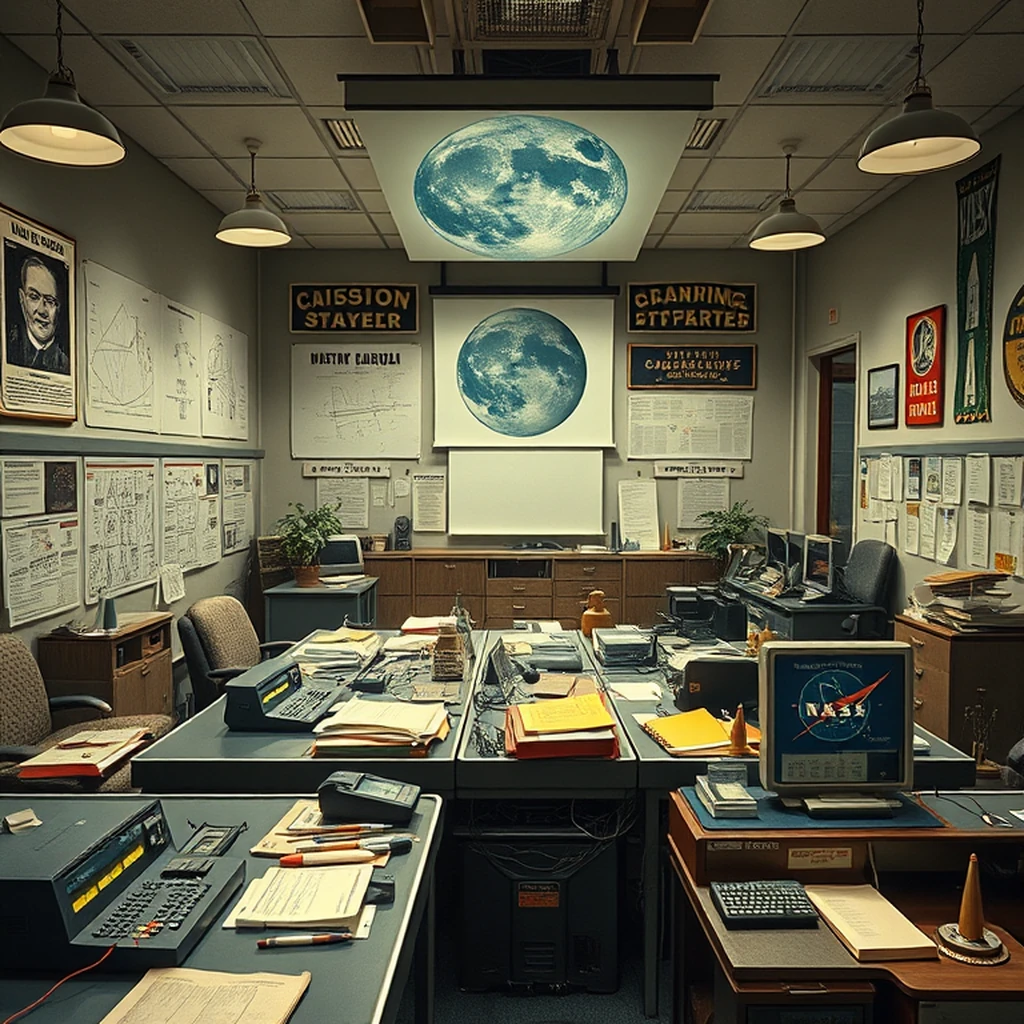
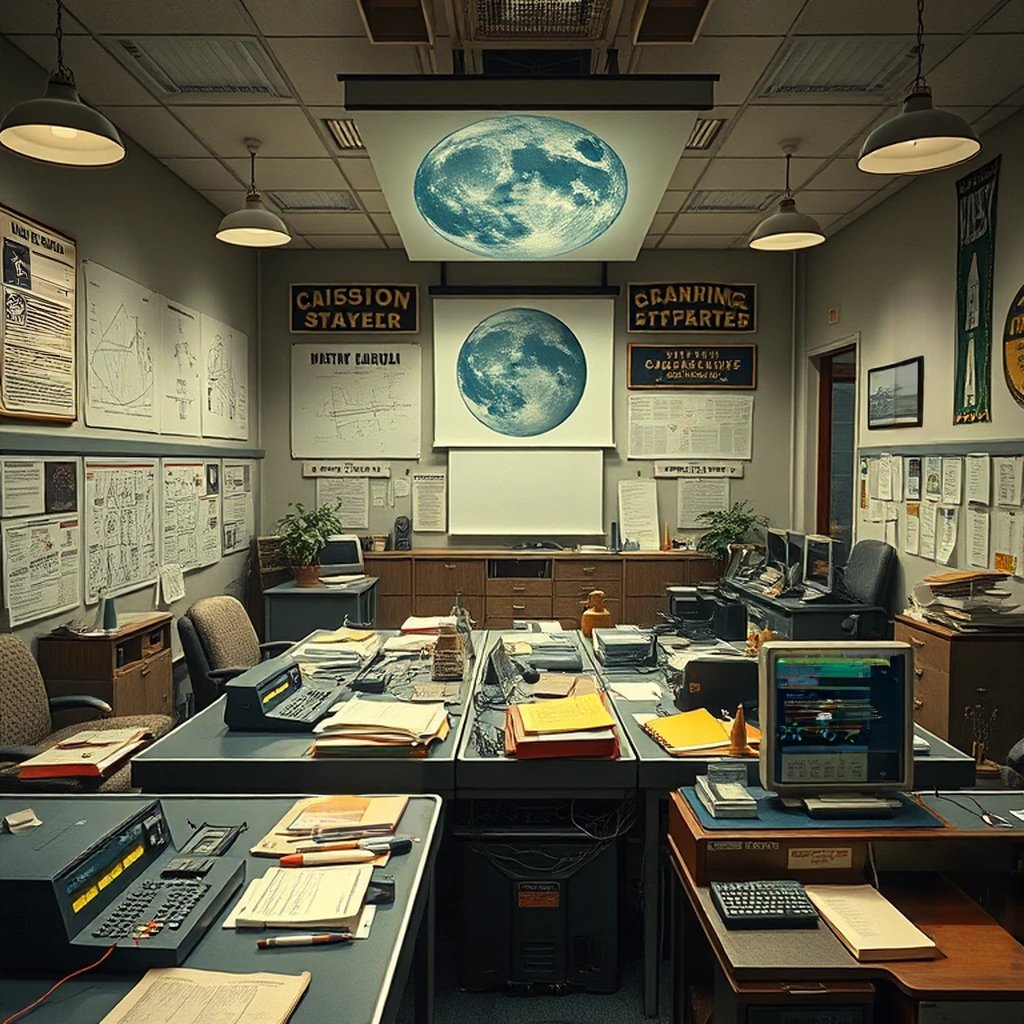
A busy mid-1960s Cape Canaveral mission planning room brimming with period-appropriate technology and decor. The walls are lined with large paper schematics of spacecraft diagrams and celestial navigation charts. Rows of slide rules and mechanical calculators sit atop metal desks cluttered with technical manuals, pencils, and coffee cups. A vintage overhead projector displays a map of the moon's surface. The space-themed room features NASA banners and astronaut portraits. Small props include hanging lamps, framed certificates, plants, and small desktop models of rockets. photorealistic, coherent composition, evenly lit
The room buzzes with the quiet energy of dedicated minds bent on conquering space. Warm fluorescent lights bathe the retro NASA mission planning area in an inviting glow, casting gentle shadows over the paper schematics and mechanical tools scattered about. The walls are a soothing blue-gray hue, adorned with large-scale diagrams of rocket ships and intricate celestial maps that seem to whisper secrets of distant worlds. Rows of desks, each cluttered with slide rules, mechanical calculators, and stacks of technical manuals, reflect the intense focus required for such groundbreaking work. Pencils lay alongside coffee cups, evidence of long hours spent in contemplation and calculation. A vintage overhead projector casts a detailed map of the moon's surface onto one wall, its craters and seas a mesmerizing study in lunar geography. NASA banners flutter gently in the breeze from an old-fashioned hanging lamp, while portraits of early astronauts line the walls like silent guardians of human exploration. Small desktop models of rockets sit proudly amidst plants and framed certificates, each object telling a story of ambition and ingenuity. The scene's rich textures—from the worn metal desks to the glossy surfaces of slide rules—bring this pivotal moment in space history vividly to life. This meticulously detailed room offers an unparalleled backdrop for any spot-the-difference puzzle, inviting players to dive into its layers of historical significance and technological charm.
Background
The mid-1960s Cape Canaveral mission planning room depicted here is a vivid snapshot of America’s Space Age era and the fervor surrounding NASA's quest to reach the moon. This period was marked by intense competition with the Soviet Union in what became known as the Space Race, culminating in Neil Armstrong's historic lunar landing in 1969. Cape Canaveral, now known as Cape Kennedy or simply Kennedy Space Center, served as a hub for NASA’s ambitious projects during this pivotal time. The room is filled with tangible reminders of technological progress and scientific rigor: large paper schematics that meticulously detail spacecraft design and navigation charts illustrating the intricate calculations needed to traverse space. Slide rules and mechanical calculators stand as symbols of pre-digital era engineering, while technical manuals and coffee cups hint at long hours spent by dedicated teams pushing the boundaries of human knowledge. The vintage overhead projector displaying a map of the moon's surface is both an educational tool and a visual representation of the ambitious goals set for space exploration. NASA banners and astronaut portraits add to the room’s sense of purpose and national pride, reflecting the era’s cultural fascination with space travel as a symbol of technological advancement and American ingenuity.
Tips for this puzzle
When you're on the hunt for those five differences in today's vintage Cape Canaveral mission planning room scene, take your time and really soak up all the details. Look closely at the cluttered metal desks where slide rules and mechanical calculators are scattered among technical manuals and coffee cups; these busy areas often hide subtle changes. Don’t overlook any shadows or overlapping objects like hanging lamps and framed certificates on the walls—they can obscure tiny tweaks. The intricate patterns of spacecraft diagrams and celestial navigation charts might also hold some differences, so give those a good once-over too. To make sure you don't miss anything, try scanning the scene in sections from top to bottom and left to right. This systematic approach helps catch every little detail that could be one of today’s five differences. Happy spotting!
How to play
- Two near-identical images are shown side by side.
- Tap or click on the differences before the countdown timer runs out.
- Wrong clicks subtract 5 seconds from the clock.
- Stuck? Spend a hint token to glow one remaining difference.
About this puzzle
This is one of 633+ hand-curated AI-generated spot-the-difference puzzles in the SpotDiff library. Each puzzle has multiple variants — the differences you see on your first play are different from the next. 3 variant(s) for this scene.
SpotDiff is free to play with no signup required, and the library grows daily — roughly 10-30 new puzzles added every day. Hint tokens are earned through daily login, streaks, and referrals — or buy a bundle if you want unlimited hints. Refunds are available within 7 days, prorated by the tokens you haven't used yet.