1950s italian pizzeria kitchen with wood-fired oven
Explore the remnants of a forgotten pizzeria kitchen with this vivid ukiyo-e woodblock print style spot-the-difference puzzle, set in mid-morning…
About this scene
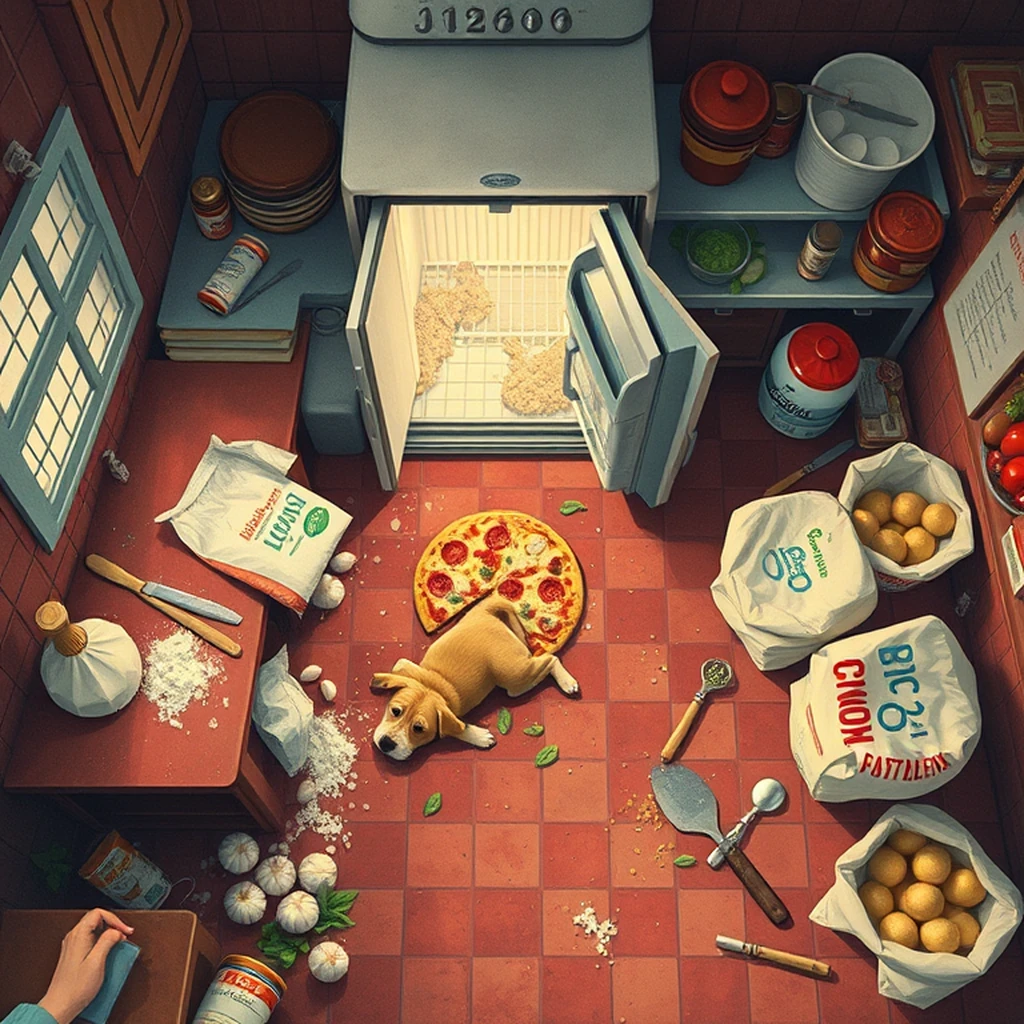
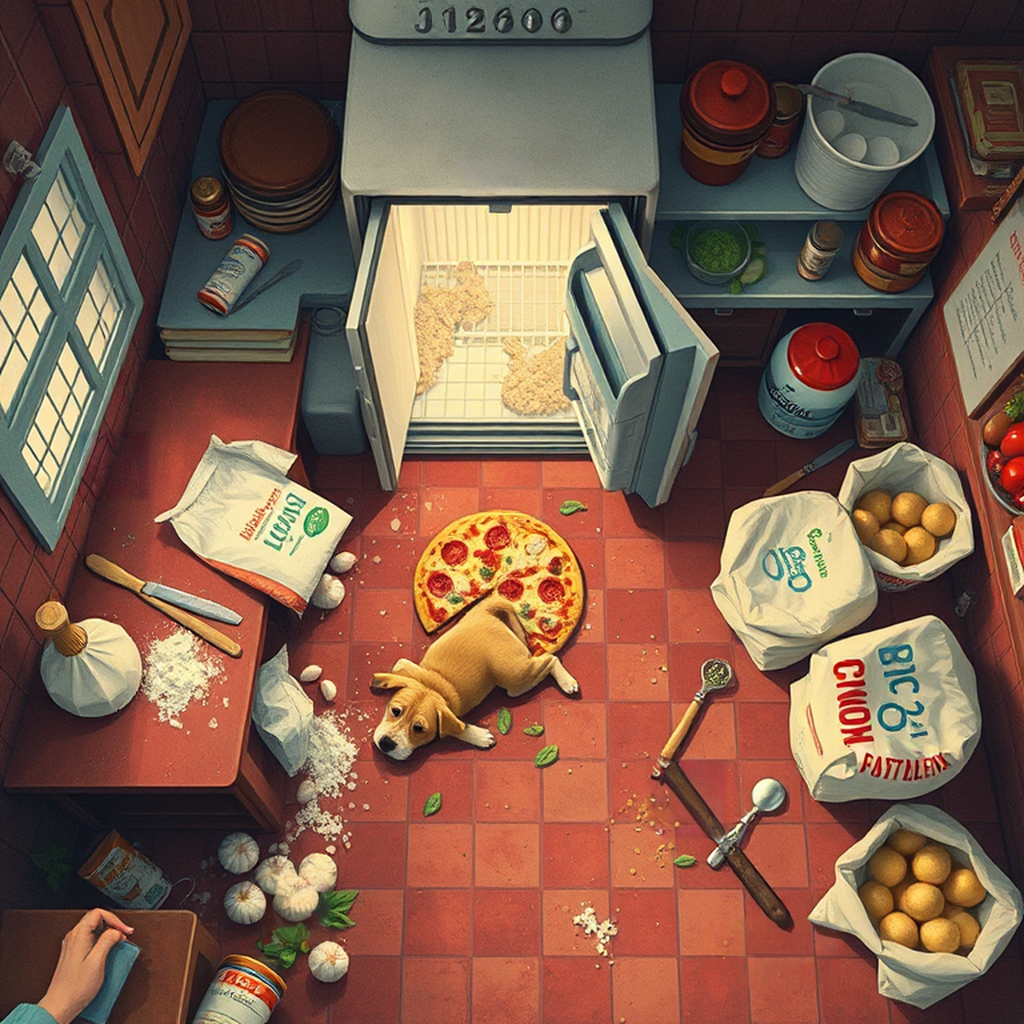
An abandoned 1950s Italian pizzeria kitchen at mid-morning in a crisp cold environment where the breath is visible due to the low temperature. The flat colors of burgundy and cream with decorative outlines evoke a sense of nostalgia through the ukiyo-e woodblock print style, capturing every detail from overturned ingredients on the counter to the remnants of freshly made pizza dough scattered around. A small dog lies curled up beside an open refrigerator door as if it was left in haste by the staff. The composition is top-down with an overhead view highlighting the chaotic aftermath: a spilled bag of flour next to a partially dismantled pizza, loose garlic and basil leaves spread across the floor, wooden rolling pins and dough cutters strewn about, and an empty canola oil bottle near a half-open sack of potatoes.
The kitchen of this abandoned 1950s Italian pizzeria is bathed in the soft glow of mid-morning light, casting long shadows across the room’s flat colors of burgundy and cream. The ukiyo-e woodblock print style imbues every element with a sense of nostalgia and timelessness, as if paused in a moment captured forever on paper. Visible breath swirls around like delicate smoke, hinting at the crisp chill outside that seeps into this forgotten corner of culinary history. An overturned bag of flour lies open near a partially dismantled pizza, its doughy remnants spilling onto the floor amid scattered ingredients and half-used utensils. A small dog curls up beside an open refrigerator door, seemingly left behind in the rush to abandon ship, its presence adding a poignant touch to the scene’s desolation. Wooden rolling pins and dough cutters are carelessly strewn about, each item telling a story of hurried departure or unexpected closure. Loose garlic and basil leaves scatter across the floor like fallen stars from an autumn sky, their green hues striking against the earthy tones of the room. An empty canola oil bottle rests near a half-open sack of potatoes, its contents spilling out as if in defiance of the order that was once so meticulously maintained here. This scene's unique charm lies not just in its nostalgic 1950s Italian ambiance or its Ukiyo-e inspired aesthetic, but also in the intricate details that make it perfect for a spot-the-difference puzzle: each spilled ingredient, discarded utensil, and abandoned detail offers myriad opportunities to discern subtle changes between two seemingly identical moments captured in time.
Background
Set in the heart of an Italian pizzeria kitchen during the mid-1950s, this scene captures a moment frozen in time, evoking a sense of nostalgia and cultural richness through its ukiyo-e inspired flat lay composition. Ukiyo-e, meaning "pictures of the floating world," is a Japanese art form that flourished from the 17th to the 19th century and is known for its woodblock prints depicting scenes of everyday life with an emphasis on aesthetic beauty and emotional depth. This style lends a unique charm to the otherwise mundane setting of a pizzeria kitchen, transforming it into a canvas rich in visual storytelling and cultural detail. The era depicted, the mid-1950s, was a period marked by economic recovery and rapid urbanization following World War II in Italy. With people returning to normalcy after years of hardship, there was an increased appetite for traditional foods like pizza, which had roots that traced back centuries but gained popularity as a quick and comforting meal during the war. This kitchen embodies the bustling spirit of post-war Italian life where family-run establishments served as community hubs, each with their own unique flavors and cooking techniques. The use of flat colors such as burgundy and cream, reminiscent of traditional ukiyo-e prints, adds to the scene's authenticity while also highlighting the rustic charm of the setting. The decorative outlines used in this style further emphasize the handmade nature of items like dough cutters and rolling pins, which are scattered haphazardly across the kitchen floor. These objects, though simple, carry significant cultural weight; they represent not just the act of preparing food but also the enduring traditions that bind communities together. The inclusion of a small dog curled up beside an open refrigerator door adds a poignant touch to this scene, suggesting a sudden departure by the staff perhaps due to unforeseen circumstances or simply taking a break. This detail invites viewers to imagine the stories behind such moments and the lives intertwined with these kitchens, making every element in the image—from overturned ingredients on the counter to scattered pizza dough remnants—a window into a past era where food was more than just sustenance; it was a cultural cornerstone that brought people together.
Tips for this puzzle
When you're hunting for those five differences in a cozy yet chaotic 1950s Italian pizzeria kitchen, it pays to be thorough and methodical. Given the top-down flat lay view, keep an eye on every corner of this ukiyo-e style scene—look out for details like intricate woodblock patterns on walls or floors, shadows cast by overturned ingredients, and cluttered shelves where small differences often hide. Notice how a spilled bag of flour might differ from one image to another in terms of spill size or location, or how the remnants of pizza dough could vary slightly between shots. Don’t forget about that cute little dog beside the refrigerator—sometimes the smallest details are tucked away there too. Move your gaze slowly and deliberately across each area, taking your time so you don’t miss a thing. Happy spotting!
How to play
- Two near-identical images are shown side by side.
- Tap or click on the differences before the countdown timer runs out.
- Wrong clicks subtract 5 seconds from the clock.
- Stuck? Spend a hint token to glow one remaining difference.
About this puzzle
This is one of 633+ hand-curated AI-generated spot-the-difference puzzles in the SpotDiff library. Each puzzle has multiple variants — the differences you see on your first play are different from the next. 3 variant(s) for this scene.
SpotDiff is free to play with no signup required, and the library grows daily — roughly 10-30 new puzzles added every day. Hint tokens are earned through daily login, streaks, and referrals — or buy a bundle if you want unlimited hints. Refunds are available within 7 days, prorated by the tokens you haven't used yet.