1950s chinese teahouse courtyard garden under stars
Experience a vibrant midday rush in a rain-soaked 1950s Chinese teahouse courtyard garden under harsh noon sunlight. Spot the differences in this…
About this scene
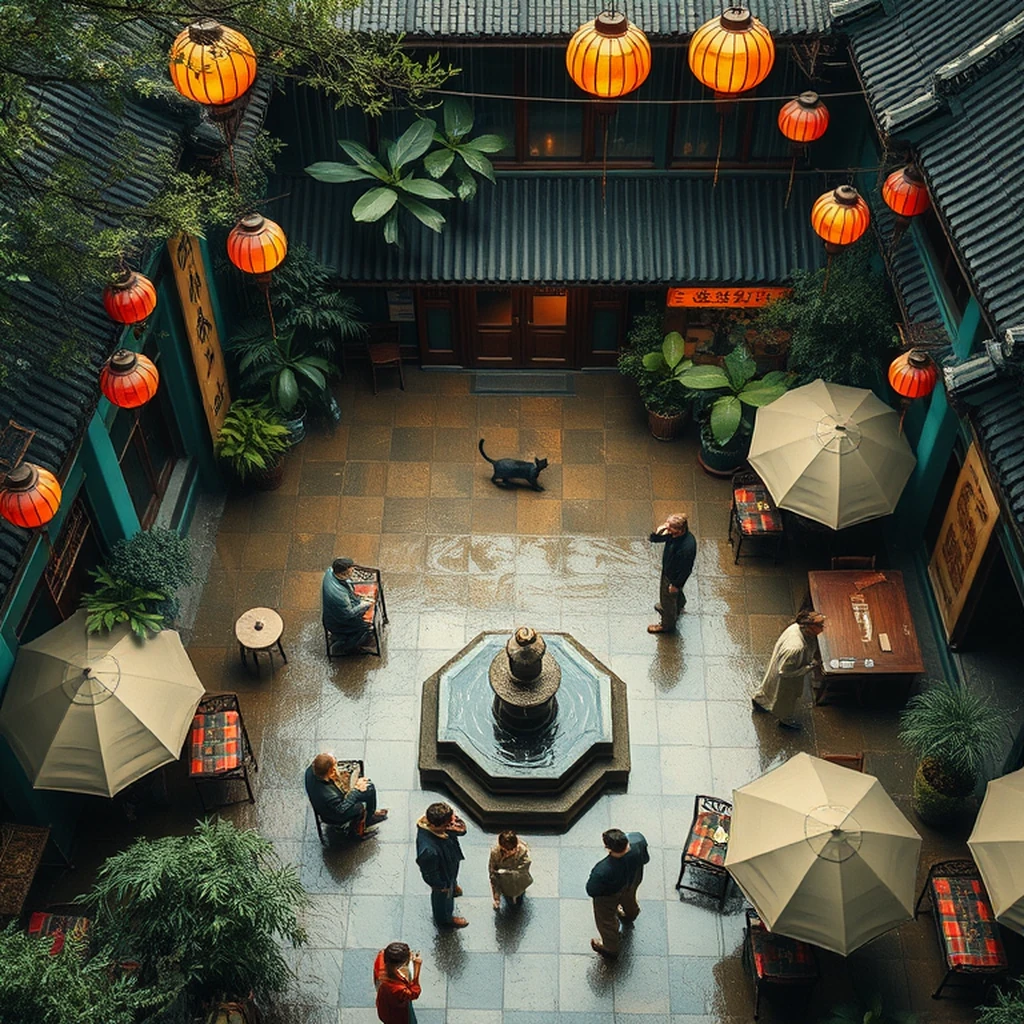
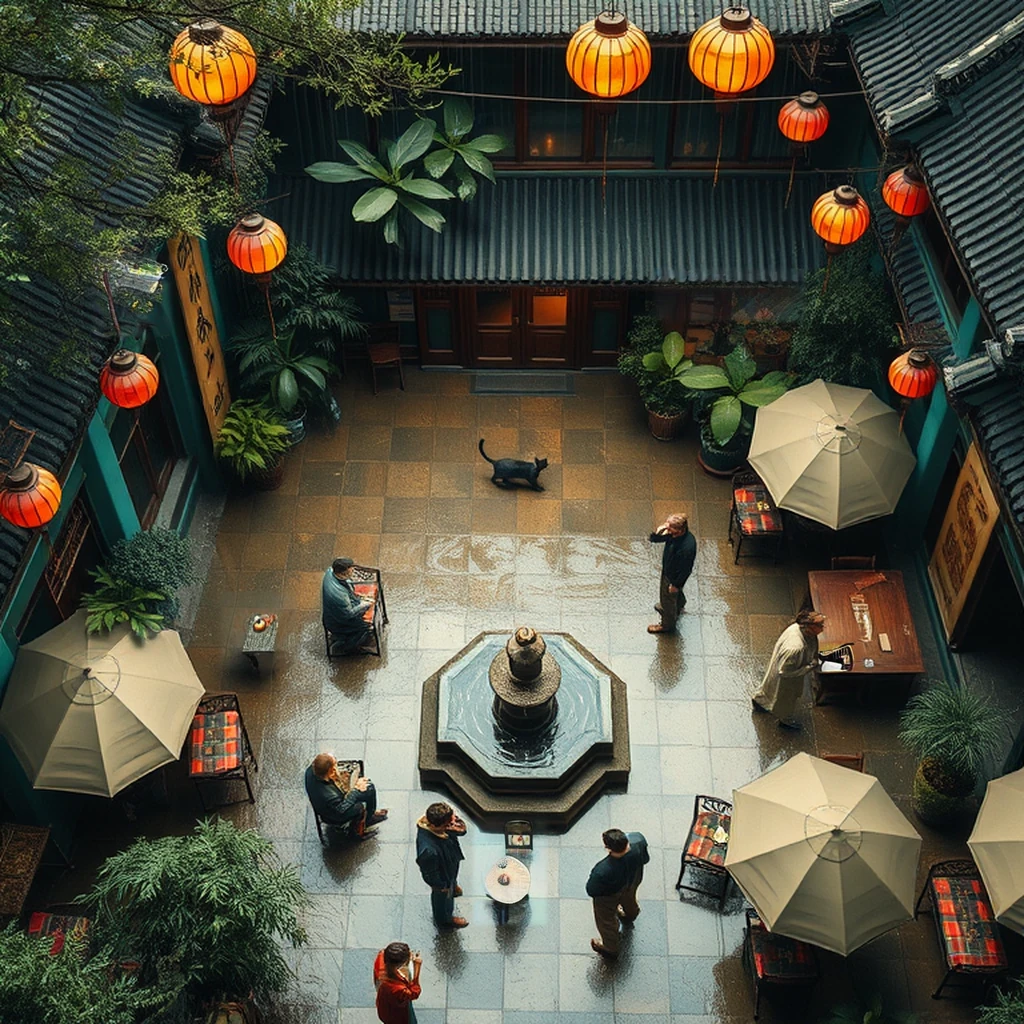
A bustling 1950s Chinese teahouse courtyard garden under harsh noon sunlight, now transformed into a rain-soaked scene with reflections glistening on the wet tiles and lanterns swaying in the wind. The scene is richly painted in oil, with visible brushwork capturing dramatic chiaroscuro shadows. Overhead view shows a central fountain surrounded by tables, chairs, and umbrellas, each detailed element contributing to the vibrant atmosphere. Delicate paper lanterns hang above the waterlogged paving stones, casting amber lights that contrast sharply with deep teal walls and foliage. Amidst the peak rush hour activity, a playful cat dashes between patrons, adding life and movement to this vivid moment in time. Specific props include: vintage kites hanging from the ceiling, bamboo fences speckled with raindrops, calligraphy scrolls fluttering slightly on strings, antique ceramic vases filled with blooming chrysanthemums, and small umbrellas placed haphazardly around tables. Soft oil painting with visible brushwork, dramatic chiaroscuro.
The rain-soaked courtyard garden of the 1950s Chinese teahouse is a captivating tableau, its surfaces glistening under the dimming light of an overcast sky. The oil painting's rich hues and visible brushstrokes lend a tactile quality to every element, from the wet paving stones reflecting the subtle movements of paper lanterns swaying above, to the deep teal walls that contrast sharply with the warm amber glow cast by hanging lights. Each table is set with small umbrellas haphazardly scattered about, their bright colors adding splashes of vibrancy amidst the muted tones of rain-dampened foliage and bamboo fences speckled with droplets. Vintage kites hang from the ceiling, stirring slightly in the breeze that rustles through the courtyard, while calligraphy scrolls flutter gently on strings overhead, imbuing the space with a sense of historical charm. Antique ceramic vases filled with blooming chrysanthemums stand as quiet sentinels around the central fountain, their delicate shapes and vibrant petals adding a splash of color to the otherwise subdued palette. The scene is animated by patrons moving about in a flurry of activity during peak hours, their movements punctuated by the playful dashes of a cat darting through the crowd. This vivid moment captures not only the essence of 1950s Chinese teahouse life but also offers an intriguing backdrop for spotting subtle differences hidden within its detailed and textured elements.
Background
The scene captures a moment in time from the mid-1950s in a traditional Chinese teahouse courtyard garden, offering a glimpse into the rich cultural tapestry of East Asian life during this period. Set against the backdrop of an oil painting rendered with dramatic chiaroscuro, the image evokes a sense of nostalgia and historical depth. The teahouses of this era were not merely places for casual gatherings but were central to social and business activities, reflecting the importance of tea culture in Chinese society. Each element within the scene—vintage kites hanging from the ceiling, bamboo fences, calligraphy scrolls fluttering slightly on strings, antique ceramic vases filled with blooming chrysanthemums, and small umbrellas placed haphazardly around tables—contributes to a tableau that encapsulates the traditional aesthetics and daily life of this period. The courtyard garden itself is an integral part of Chinese architectural heritage, symbolizing harmony between nature and human habitation. In rainy weather, such as depicted here, teahouses often transformed into cozy retreats for patrons seeking shelter from the elements while still enjoying the outdoors through the covered walkways and open-air seating areas protected by umbrellas. The soft oil painting technique used in this piece emphasizes texture and light, inviting viewers to immerse themselves in a vivid representation of 1950s Chinese life.
Tips for this puzzle
When tackling today's SpotDiff puzzle set in a rain-soaked Chinese teahouse courtyard garden from the 1950s, your keen eye will be crucial. Given the rich oil painting style and intricate details of this scene, differences can hide in plain sight amidst shadows or within the lush foliage. Keep an eye out for areas where light and dark meet—chiaroscuro effects often play tricks on the eye. The cluttered tables and chairs are perfect spots to spot subtle changes like a misplaced tea cup or an extra calligraphy scroll fluttering slightly on strings. Since we have a top-down flat lay view, make sure you don’t miss out on the intricate patterns of the wet paving stones or the delicate hanging lanterns that cast amber lights across the courtyard. A systematic approach helps—start at one corner and work your way methodically around the scene to ensure nothing slips through the cracks. Remember, even a playful cat darting between patrons might be hiding something unusual in its surroundings!
How to play
- Two near-identical images are shown side by side.
- Tap or click on the differences before the countdown timer runs out.
- Wrong clicks subtract 5 seconds from the clock.
- Stuck? Spend a hint token to glow one remaining difference.
About this puzzle
This is one of 633+ hand-curated AI-generated spot-the-difference puzzles in the SpotDiff library. Each puzzle has multiple variants — the differences you see on your first play are different from the next. 3 variant(s) for this scene.
SpotDiff is free to play with no signup required, and the library grows daily — roughly 10-30 new puzzles added every day. Hint tokens are earned through daily login, streaks, and referrals — or buy a bundle if you want unlimited hints. Refunds are available within 7 days, prorated by the tokens you haven't used yet.