1950s chinese opera house backstage area with costumes and masks
Discover hidden details in this spot-the-difference puzzle set in a smoky midnight backstage area of a 1950s Chinese opera house, where secrets…
About this scene
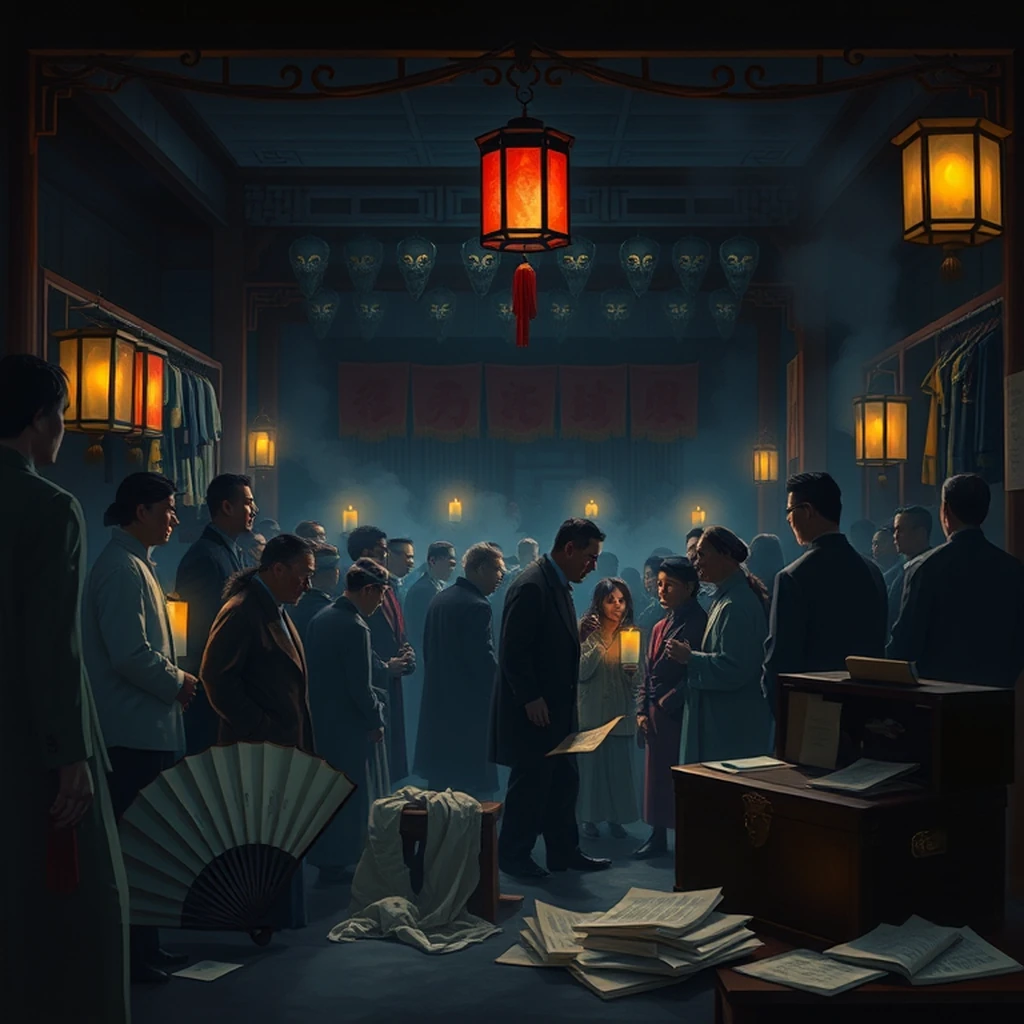
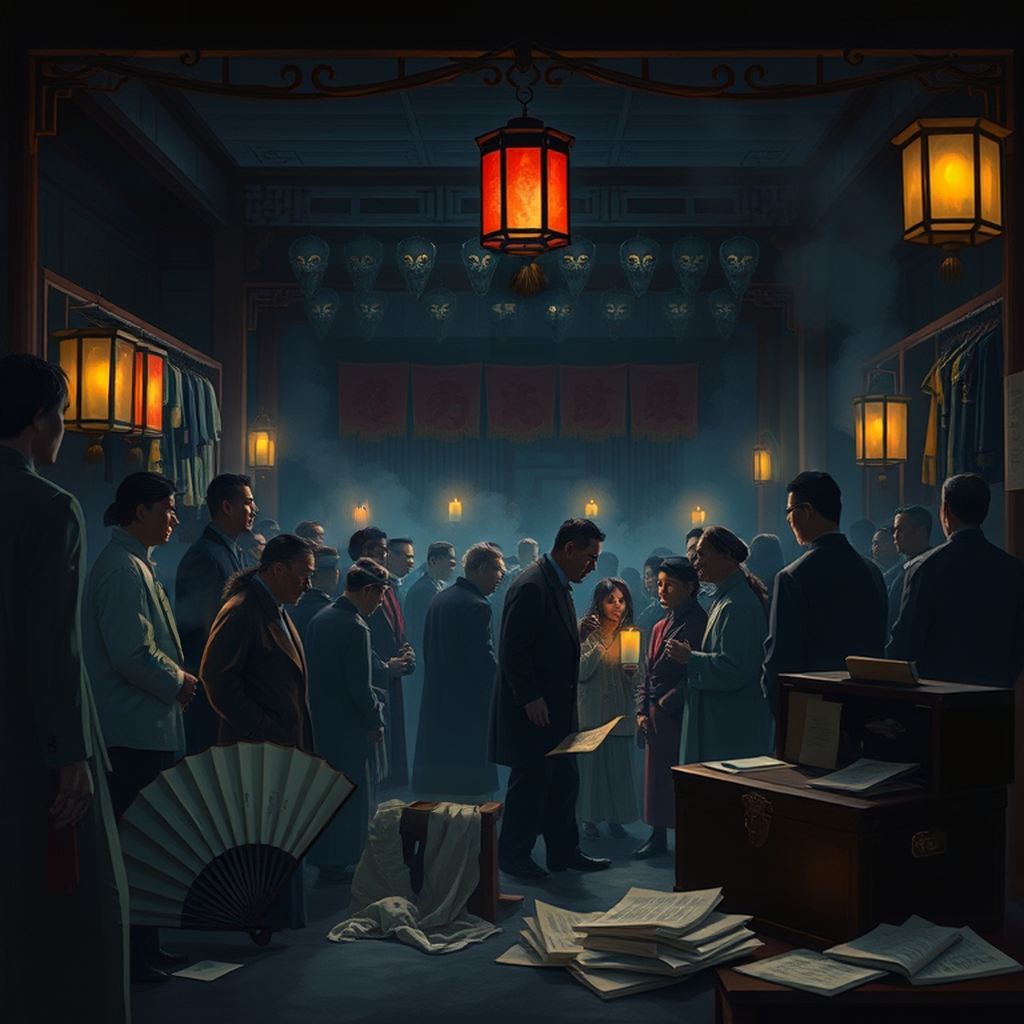
A midnight scene in the backstage area of a 1950s Chinese opera house, illuminated only by flickering candles casting an ultramarine glow amidst a smoky atmosphere. The head-on flat composition captures a busy crowd of silhouetted figures engaged in hushed whispers and secretive exchanges. Costumes and elaborate masks hang on racks behind the actors, while vibrant sulfur yellow accents stand out against the dark background. Props include a broken fan lying on the ground, a torn silk robe draped over a chair, an antique wooden chest with a lock, a brass lantern hanging from the ceiling, and a scattered bundle of opera scripts on a nearby table. Soft opaque gouache illustration with flat saturated colors.
The backstage area of the 1950s Chinese opera house is cloaked in an eerie midnight ambiance, where shadows dance and flicker under the dim glow of candlelight. The ultramarine hue casts long tendrils of light that accentuate the textures of ancient costumes hanging on racks—each garment a vibrant tapestry of silk, brocade, and intricate embroidery, their glossy surfaces catching bits of illumination in scattered patterns. Costumes are draped over wooden pegs like silent sentinels, while elaborate masks with painted expressions peer out from dark corners, adding an air of mystery to the dimly lit space. The atmosphere is thick with whispers and secretive exchanges among the cast, each actor’s silhouette framed against the stark background, their movements hushed as they prepare for the night ahead. The scene buzzes with a sense of anticipation and urgency, underscored by the soft rustle of fabric and the occasional clink of metal from the antique lock on a wooden chest. Props are strewn about the area: a broken fan lies forgotten on the stage floor, its edges tattered; a torn silk robe is draped over an old-fashioned chair with cracked lacquer, and scattered sheets of paper, likely opera scripts, litter a nearby table. Each object tells its own story in this quiet tableau. The vibrant sulfur yellow accents that punctuate the predominantly dark background provide stark contrasts against the shadows, drawing attention to their luminous beauty. A brass lantern hangs from above, casting elongated shadows across the stage and creating a palpable sense of drama and suspense. The flat yet saturated colors typical of gouache illustrations add an almost ethereal quality to the scene, making it both vividly real and slightly otherworldly. What makes this setting particularly intriguing for a spot-the-difference puzzle is its rich tapestry of visual elements that invite close inspection, from the intricate details on each mask to the subtle variations in lighting and shadow across different parts of the room.
Background
The scene captures a slice of life from the vibrant cultural landscape of mid-century China, specifically the backstage area of an opera house during the 1950s. This period was marked by significant societal changes and political upheaval in China, yet traditional arts like Chinese opera continued to thrive despite the challenges posed by Communist policies that favored proletarian culture over historical traditions. The setting evokes a sense of secrecy and urgency, perhaps reflecting the censored atmosphere under which artists and performers had to operate. The elaborate costumes and masks hanging on racks are hallmarks of the theatrical performances, showcasing the intricate craftsmanship typical of Chinese opera costumes, where each character's attire is meticulously designed to reflect their status and role in the narrative. The vibrant sulfur yellow accents amidst the dark background highlight the bold use of color that was a distinctive feature of traditional Chinese visual arts, symbolizing wealth, nobility, and optimism even in challenging times. Props such as an antique wooden chest with a lock, a torn silk robe, and scattered opera scripts illustrate the practicalities and personal belongings of performers working under tight schedules and strict regulations. The soft opaque gouache illustration style lends a dreamy quality to the scene, reminiscent of traditional Chinese ink paintings but rendered in flat saturated colors typical of mid-20th century Chinese art, which sought to balance traditional aesthetics with modern artistic expressions.
Tips for this puzzle
When you're on the hunt for those five differences in a scene like this Chinese opera house backstage area from the 1950s, keep your eyes peeled because there are plenty of spots where details can easily hide. The flat and symmetrical composition here means that shadows cast by flickering candles or the hanging costumes could be playing tricks on you. Look closely at areas like the racks where elaborate masks and colorful costumes hang, as well as any props scattered around, such as a broken fan lying on the ground or an antique wooden chest with its lock prominently displayed. The vibrant sulfur yellow accents against the dark background might also hold subtle changes that catch your eye. To make sure you don’t miss anything, try scanning the scene systematically from left to right and top to bottom, checking every nook and cranny for those sneaky differences. Remember, it’s all about the details in scenes like this one!
How to play
- Two near-identical images are shown side by side.
- Tap or click on the differences before the countdown timer runs out.
- Wrong clicks subtract 5 seconds from the clock.
- Stuck? Spend a hint token to glow one remaining difference.
About this puzzle
This is one of 696+ hand-curated AI-generated spot-the-difference puzzles in the SpotDiff library. Each puzzle has multiple variants — the differences you see on your first play are different from the next. 3 variant(s) for this scene.
SpotDiff is free to play with no signup required, and the library grows daily — roughly 10-30 new puzzles added every day. Hint tokens are earned through daily login, streaks, and referrals — or buy a bundle if you want unlimited hints. Refunds are available within 7 days, prorated by the tokens you haven't used yet.