1950s berlin department store toy section with dollhouses and teddy bears
Explore the abandoned toy section of a 1950s Berlin department store in early evening fluorescent light with post-storm puddles, featuring dusty…
About this scene
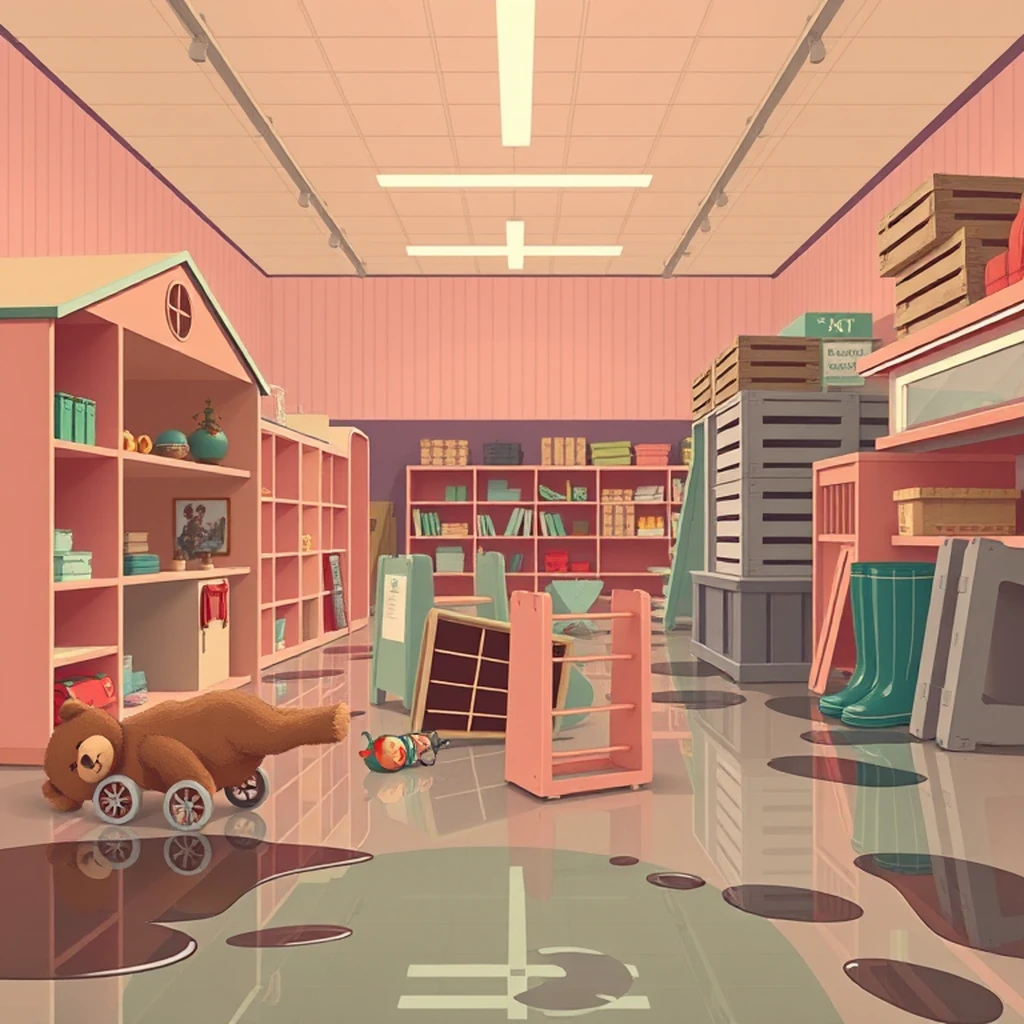
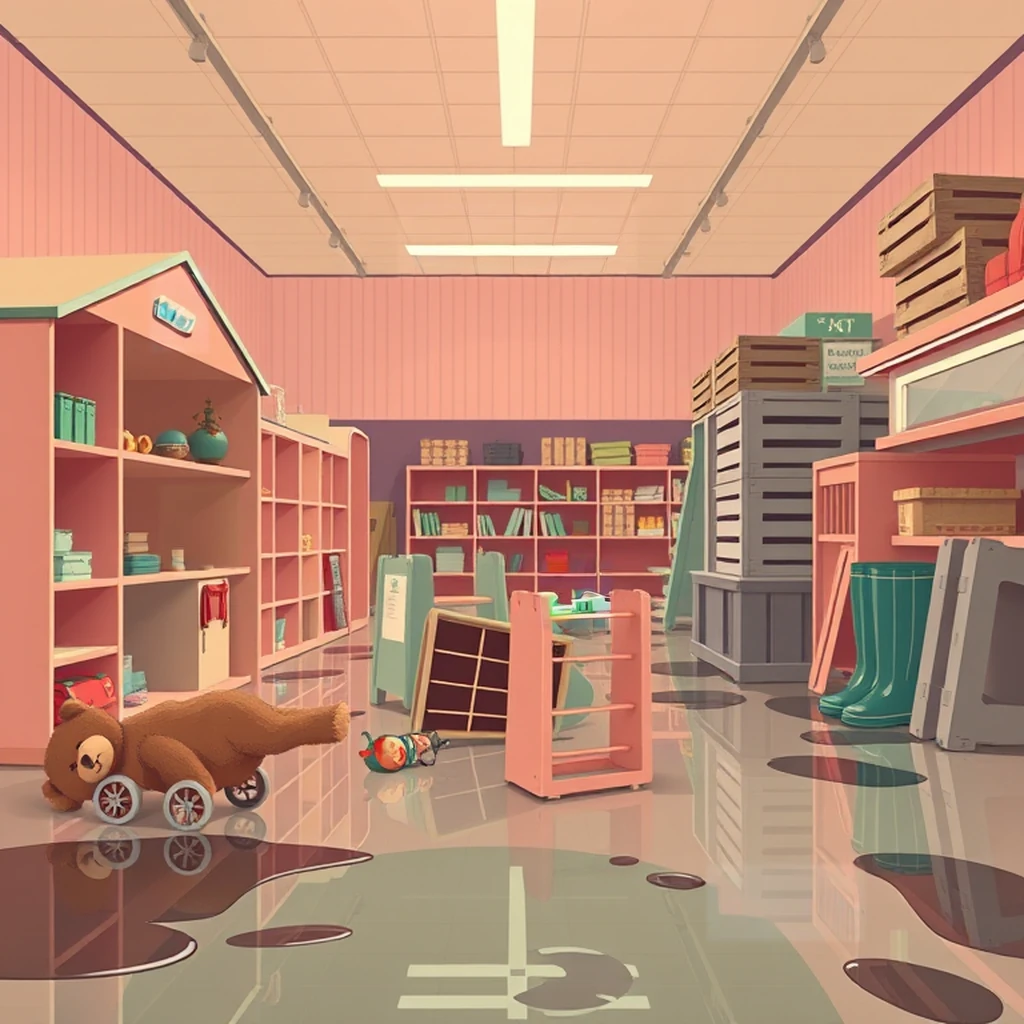
A flat vector illustration of the toy section in a 1950s Berlin department store, focusing on dollhouses and teddy bears under early evening fluorescent lighting with post-storm puddles reflecting on the floor. The scene is empty but shows signs of an abandoned aftermath, with overturned items scattered around. Dominant colors are dusty pink and forest green, giving it a nostalgic yet eerie feel. Flat vector style with clean shapes, no gradients, eye-level chest-high straight-on composition. Props include: a half-open dollhouse door showing interior details, broken toy soldiers lying on the puddle-slick floor, a disheveled teddy bear near an overturned pram, discarded rubber boots by the entrance, and water-stained wooden crates stacked beside a shelf.
The toy section of the 1950s Berlin department store is an eerie yet nostalgic space under the cool glow of early evening fluorescent lights, casting long shadows and sharp edges. The flat vector illustration captures dusty pink and forest green hues that dominate the scene, creating a melancholic ambiance as one gazes into the abandoned area. Post-storm puddles reflect the dim lighting, shimmering with an unsettling clarity on the slick floor. A half-open dollhouse door stands invitingly but hints at the chaos beyond—its interior details visible yet incomplete, like life paused mid-play. Broken toy soldiers lie scattered in the water, their once pristine uniforms now muddied and tattered, adding to the sense of abandonment. Near an overturned pram, a disheveled teddy bear with missing stuffing lies forlornly, its once comforting presence now bittersweet. Discarded rubber boots by the entrance suggest a hasty departure in the storm’s aftermath. Water-stained wooden crates, stacked beside a shelf, reveal chipped paint and faded labels, each marking a forgotten era of play. The scene feels both vintage and haunting, with every object contributing to an atmosphere that is at once nostalgic and melancholy. This setting's unique blend of charm and desolation makes it particularly intriguing for a spot-the-difference puzzle, inviting players to uncover the subtle contrasts amidst the abandoned toys.
Background
In the heart of post-war Berlin during the 1950s, the city was slowly recovering from the devastation wrought by World War II. The era saw a blend of austerity and cautious optimism as German society rebuilt itself economically and culturally. Department stores like the one depicted in this illustration were hubs for daily life and commerce, where families could find everything from groceries to toys. The toy section showcased an array of items that reflected both the scarcity and the hopefulness of the time—vintage dollhouses and teddy bears, for instance, symbolized stability and warmth amidst a backdrop of uncertainty. Dollhouses and teddy bears were cherished childhood companions, embodying the cozy domesticity that many Germans yearned to reclaim after years of upheaval. These toys also carried significant cultural weight; they were often handcrafted with meticulous attention to detail, reflecting the artisanal craftsmanship that persisted despite industrial shifts. The dollhouse in particular, with its miniature furniture and architectural features, served as a microcosm of idealized living spaces, offering children a glimpse into a world where order and harmony reigned. In the flat vector style used here, the nostalgic yet eerie atmosphere underscores the tension between longing for the past and facing forward. The clean shapes and lack of gradients evoke a sense of simplicity and clarity that aligns with the era's design ethos, characterized by functionalism and minimal ornamentation. This aesthetic choice contrasts sharply with the chaos visible in the scattered toys and puddles, highlighting the discord between societal aspirations and the realities of recovery.
Tips for this puzzle
When you're on the hunt for those five differences in our vintage Berlin department store scene, take your time and look carefully at every corner of the toy section. With a flat vector style and clean shapes, it might seem like everything is simple at first glance, but there's always something hiding in plain sight or lurking within the details. Focus on areas where shadows fall across cluttered shelves and piles of toys to find subtle changes that aren't immediately obvious. The half-open dollhouse door and its detailed interior can be a goldmine for spotting differences as well. Don’t forget about the puddles reflecting the gloomy evening light, they might reflect more than just water—they could show you something out of place if you look closely enough. To make sure you don't miss anything, scan methodically from left to right and top to bottom, checking every inch of that dusty pink and forest green world for any discrepancies. Happy hunting!
How to play
- Two near-identical images are shown side by side.
- Tap or click on the differences before the countdown timer runs out.
- Wrong clicks subtract 5 seconds from the clock.
- Stuck? Spend a hint token to glow one remaining difference.
About this puzzle
This is one of 696+ hand-curated AI-generated spot-the-difference puzzles in the SpotDiff library. Each puzzle has multiple variants — the differences you see on your first play are different from the next. 3 variant(s) for this scene.
SpotDiff is free to play with no signup required, and the library grows daily — roughly 10-30 new puzzles added every day. Hint tokens are earned through daily login, streaks, and referrals — or buy a bundle if you want unlimited hints. Refunds are available within 7 days, prorated by the tokens you haven't used yet.