1940s italian villa art gallery with framed paintings
Explore early evening melancholy in an Italian villa art gallery with ukiyo-e woodblock prints and charcoal tones, featuring a solitary…
About this scene
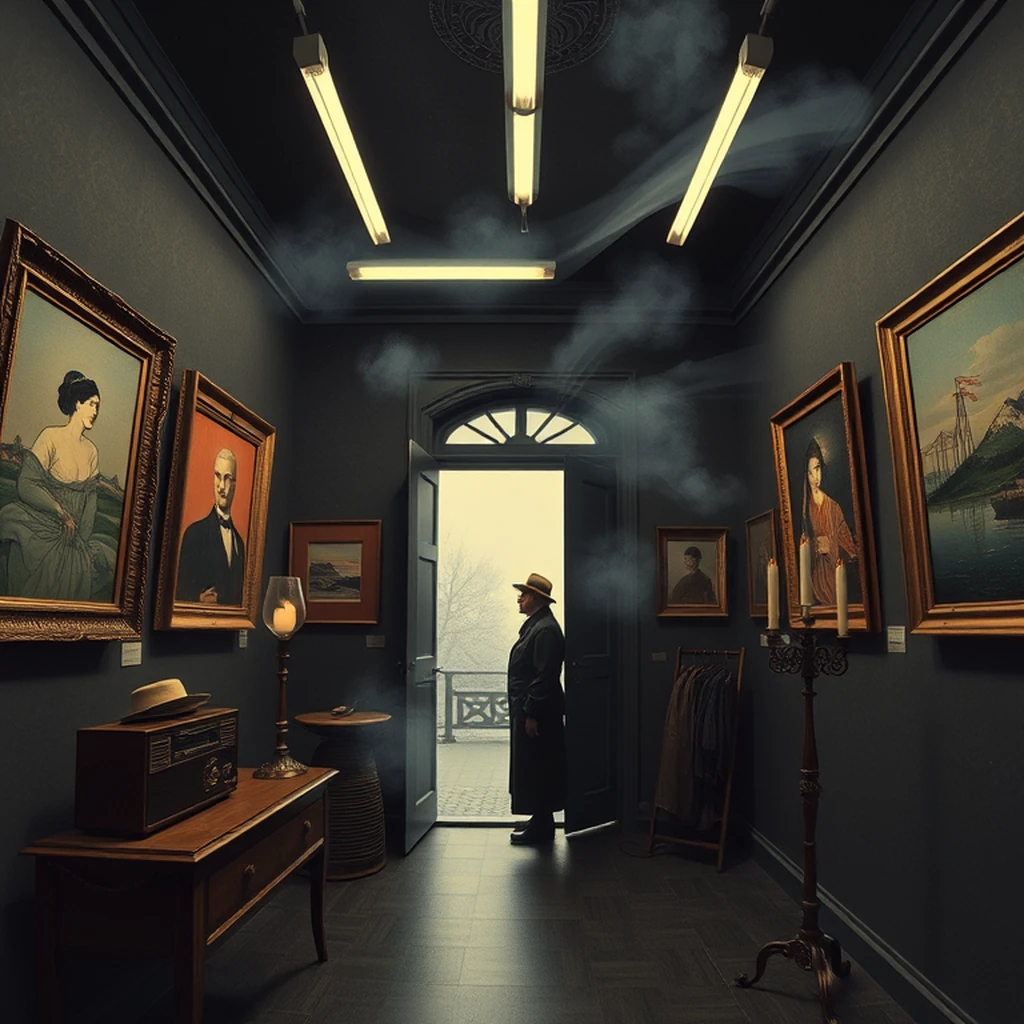
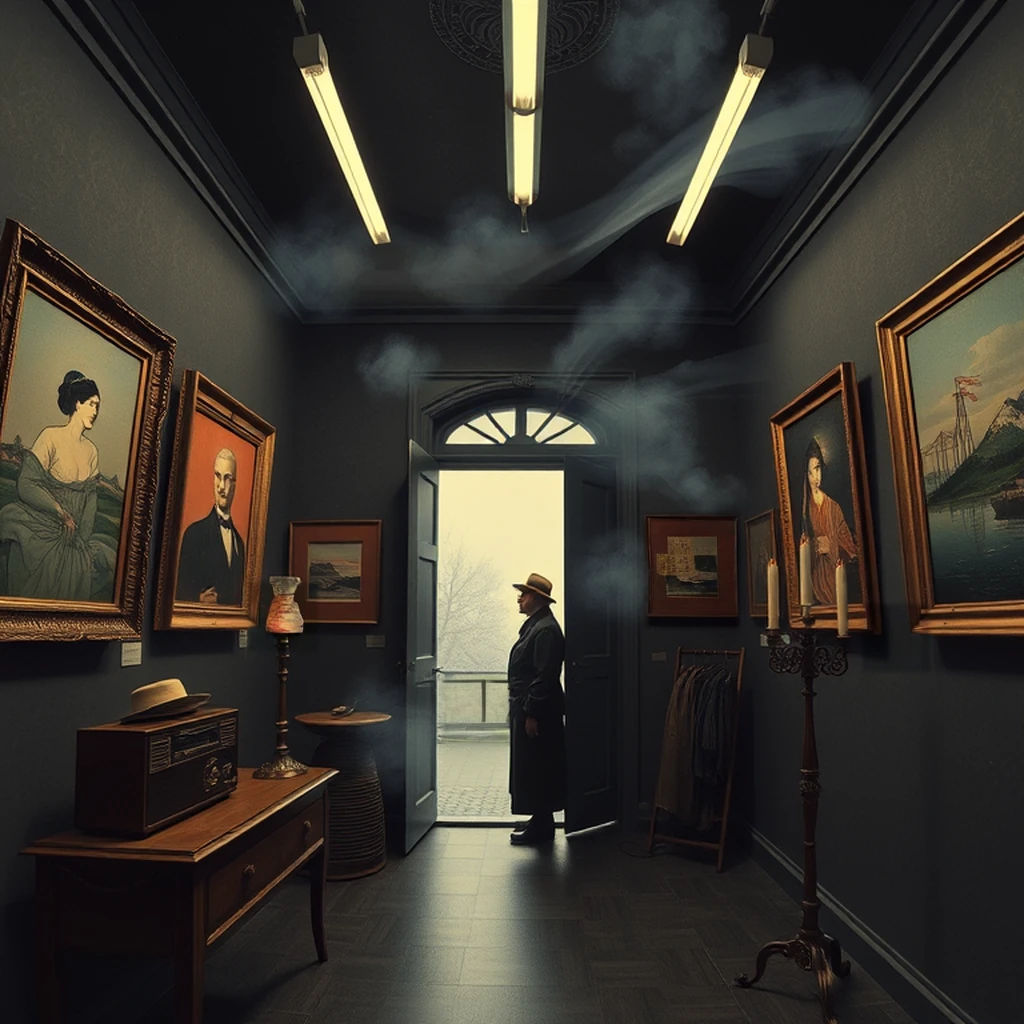
An early evening scene in a 1940s Italian villa art gallery, captured through the lens of ukiyo-e woodblock print aesthetics. The interior is dimly lit by fluorescent lights, casting a cold glow on charcoal walls adorned with copper-framed paintings. Breathable vapor trails form ethereal clouds near the entryway as winter chills seep in. A solitary silhouette stands against the doorway, evoking a mood of melancholic reflection and quiet farewell to the day's events. The gallery is filled with intricate patterns and decorative lines typical of ukiyo-e art, creating a visually immersive space that invites contemplation. Small props include a vintage radio on a side table, an ornate candelabra dimly lit, a dusty old hat resting on a coat rack near the entrance, a rolled-up oil painting lying on the floor, and delicate porcelain figurines displayed atop a nearby pedestal. Soft ukiyo-e woodblock print illustration with flat colors and decorative outlines.
As the sun sets on an early winter evening, a 1940s Italian villa art gallery stands in quiet contemplation. The interior is bathed in a cold glow cast by fluorescent lights that flicker against charcoal walls, their copper frames catching the light and casting sharp shadows. A solitary figure silhouetted at the doorway seems lost in thought, as if bidding farewell to the day's end with a sense of melancholic reflection. Ukiyo-e woodblock print aesthetics fill every corner of this space, from the intricate patterns etched into wooden panels to the decorative lines that wind around copper frames like delicate vines. In one corner, a vintage radio rests atop an ornate side table, its surface covered in fine dust and muted by time. Nearby, an old candelabra flickers dimly, casting soft shadows on a dusty hat hanging on the coat rack near the entryway. A rolled-up oil painting lies forgotten on the floor, its edges crinkling slightly with each passing breeze that carries whispers of winter chill through open windows. Delicate porcelain figurines sit proudly atop a nearby pedestal, their pristine surfaces catching bits of light and adding to the gallery's ethereal ambiance. The air is filled with the faint scent of old books mingled with the cool bite of winter, creating an atmosphere that invites deep contemplation. Each element within this space contributes to a narrative of bygone eras and timeless artistry, making it not just a setting but a living tableau of memories frozen in time. This scene offers endless possibilities for those who enjoy spotting subtle differences, as every object and shadow tells its own story, waiting to be discovered in the intricate details that make this 1940s Italian villa art gallery uniquely captivating.
Background
The scene set in an Italian villa art gallery during the early evening of the 1940s evokes a period marked by post-war melancholy and nostalgia for pre-war elegance. The gallery's interior is decorated with copper-framed paintings that are reminiscent of ukiyo-e woodblock prints, a traditional Japanese art form that flourished between the 17th and 19th centuries. Ukiyo-e literally translates to "pictures of the floating world," depicting themes from daily life, landscapes, kabuki theater, and sumo wrestling. The influence of this style on European art during the early 20th century is significant; it inspired many Western artists with its vibrant colors and intricate line work, leading to a blend of Eastern aesthetics and Western design sensibilities. In the gallery's dimly lit space, one can see decorative elements like an ornate candelabra, a dusty old hat on a coat rack, and delicate porcelain figurines that hint at a bygone era of opulence and refinement. These objects, alongside the vintage radio on a side table and a rolled-up oil painting on the floor, suggest a setting where past traditions coexist with modern conveniences, reflecting the cultural crossroads of early 20th-century Europe. The winter chill seeping in through the entryway adds to the ambiance of quiet farewell, encapsulating the somber mood prevalent during this period as societies grappled with the aftermath of conflict and change.
Tips for this puzzle
Finding those five differences in today's scene from a 1940s Italian villa art gallery is like searching for hidden treasures in an intricate ukiyo-e woodblock print. The key to spotting the differences here lies in understanding how the fish-eye wide-angle distortion and the detailed patterns can play tricks on your eyes. Look closely at areas where shadows fall across the charcoal walls or under copper-framed paintings, as these dark spots are perfect places for small changes to hide. Also, pay attention to the decorative lines and intricate details that might have subtle alterations. Don't miss checking out smaller objects like the vintage radio, the ornate candelabra, and delicate porcelain figurines—they often hold unexpected differences. A systematic approach helps: start from one corner of the image and move methodically across it, row by row or section by section, to ensure you don’t overlook anything. Remember, patience is your ally in this puzzle—take your time, and those five differences will reveal themselves!
How to play
- Two near-identical images are shown side by side.
- Tap or click on the differences before the countdown timer runs out.
- Wrong clicks subtract 5 seconds from the clock.
- Stuck? Spend a hint token to glow one remaining difference.
About this puzzle
This is one of 633+ hand-curated AI-generated spot-the-difference puzzles in the SpotDiff library. Each puzzle has multiple variants — the differences you see on your first play are different from the next. 3 variant(s) for this scene.
SpotDiff is free to play with no signup required, and the library grows daily — roughly 10-30 new puzzles added every day. Hint tokens are earned through daily login, streaks, and referrals — or buy a bundle if you want unlimited hints. Refunds are available within 7 days, prorated by the tokens you haven't used yet.