1940s chinese teahouse garden with koi pond and bridges
Discover subtle differences in this richly detailed oil painting of a steamy noon teahouse garden with secret meetings, perfect for…
About this scene
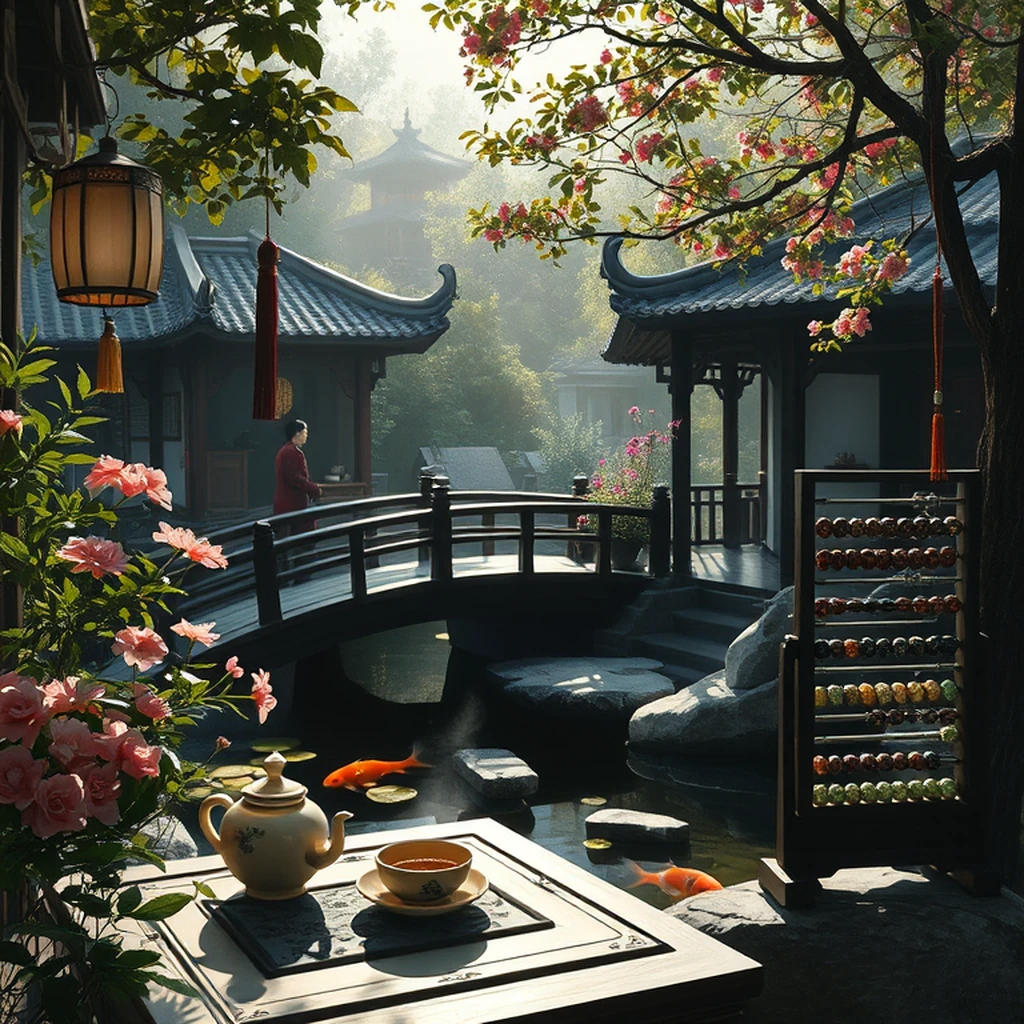
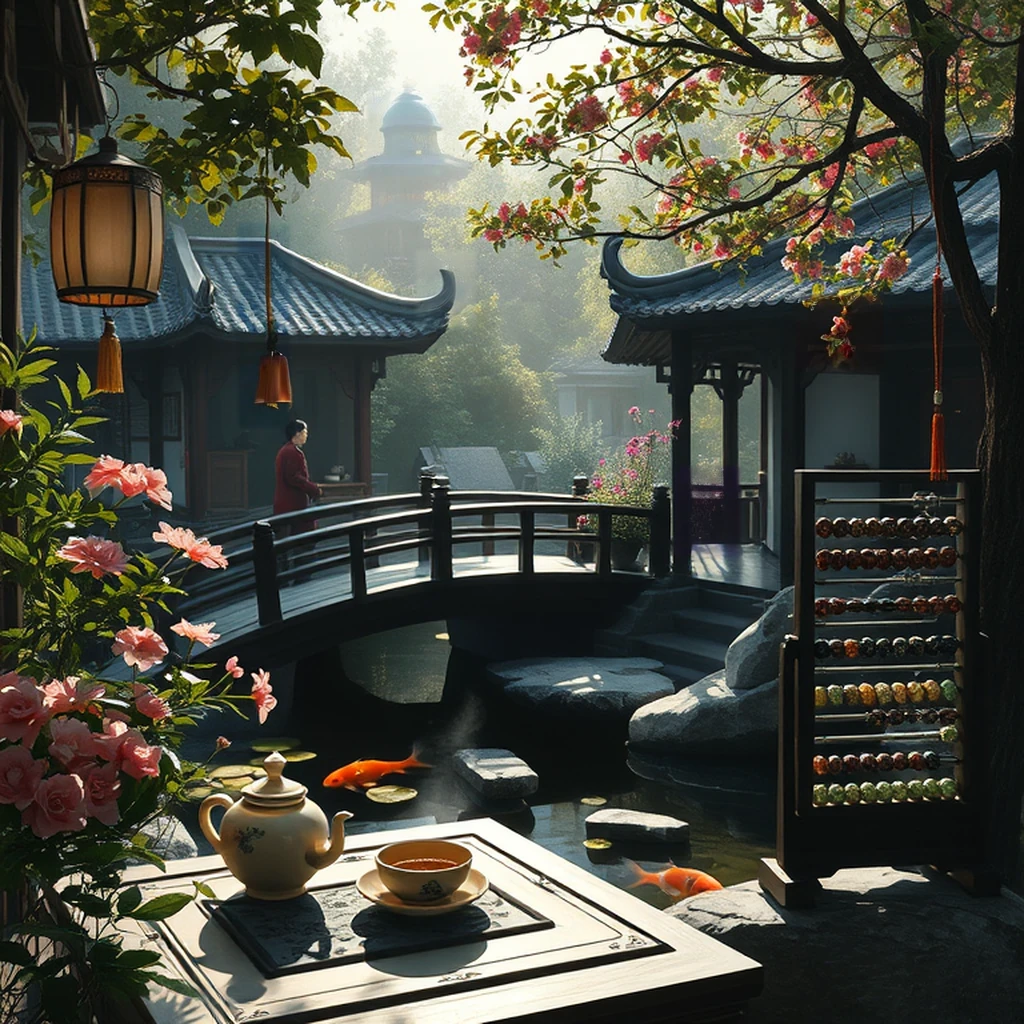
A rich oil painting captures the steamy noon atmosphere of a 1940s Chinese teahouse garden, bathed in harsh sunlight that casts deep shadows and highlights intricate brushwork. The composition features a deep diagonal corner view, with the koi pond and traditional stone bridges framing the scene. In the background, two people are engaged in a secretive conversation amidst the humid air. The garden is filled with lush greenery and blooming flowers, creating a dense, verdant environment. Dominant colors include dusty pink and forest green, reflecting both the warmth of the day and the natural beauty around. Small props unique to this scene include a delicate bamboo lantern hanging near the pond, a steaming cup of tea placed on an intricately carved wooden table, ornate jade pendants hanging from a nearby tree, a vintage abacus resting on a rock beside the path, and a traditional Chinese fan partially open on a stone bench. The oil painting style emphasizes dramatic chiaroscuro and visible brushwork throughout.
The sun beats down upon the 1940s Chinese teahouse garden in an oil painting that captures the essence of steamy noon, casting sharp shadows and illuminating each leaf and petal with vibrant clarity. The koi pond reflects the bright light, its surface rippling gently as fish dart beneath, while stone bridges arc gracefully over the water, inviting a stroll through the verdant landscape. In the background, two figures are engrossed in hushed conversation under the shade of ancient trees, their voices barely audible above the rustle of leaves and the soft gurgle of water. The lush greenery surrounds them like a dense forest, with delicate flowers blooming amidst the foliage, adding splashes of dusty pink that contrast beautifully against the deep greens. A bamboo lantern hangs near the pond, casting an ethereal glow through its intricate weave as steam rises from a steaming cup of tea on an intricately carved wooden table beside it. Ornate jade pendants swing softly from branches above, catching the light and adding a touch of elegance to the tranquil setting. A vintage abacus rests quietly on a rock by the path, its beads gleaming in the sunlight like polished jewels, while a traditional Chinese fan lies open partially on a nearby stone bench, inviting contemplation as it catches the breeze. The dramatic chiaroscuro in this oil painting creates an atmosphere of warmth and mystery, perfectly encapsulating the essence of a secret meeting in a bygone era. This scene's rich textures and detailed props make for a captivating spot-the-difference puzzle that invites viewers to lose themselves in its intricate details and evocative mood.
Background
The scene captures the essence of a Chinese teahouse garden during the mid-1940s in an era characterized by significant cultural and political upheaval. Located within the bustling urban areas or tranquil countryside settings of China, these teahouses served as more than just places to enjoy tea; they were centers for social interaction, business meetings, and even secret discussions amid the turmoil of war and revolution. The rich oil painting style employed here reflects a form of artistic expression that emphasizes dramatic lighting contrasts (chiaroscuro) and detailed brushwork, creating an atmosphere that is both visually striking and emotionally evocative. The koi pond and traditional stone bridges are iconic elements in Chinese garden design, symbolizing harmony with nature and the passage of time. Such features were integral to the aesthetics of classical Chinese gardens, which sought to recreate miniature landscapes imbued with poetic beauty and philosophical meaning. The setting is further enhanced by objects like bamboo lanterns, intricately carved wooden tables, jade pendants, abacuses, and traditional fans, each carrying layers of cultural significance tied to traditions, artistry, and practical uses. In this context, the teahouse becomes a microcosm of Chinese society at that time. It was a place where individuals from different walks of life could come together, engaging in conversations ranging from casual chats about daily affairs to more serious discussions about politics or business strategies. The lush greenery and blooming flowers surrounding the pond contribute to an ambiance of tranquility amidst the chaos outside, reflecting themes often explored in Chinese literature and art during this period—namely, finding peace within oneself despite external strife.
Tips for this puzzle
Spotting those five differences in today's vivid oil painting of a 1940s Chinese teahouse garden can be quite the adventure! With its deep diagonal corner view and rich, detailed composition, there are plenty of places where discrepancies might hide. Look closely at the shadows cast by the harsh sunlight; they're perfect spots for sneaky changes. The intricate patterns on the koi pond's surface or along the wooden tables could also have subtle alterations you need to spot. Don't forget about those delicate bamboo lanterns and ornate jade pendants hanging from trees—details like these often get overlooked but can be key differences. To stay organized, try scanning methodically: start with one corner of the garden and work your way across systematically, checking every element thoroughly before moving on. This way, you won't miss a thing in this lush and intricate setting!
How to play
- Two near-identical images are shown side by side.
- Tap or click on the differences before the countdown timer runs out.
- Wrong clicks subtract 5 seconds from the clock.
- Stuck? Spend a hint token to glow one remaining difference.
About this puzzle
This is one of 633+ hand-curated AI-generated spot-the-difference puzzles in the SpotDiff library. Each puzzle has multiple variants — the differences you see on your first play are different from the next. 3 variant(s) for this scene.
SpotDiff is free to play with no signup required, and the library grows daily — roughly 10-30 new puzzles added every day. Hint tokens are earned through daily login, streaks, and referrals — or buy a bundle if you want unlimited hints. Refunds are available within 7 days, prorated by the tokens you haven't used yet.