1940s chinese teahouse garden patio under moonlight
Explore the serene yet abandoned Chinese teahouse garden under moonlight in early evening. Spot the differences in this isometric scene with a…
About this scene
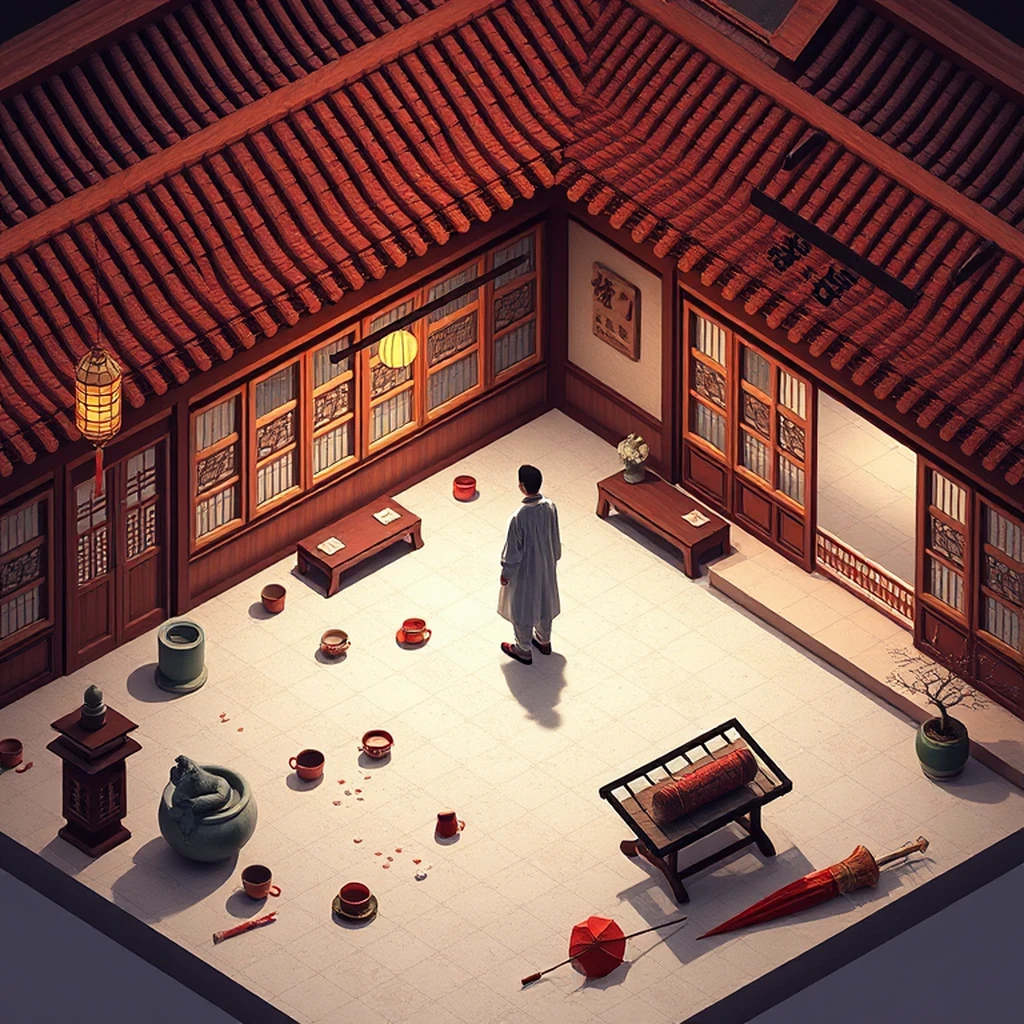
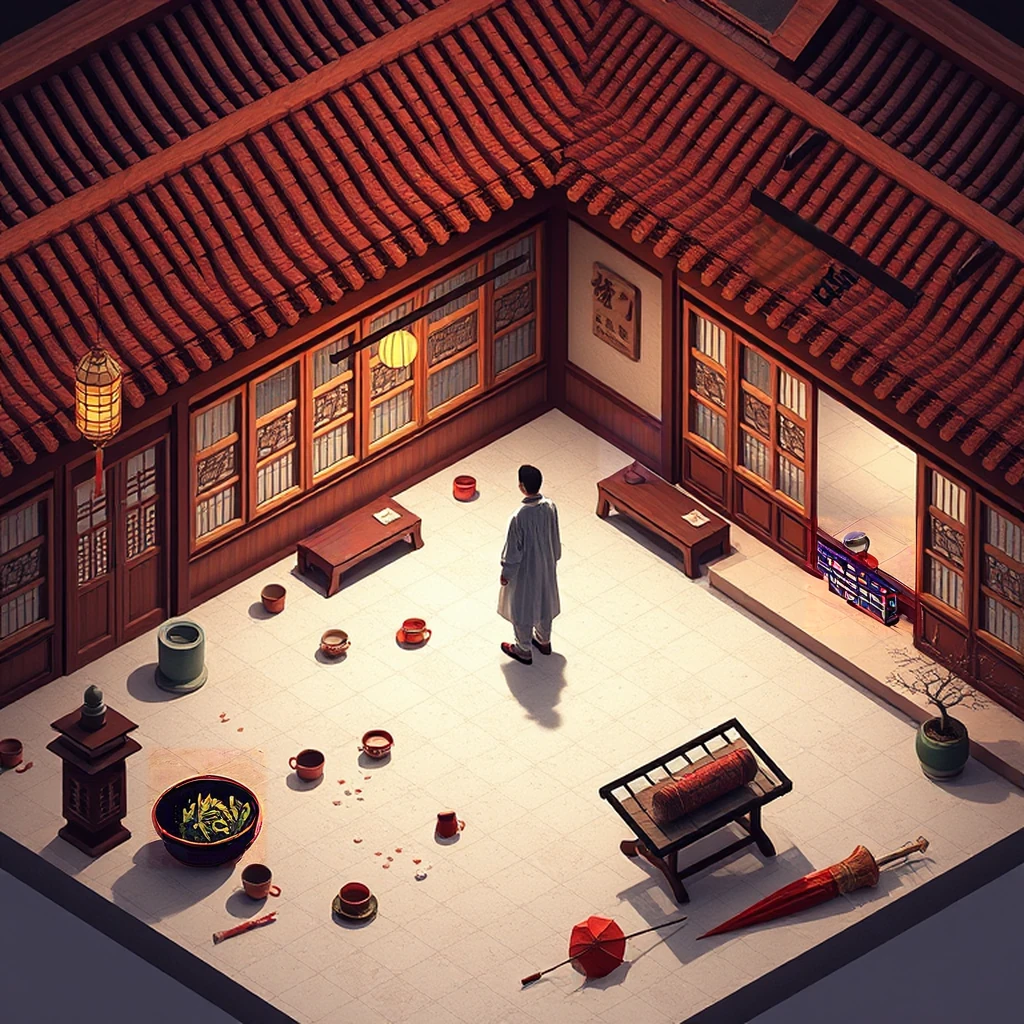
An isometric view of an early evening Chinese teahouse garden patio under moonlight, rendered in clean geometry and axonometric projection. The scene is bathed in a crisp, cold atmosphere with visible breath plumes. Dominant colors are burgundy and cream. A single figure stands back-turned in the center, adding to the abandoned aftermath feel. Small overturned items like ceramic teacups and fallen lanterns lie scattered around. Additional props include hanging bamboo blinds, delicate stone lanterns, potted bonsai trees, and a discarded silk umbrella. The mood is somber with a hint of melancholy. Soft watercolor illustration, paper texture.
The moon casts a silver glow over the abandoned Chinese teahouse garden patio, its cold light piercing through the chill of early evening. The isometric view offers an expansive look at the space, where every detail in clean geometry and crisp axonometric lines tells a story of desolation. Dominant colors of burgundy and cream paint the scene with a nostalgic hue, each shade speaking volumes about the quiet melancholy that settles over the patio under moonlight. The air is thick with an almost visible coldness, as wisps of breath dance in the still night. A solitary figure stands at the center, back turned to the viewer, adding an eerie sense of abandonment and isolation. Small items, once cherished for their delicate beauty, now lie scattered across the patio—upturned ceramic teacups, fallen stone lanterns with broken shards, and a discarded silk umbrella that hangs limply from its stand. The hanging bamboo blinds sway slightly in the gentle breeze, creating soft shadows on the ground beneath them. Delicate potted bonsai trees dot the scene, their branches bare but graceful, hinting at the passage of time and seasons. The stone lanterns lining the patio emit a faint glow, casting long shadows that play across the textured paper walls and floors. The texture of the surfaces adds depth to the atmosphere; each crack in the stone pathways and every crevice on the bamboo blinds holds its own story of wear and decay. This scene invites one to imagine the life that once thrived here—whispered conversations, soft laughter, and the gentle clink of teacups—and now stands as a poignant reminder of what has been left behind. What makes this scene particularly intriguing for a spot-the-difference puzzle is the interplay between beauty and decay, inviting observers to seek out subtle changes amidst the serene yet abandoned setting.
Background
The scene depicts an early evening Chinese teahouse garden patio under moonlight in the 1940s, a period of significant cultural transition and upheaval in East Asia. Located in an era when traditional aesthetics were still prevalent but Western influences began to seep into daily life, this setting encapsulates a blend of old-world charm with hints of modernity. The teahouse itself stands as a testament to the rich history of Chinese tea culture, which dates back over 4000 years and is deeply intertwined with social, economic, and cultural practices in China. During the early decades of the twentieth century, these serene spaces were not only places for relaxation but also venues where important business transactions and political discussions took place. The architectural elements such as hanging bamboo blinds and delicate stone lanterns are indicative of the traditional Chinese aesthetic, which emphasizes harmony with nature and simplicity. Potted bonsai trees, often seen in teahouse gardens, symbolize the art of cultivation and patience, reflecting broader philosophical ideals like wabi-sabi—appreciation for beauty found in imperfection and transience. The scene's melancholic tone suggests a moment of abandonment or transition, hinting at the broader socio-political changes that marked this era, including the Second Sino-Japanese War (1937-1945) and its aftermath.
Tips for this puzzle
When you dive into today’s SpotDiff puzzle set in a moonlit Chinese teahouse garden patio, keep your eyes peeled for those subtle changes that might be lurking just out of sight. With an isometric view and a head-on composition, the typical hiding spots are intricate patterns on walls or furniture, shadows cast by hanging bamboo blinds and stone lanterns, and the clutter around fallen tea cups and broken lanterns. The abandoned feel adds a layer of complexity as every small detail can be a difference waiting to be noticed. A systematic approach works best here—start from one corner and move methodically across the scene, checking each item in turn. Don’t forget about the edges where pots, lamps, or even that discarded silk umbrella might conceal tiny changes. And always remember to double-check areas where the lighting shifts dramatically as differences often hide in the play of light and shadow. Happy spotting!
How to play
- Two near-identical images are shown side by side.
- Tap or click on the differences before the countdown timer runs out.
- Wrong clicks subtract 5 seconds from the clock.
- Stuck? Spend a hint token to glow one remaining difference.
About this puzzle
This is one of 633+ hand-curated AI-generated spot-the-difference puzzles in the SpotDiff library. Each puzzle has multiple variants — the differences you see on your first play are different from the next. 3 variant(s) for this scene.
SpotDiff is free to play with no signup required, and the library grows daily — roughly 10-30 new puzzles added every day. Hint tokens are earned through daily login, streaks, and referrals — or buy a bundle if you want unlimited hints. Refunds are available within 7 days, prorated by the tokens you haven't used yet.