1940s chinese opera theater backstage area with elaborate costumes
Explore the peaceful backstage area of a 1940s Chinese opera theater at dusk, illuminated by soft pink and lavender hues. Spot subtle differences…
About this scene
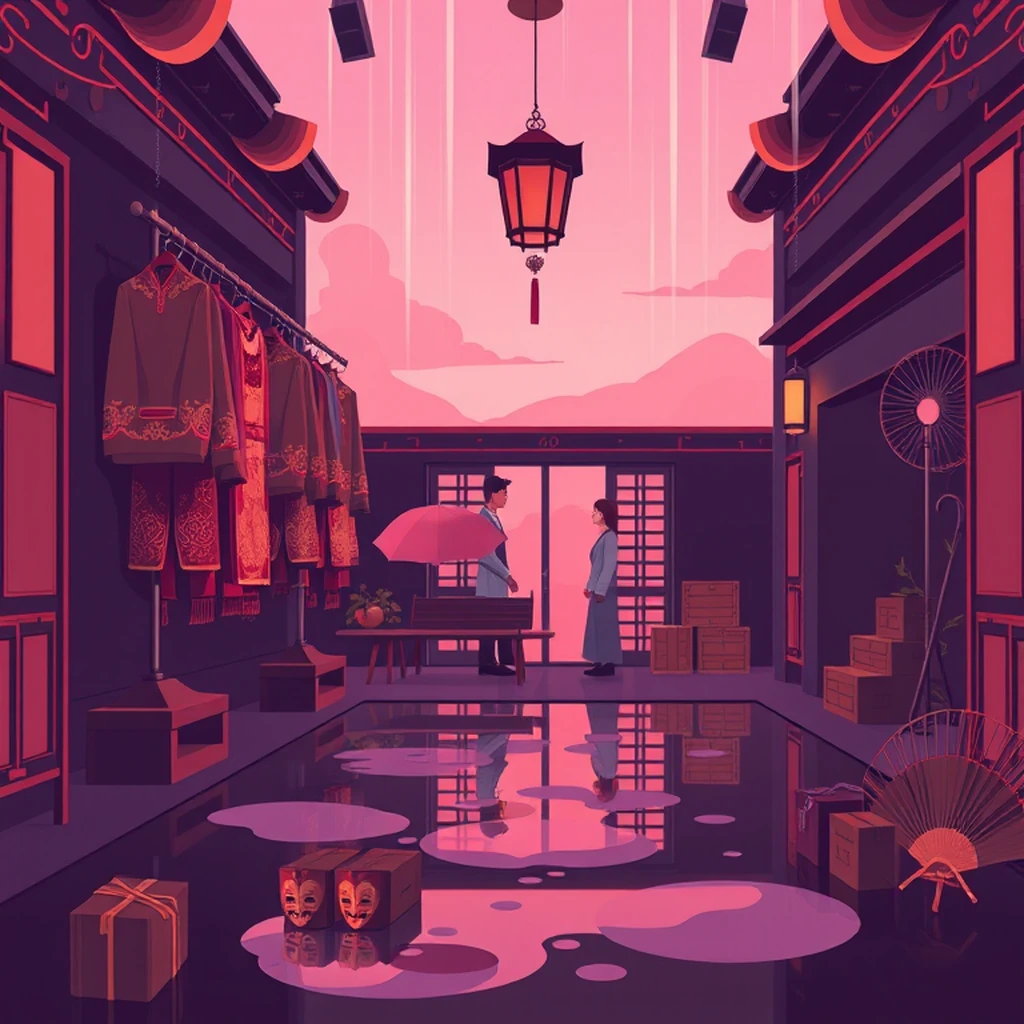
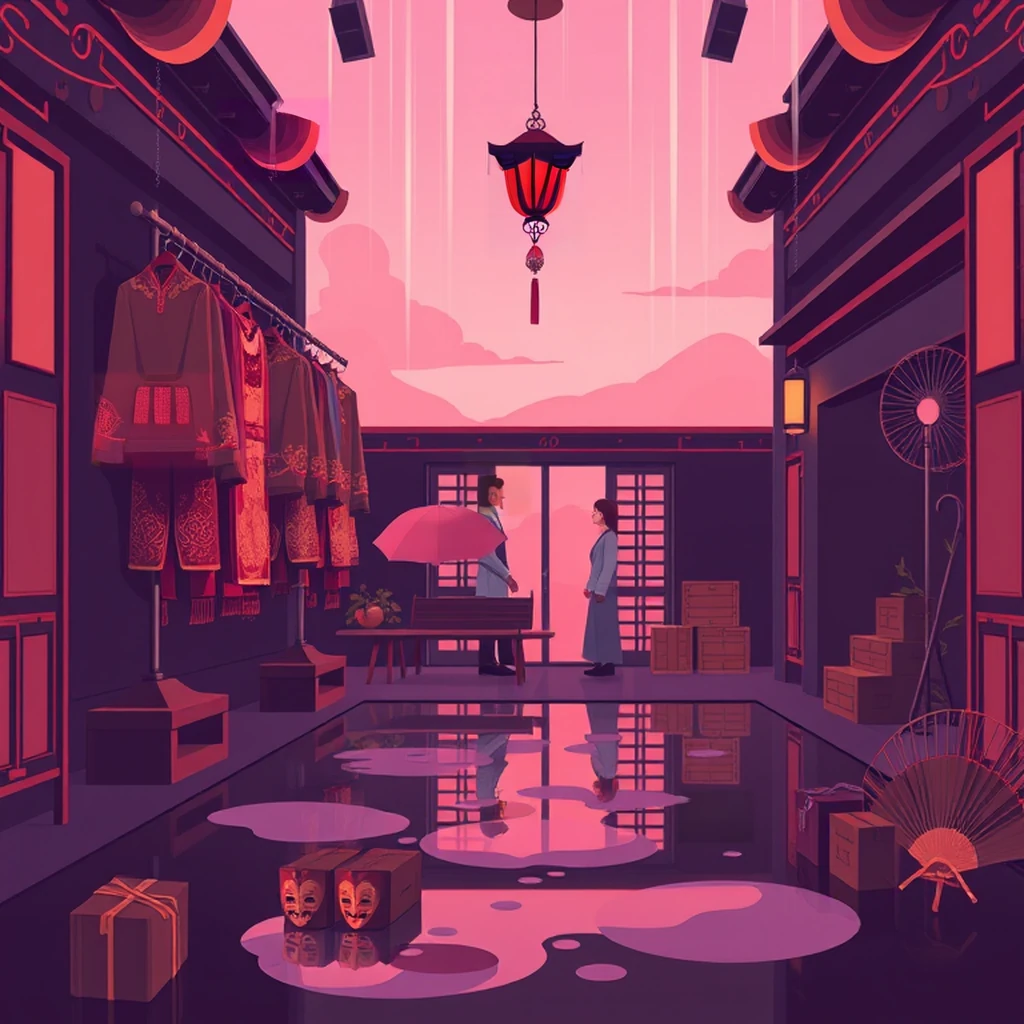
A flat vector illustration depicting the backstage area of a 1940s Chinese opera theater at dusk, with pink and lavender hues casting an enchanting glow over the scene. Post-storm puddles dot the floor, reflecting soft lights from above. Elaborate costumes hang on racks, their rich textures contrasting against the charcoal walls and copper accents. The composition is diagonally framed with a Dutch tilt, emphasizing dramatic angles and shadows. In the background, two people are engaged in a quiet conversation, preparing for the show to begin. Small props include an open umbrella resting on a bench, a lantern hanging from the ceiling, a stack of wooden crates near the door, ornate masks lined up on a table, and a bamboo fan leaning against a costume stand. The illustration maintains a clean shape aesthetic with no gradients, focusing on crisp lines and intricate details.
As dusk settles over the 1940s Chinese opera theater backstage area, an ethereal glow bathes the space in soft pink and lavender hues, casting long shadows across the charcoal walls. The rich textures of elaborate costumes hanging on racks contrast sharply with the monochromatic backdrop, their vibrant patterns and sumptuous fabrics hinting at the grandeur about to unfold. Copper accents glint softly amidst the dim light, adding a touch of warmth that dances along the floor where post-storm puddles reflect the overhead lanterns in shimmering patches. A quiet conversation drifts through the air as two figures, lost in their preparations, move silently around the space. On a nearby bench rests an open umbrella, its fabric slightly damp from the rain, while a stack of wooden crates near the door suggests the arrival or departure of props and costumes. An ornate lantern hangs from the ceiling, casting delicate shadows that play across the intricate masks lined up on a table—a silent chorus waiting for their cue to perform. A bamboo fan leans against one of the costume stands, its slats catching the light as it tilts slightly in the breeze. The clean lines and sharp details of this flat vector illustration emphasize the crispness of each element, from the precise folds of the costumes to the careful arrangement of props. The Dutch tilt composition heightens the drama, drawing the eye through the scene with dramatic angles and shadows that seem almost alive. This evocative setting invites one to explore its depths, uncovering subtle differences in textures and colors that tell stories beyond the immediate view—a perfect canvas for a spot-the-difference puzzle where every detail matters.
Background
The illustration captures the backstage area of a Chinese opera theater during the turbulent yet culturally rich period of the 1940s in East Asia. This era saw the continuation of traditional arts amidst rapid societal changes brought about by political upheaval and foreign influence. The Chinese opera, with its roots dating back to the Tang Dynasty, is not only a form of entertainment but also a vital part of cultural heritage that reflects historical narratives and moral teachings through elaborate performances. In this illustration, the flat vector style emphasizes clean lines and intricate details, reminiscent of traditional East Asian art forms such as woodblock prints. The setting exudes an atmosphere of anticipation and reverence for the performing arts, with elaborate costumes hanging from racks against charcoal-colored walls, their vibrant hues contrasting sharply yet harmoniously with the subdued tones of the room. Copper accents and ornate masks add to the opulent decor, symbolizing the significance of these performances in Chinese society. The dramatic Dutch tilt composition highlights the intricate details of the stage preparations, drawing attention to elements such as a lantern hanging from the ceiling and an umbrella resting on a bench, which are symbolic of the interplay between tradition and modernity. The inclusion of props like wooden crates and bamboo fans underscores the practical aspects of preparing for a performance while maintaining the artistic integrity of Chinese opera. Backstage areas in Chinese theaters during this period were bustling hubs of activity, where actors would prepare their elaborate costumes and makeup under dim lighting, creating an air of mystery and anticipation before stepping into the spotlight. This scene encapsulates the essence of cultural preservation amidst societal change, reflecting the enduring spirit of traditional arts even as China navigated through a tumultuous historical landscape.
Tips for this puzzle
When you're on the lookout for those five differences in our Chinese opera theater backstage scene, keep an eye out for spots where details can easily get lost. Given the Dutch tilt and dramatic diagonal composition, shadows play a big role in hiding changes. Look closely at the elaborate costumes hanging on racks—those rich textures offer plenty of potential for subtle alterations. The background area with its quiet conversation is also ripe with small objects like lanterns and masks that could be slightly off or missing. Don’t forget to check the floor too; those post-storm puddles might hide a few surprises. To make sure you don't miss anything, move methodically across the image, comparing areas bit by bit. Start from one corner and work your way diagonally across, checking each element as you go. Remember, the clean vector style means every line is deliberate, so any oddity or missing detail will stand out if you know where to look.
How to play
- Two near-identical images are shown side by side.
- Tap or click on the differences before the countdown timer runs out.
- Wrong clicks subtract 5 seconds from the clock.
- Stuck? Spend a hint token to glow one remaining difference.
About this puzzle
This is one of 633+ hand-curated AI-generated spot-the-difference puzzles in the SpotDiff library. Each puzzle has multiple variants — the differences you see on your first play are different from the next. 3 variant(s) for this scene.
SpotDiff is free to play with no signup required, and the library grows daily — roughly 10-30 new puzzles added every day. Hint tokens are earned through daily login, streaks, and referrals — or buy a bundle if you want unlimited hints. Refunds are available within 7 days, prorated by the tokens you haven't used yet.