1940s chinese laundry shop in los angeles with washboards
Explore an ukiyo-e style Chinese laundry shop at dusk with a melancholic atmosphere and smoky haze. Spot subtle differences in this vintage scene.
About this scene
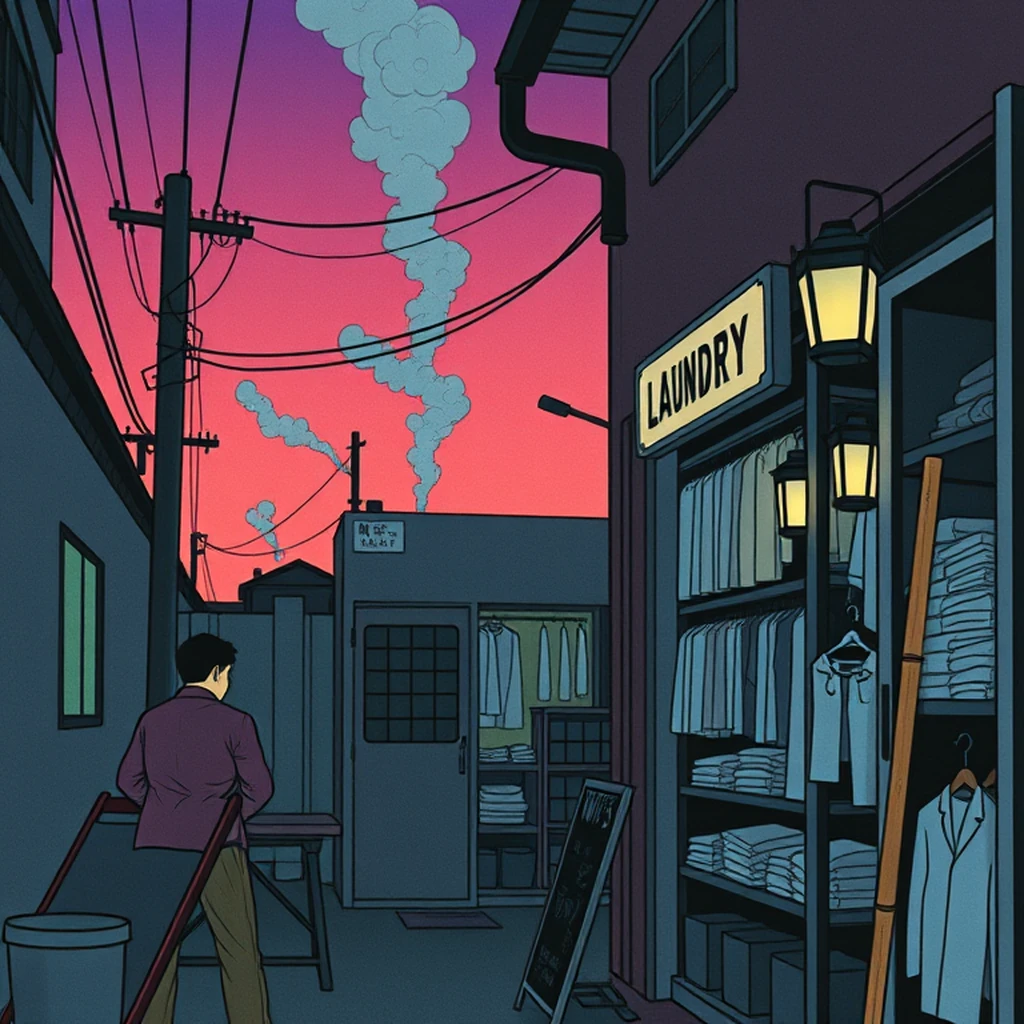
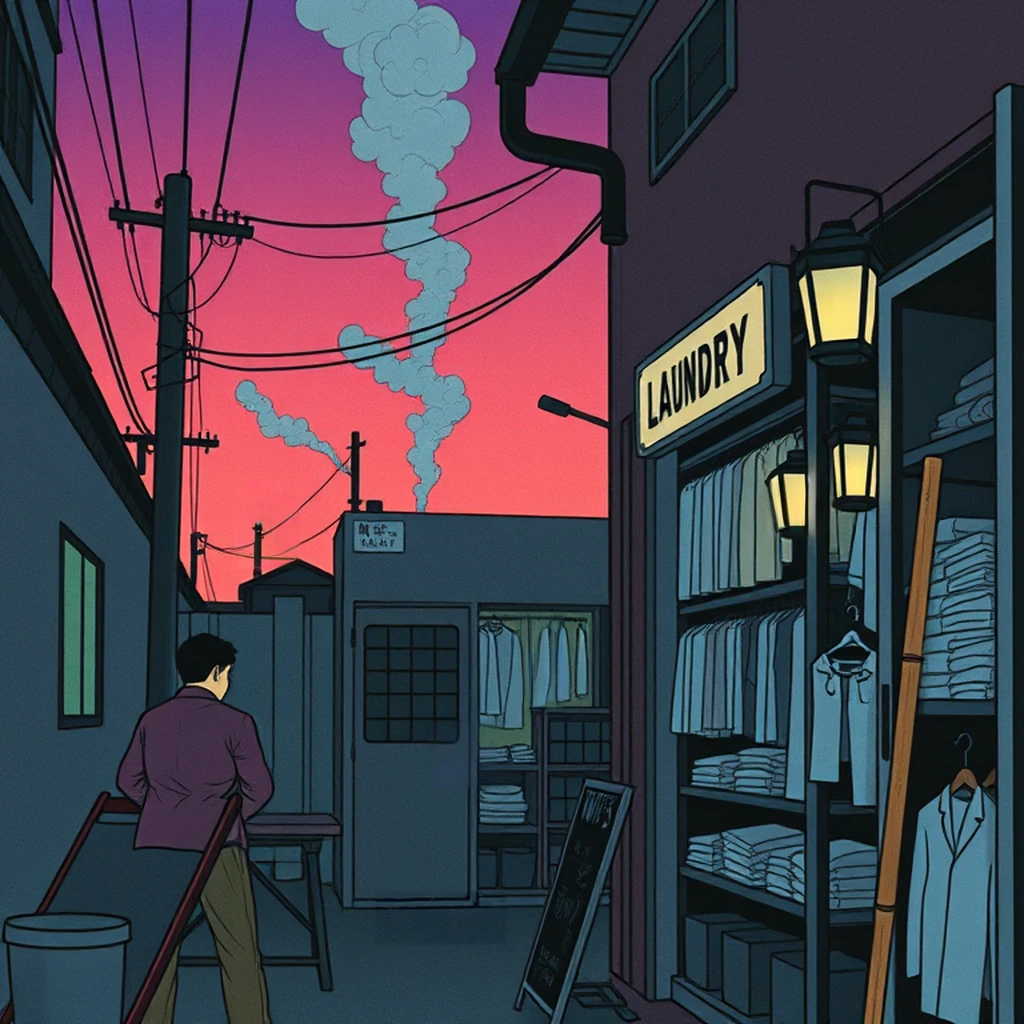
An ukiyo-e style woodblock print of a small Chinese laundry shop in Los Angeles during the late hours of dusk. The sky is painted with shades of magenta and lavender, casting an ethereal glow over the dimly lit alleyway. Smoke from distant fires hangs low, adding to the melancholic atmosphere. A lone worker stands at a washboard on one side, their back turned towards us as they prepares for closing time. Inside, shelves are lined with neatly folded clothes, while hanging laundry sways gently in the evening breeze. Small props include an old enamel sign reading 'Wu’s Laundry,' a lantern swinging from the door frame, and a bamboo pole resting against the wall. The scene is detailed but cropped tightly to focus on the intimate setting of the shop.
The dusky sky of an ukiyo-e woodblock print stretches over the Chinese laundry shop in Los Angeles, its magenta and lavender hues casting an ethereal glow that bathes everything in a soft, melancholic light. Smoke from distant fires billows low across the alleyway, lending a dreamlike quality to the scene as it envelops the space with a pungent aroma of woodsmoke. Inside the shop, a lone worker stands at a washboard, his figure backlit by the fading light, adding a sense of solitude and quiet contemplation to the setting. The shelves are meticulously arranged with neatly folded garments in soft pastel tones, while hanging laundry gently sways in the evening breeze, each piece catching the last rays of daylight before night falls. An old enamel sign reading "Wu’s Laundry" hangs above the door, its letters worn but still legible; a lantern swings slightly from the frame, casting flickering shadows on the walls and lending an air of mystery to the space. A bamboo pole leans against one wall, its smooth surface catching the light, adding a textural contrast to the rough wood of the washboards and the creased fabric of the clothes. The overall atmosphere is imbued with a sense of nostalgia, capturing a fleeting moment in time that feels both timeless and poignant. This scene's intricate details and intimate setting make it particularly intriguing for a spot-the-difference puzzle, inviting viewers to explore the subtle nuances within this bygone era’s Chinese laundry shop.
Background
The late 1940s in Los Angeles saw the Chinese laundry shop as a cornerstone of community and commerce for immigrants who faced significant social and economic challenges. These businesses were often one of the few avenues available to Chinese Americans to establish themselves financially after enduring decades of exclusionary laws and discriminatory practices. The ukiyo-e style, traditionally associated with Japan's Edo period (1603-1868), was characterized by its focus on everyday life and popular culture. Its adoption here creates an intriguing juxtaposition between Eastern aesthetics and Western settings, blending the rich cultural heritage of traditional Japanese art with the realities of Chinese American immigrant experiences in a major U.S. city. Washboards were indispensable tools for laundry work before the advent of modern washing machines, symbolizing hard labor and perseverance. The melancholic tone conveyed by the dim lighting and ethereal sky hints at the bittersweet nature of immigrant life—struggling to maintain cultural identity while carving out a place in an often unwelcoming society.
Tips for this puzzle
When you're searching for those five differences in our ukiyo-e style Chinese laundry shop scene from the late 40s, remember to take your time and look closely at all the details. With such an intricate composition, it's easy to miss things hidden in plain sight, especially in shadows or within the patterns of hanging laundry. Pay special attention to areas like the shelves lined with neatly folded clothes; there might be a subtle change in how items are arranged. Also, don't overlook the small props and text on signs which can sometimes differ slightly between versions of the image. To ensure you find every difference without getting frustrated, try scanning methodically from left to right and top to bottom, checking each section thoroughly before moving on. Happy spotting!
How to play
- Two near-identical images are shown side by side.
- Tap or click on the differences before the countdown timer runs out.
- Wrong clicks subtract 5 seconds from the clock.
- Stuck? Spend a hint token to glow one remaining difference.
About this puzzle
This is one of 633+ hand-curated AI-generated spot-the-difference puzzles in the SpotDiff library. Each puzzle has multiple variants — the differences you see on your first play are different from the next. 3 variant(s) for this scene.
SpotDiff is free to play with no signup required, and the library grows daily — roughly 10-30 new puzzles added every day. Hint tokens are earned through daily login, streaks, and referrals — or buy a bundle if you want unlimited hints. Refunds are available within 7 days, prorated by the tokens you haven't used yet.