1940s british wartime school classroom with blackout curtains
Discover the subtle differences in this sumi-e ink wash painting of a 1940s British wartime classroom at dusk, filled with dust and melancholic…
About this scene
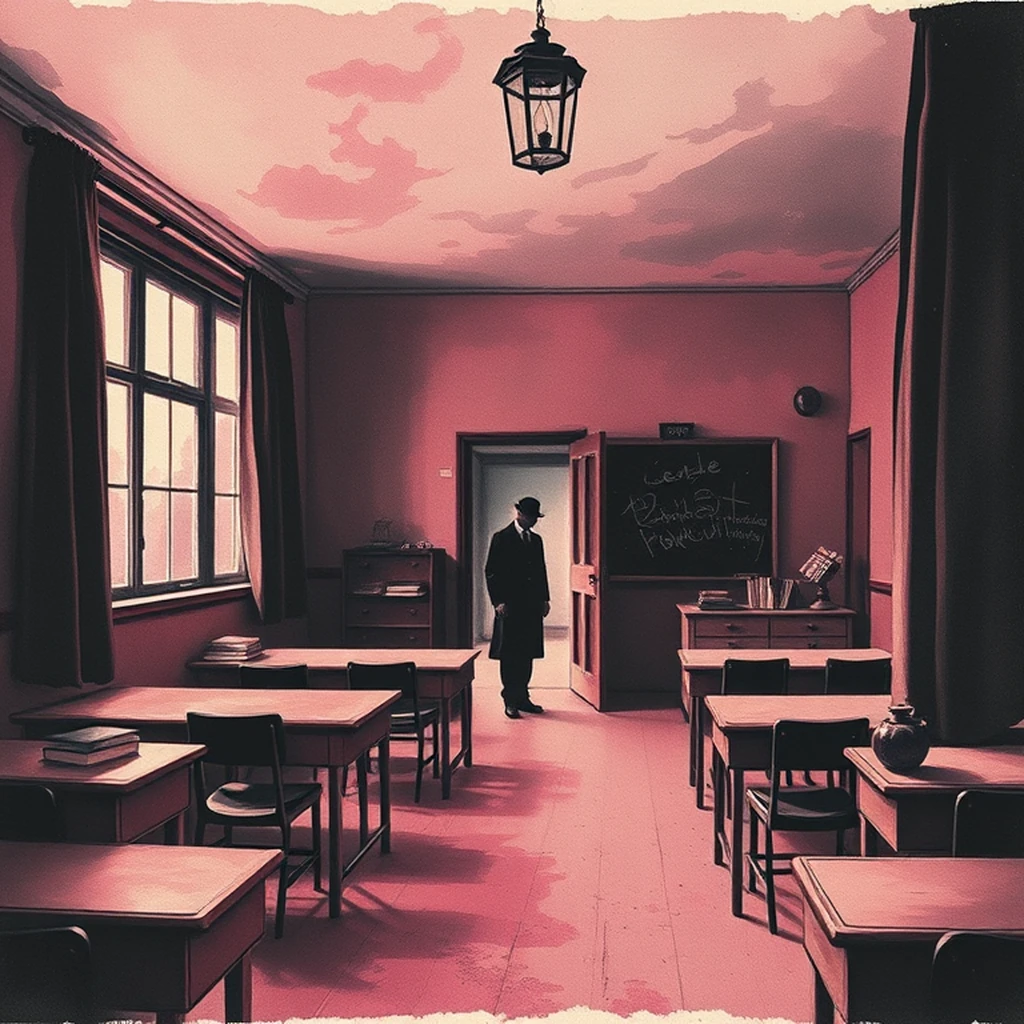
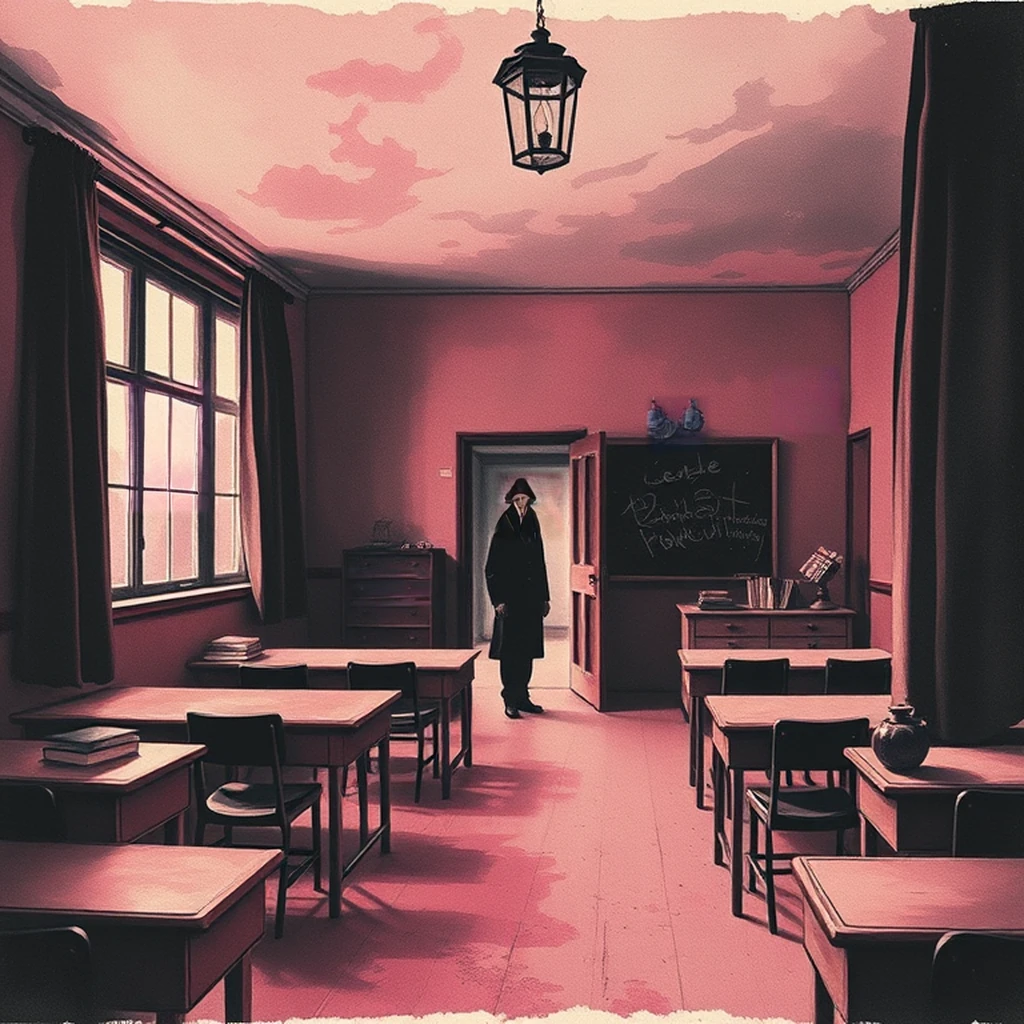
A side elevation cross-section of a 1940s British wartime classroom, rendered in sumi-e ink wash painting style. The scene is bathed in the dusky hues of magenta and slate gray with pink and lavender tones as dusk sets in, casting a melancholic atmosphere over the space. Dust particles float gently through the dimly lit room, emphasizing the austerity of wartime life. Blackout curtains are drawn tightly shut, revealing only thin slits where light barely seeps through. The classroom is sparsely furnished with worn desks and chairs, some scattered books, and an old blackboard covered in faint chalk scribbles. In the doorway stands a solitary silhouette, perhaps a student leaving late or a teacher lingering at the end of the day. Small props unique to this moment include an unlit gas lamp hanging from the ceiling, several faded wartime posters on the walls, a single dusty globe sitting atop a cluttered desk, an old record player with a needle paused mid-track, and a tin lunchbox left abandoned on a corner shelf. The scene is painted in soft, atmospheric ink washes to capture the quiet solemnity of the late evening hours.
The dusky room is enveloped in the melancholic hues of magenta and slate gray, with pink and lavender tones softly mingling as dusk descends. The air inside is thick with a quiet solemnity, punctuated by faint whispers of dust motes dancing through the dim light filtering through narrow slits in tightly drawn blackout curtains. The walls are adorned with faded wartime posters that silently remind of the austerity and vigilance demanded by times of conflict. An old blackboard stands at the front of the room, its surface scratched with traces of chalk marks left from lessons past; some faintly readable, others erased to reveal the worn texture beneath. Worn desks and chairs are scattered about, each bearing witness to countless hours of learning amidst hardship. At one corner, a single dusty globe rests atop a cluttered desk, partially obscured by piles of books that spill over onto the floor. A tin lunchbox lies abandoned on a nearby shelf, its metal surface dull with age and neglect, hinting at stories left untold. The air carries the faint hum of an old record player where a needle pauses mid-track, suspended in time as if waiting for the hand to turn the dial once more. An unlit gas lamp hangs from the ceiling, its shade cast aside like a forgotten relic of better days. This scene is particularly intriguing for a spot-the-difference puzzle because each object and shadow tells a story of resilience and quiet heroism against the backdrop of wartime Britain, inviting players to uncover hidden details that breathe life into this somber tableau.
Background
Set in the early 1940s during World War II, this British wartime classroom reflects a period of national austerity and collective endurance. The room's sparse furnishings and dim lighting underscore the material deprivations imposed by rationing and blackouts to prevent enemy aerial attacks. Ink wash painting, often associated with sumi-e in East Asian art traditions but adapted here for Western subjects, offers a poignant visual language to convey the somber mood of wartime Britain. Each element of the classroom—from the blackout curtains to the faded posters—evokes the era's pervasive sense of sacrifice and resilience. The solitary figure standing by the doorway symbolizes both the end of another weary school day and the lingering anxieties that permeated daily life during this time. War-time posters, like those on the walls, typically featured stark messages about resource conservation or recruitment for civil defense services. Meanwhile, an old record player with a paused needle hints at moments of respite from the grim reality outside, suggesting how music provided solace in dark times. The inclusion of a globe emphasizes Britain's role as a global power and its strategic interests during the war. This scene encapsulates not just the physical environment but also the psychological climate of wartime Britain, where everyday spaces were transformed by the exigencies of total war.
Tips for this puzzle
Finding those five differences in a scene as detailed as this wartime classroom can be quite the challenge! Start by taking your time and scanning methodically across the composition. Notice how the ink wash style of the painting might make subtle changes harder to spot. Look closely at areas like the dusty, cluttered desk where small items or details could easily blend into the background. The old record player with its needle paused mid-track offers another potential hiding spot for differences. Don't overlook the shadowy corners near the blackout curtains; these dark spots often conceal tiny variations in objects or patterns. Keep an eye out for those faded wartime posters on the walls and the faint chalk scribbles on the blackboard—they could hold a difference too. Remember, systematic scanning is your best friend here—start from one corner of the room and work your way across to the other side without skipping any spots. Happy hunting!
How to play
- Two near-identical images are shown side by side.
- Tap or click on the differences before the countdown timer runs out.
- Wrong clicks subtract 5 seconds from the clock.
- Stuck? Spend a hint token to glow one remaining difference.
About this puzzle
This is one of 696+ hand-curated AI-generated spot-the-difference puzzles in the SpotDiff library. Each puzzle has multiple variants — the differences you see on your first play are different from the next. 3 variant(s) for this scene.
SpotDiff is free to play with no signup required, and the library grows daily — roughly 10-30 new puzzles added every day. Hint tokens are earned through daily login, streaks, and referrals — or buy a bundle if you want unlimited hints. Refunds are available within 7 days, prorated by the tokens you haven't used yet.