1930s japanese tea house interior with bamboo furniture
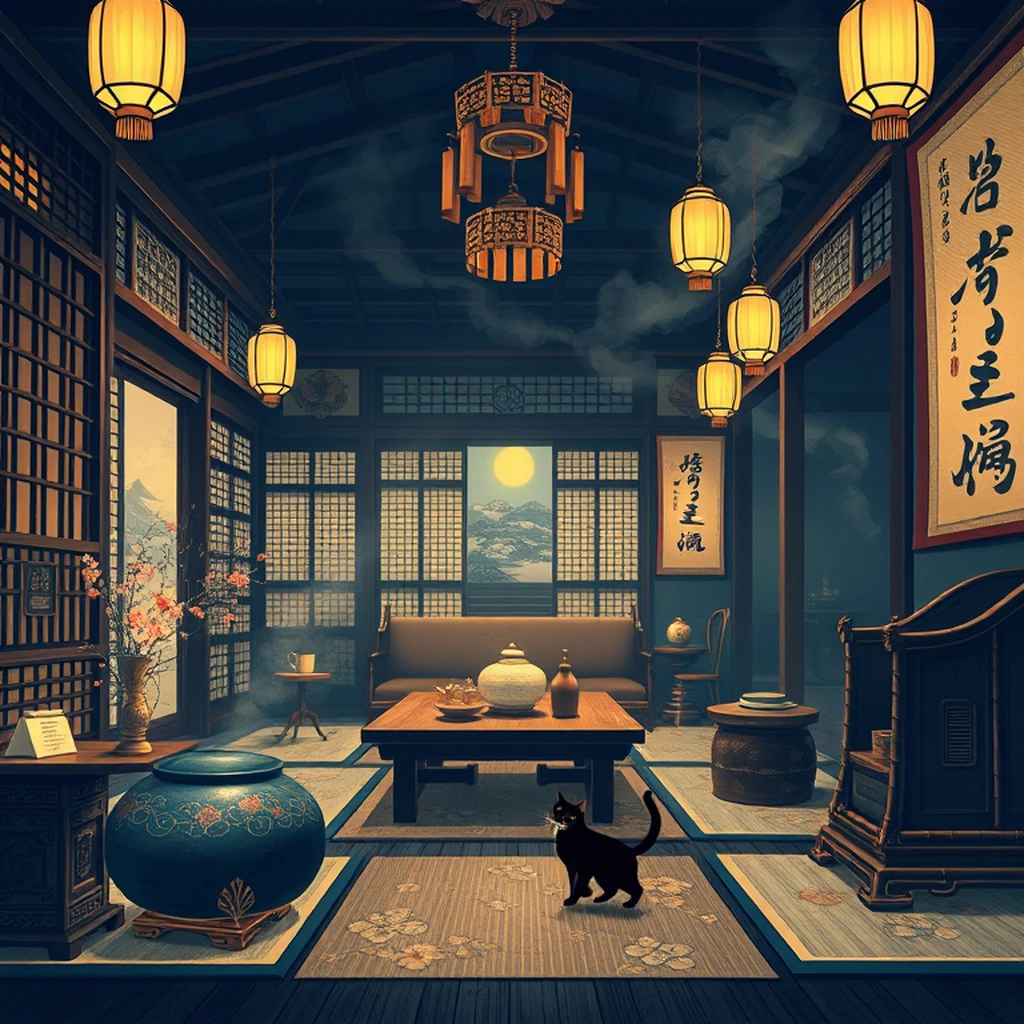
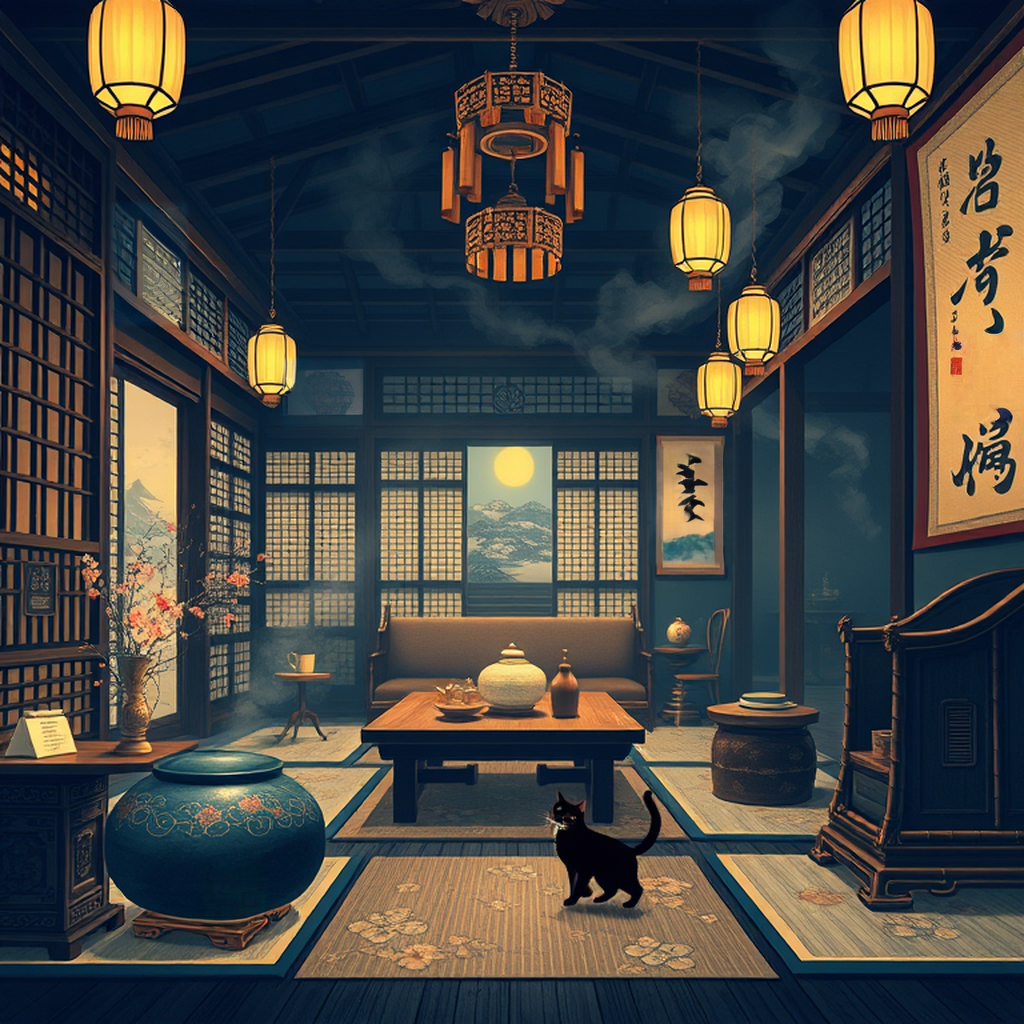
Explore a festive early evening in a classic Japanese tea house interior from the 1930s, rendered in ukiyo-e style. Perfect for spotting subtle…
About this scene
An early evening scene inside a traditional Japanese tea house from the 1930s, rendered in the style of an ukiyo-e woodblock print. The interior is bathed in a soft fluorescent glow, casting intricate shadows and creating a smoky atmosphere with incense smoke lingering in the air. The space is decorated in navy blue and brass tones, enhancing the festive celebration setup that includes intricately carved bamboo furniture, hanging lanterns, and traditional calligraphy scrolls on the walls. A small cat roams freely among the patrons, adding a touch of life to the otherwise serene setting. The room features ornate paper screens dividing spaces, delicate floral patterns adorning the floor mats, and an assortment of unique props such as a ceramic vase filled with chrysanthemums, a pair of antique brass candlesticks, a small bamboo fan hanging from a rope, a wooden abacus, and a lacquered tea chest adorned with intricate designs. The scene is symmetrically framed head-on to emphasize the formal beauty and symmetry characteristic of traditional Japanese interiors. Soft ukiyo-e woodblock print, flat colors with decorative outlines.
As the soft glow of early evening settles over the traditional Japanese tea house from the 1930s, the room is enveloped in a serene ambiance punctuated by the gentle wafting of incense smoke. The interior exudes an almost otherworldly charm with its navy blue and brass decor, creating a festive yet contemplative atmosphere that seems to whisper secrets of the past. Intricately carved bamboo furniture stands as silent sentinels around the room, their smooth surfaces reflecting the soft fluorescent light that casts delicate shadows across the floor. Hanging lanterns and traditional calligraphy scrolls adorn the walls, adding layers of cultural richness to the setting. A small cat prowls gracefully among the patrons, its presence a fleeting reminder of life's vitality amidst such refined aesthetics. Ornate paper screens divide the space into intimate nooks, each revealing glimpses of meticulously arranged floral patterns on floor mats that underscore the attention to detail. The ceramic vase filled with chrysanthemums and the pair of antique brass candlesticks stand as testament to the careful curation of objects within this sanctuary of tranquility. A small bamboo fan hangs from a rope overhead, its delicate design catching the eye as it gently sways in the subtle air currents. Nearby, a wooden abacus sits quietly beside a lacquered tea chest adorned with intricate patterns, each item holding stories of centuries-old traditions and practices. The room's symmetrical composition, framed head-on to emphasize formal beauty, invites one to lose oneself in the perfect balance of colors and textures. The flat ukiyo-e woodblock print style lends an ethereal quality to everything it touches, enhancing the sense of stepping into a bygone era where every element tells its own tale. This scene's unique blend of historical authenticity and artistic embellishment makes for a particularly intriguing spot-the-difference puzzle, inviting players to uncover subtle nuances that speak volumes about the rich tapestry of Japanese cultural heritage.
Background
The early evening scene inside a traditional Japanese tea house from the 1930s captures an era rich in cultural significance and artistic innovation. The 1930s was a period of transition for Japan, blending centuries-old traditions with emerging modern influences. Located within this context is the serene setting of a tea house that embodies the aesthetic principles of ukiyo-e woodblock prints, which were popular during the Edo period but continued to influence Japanese art well into the 20th century. Ukiyo-e, meaning "pictures of the floating world," often depicted scenes from everyday life and culture, showcasing beauty in the transient aspects of existence. The head-on composition with its symmetric framing highlights the formal elegance characteristic of traditional Japanese interiors, emphasizing a sense of harmony and balance that is central to the tea ceremony philosophy. The interior decorations reflect the festive celebration taking place, incorporating elements such as navy blue and brass tones, hanging lanterns, and calligraphy scrolls on the walls. Bamboo furniture, with its natural simplicity and elegance, complements the overall aesthetic while also symbolizing resilience and longevity in Japanese culture. Intricate paper screens that divide spaces serve both practical and artistic purposes, allowing for privacy and changing visual perspectives within a single room. The tea house itself is a testament to Japan's long-standing tradition of wabi-sabi aesthetics, which celebrate imperfection and the beauty found in nature's simplicity. This scene also reflects the social history of the 1930s, when traditional arts like woodblock printing were experiencing a revival alongside more contemporary artistic movements. The inclusion of objects such as a wooden abacus and lacquered tea chest demonstrates the intertwining of practicality with artistry—a hallmark of Japanese craftsmanship throughout its history. As patrons gather to partake in the ritualistic act of drinking tea, they engage not only in social bonding but also in a cultural practice that fosters spiritual enlightenment and aesthetic appreciation.
Tips for this puzzle
When you're tackling today's SpotDiff puzzle featuring a traditional Japanese tea house from the 1930s, remember that finding those five differences can be a bit tricky but also super rewarding! With such an intricate and detailed scene, it’s important to move methodically. Start by scanning the room symmetrically since the composition is head-on and balanced; this often means differences are mirrored or equally spaced on either side. Pay special attention to areas with lots of detail, like the intricately carved bamboo furniture and delicate floral patterns on the floor mats, as these spots can hide subtle changes easily missed at first glance. Shadows cast by hanging lanterns or the incense smoke in the air might obscure small differences too, so take your time to scrutinize every shadowy corner and crevice. And don’t forget about unique items like the ceramic vase filled with chrysanthemums or the wooden abacus; these standouts often harbor a difference due to their distinct placement within the scene. Happy spotting!
How to play
- Two near-identical images are shown side by side.
- Tap or click on the differences before the countdown timer runs out.
- Wrong clicks subtract 5 seconds from the clock.
- Stuck? Spend a hint token to glow one remaining difference.
About this puzzle
This is one of 696+ hand-curated AI-generated spot-the-difference puzzles in the SpotDiff library. Each puzzle has multiple variants — the differences you see on your first play are different from the next. 3 variant(s) for this scene.
SpotDiff is free to play with no signup required, and the library grows daily — roughly 10-30 new puzzles added every day. Hint tokens are earned through daily login, streaks, and referrals — or buy a bundle if you want unlimited hints. Refunds are available within 7 days, prorated by the tokens you haven't used yet.