1930s english countryside tea room with lace curtains and scones
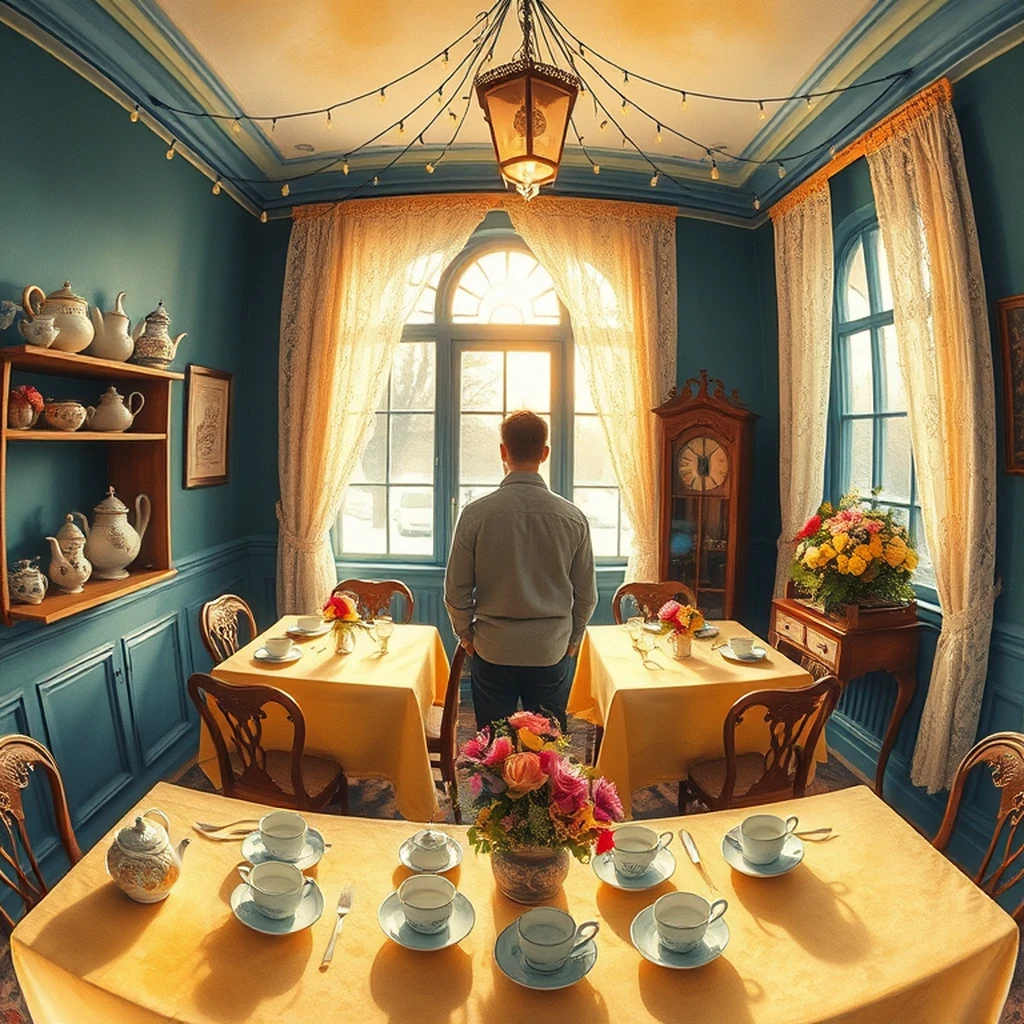
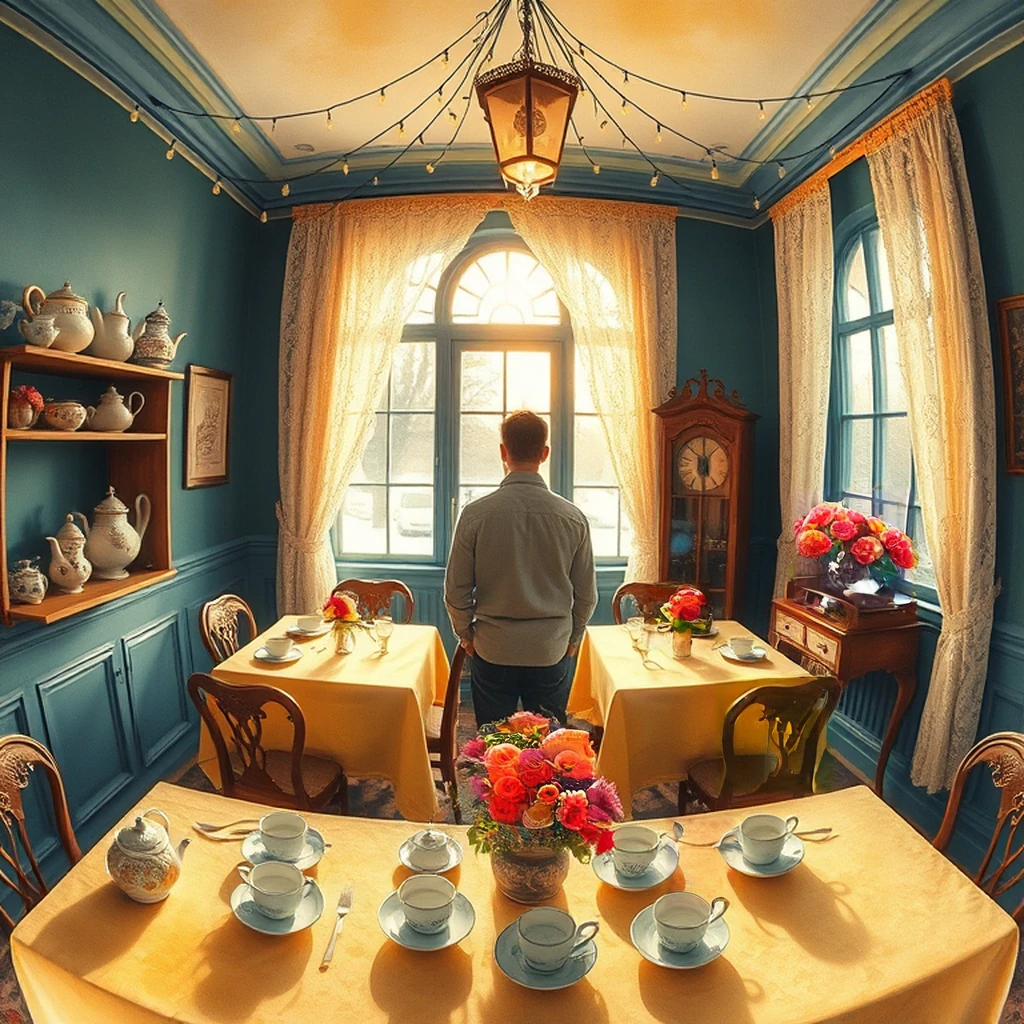
Step into the golden hour beauty of an early 1930s English countryside tea room with fish-eye wide-angle distortion and crisp cold air in this…
About this scene
A photorealistic photo captures the enchanting afternoon golden hour in an early 1930s English countryside tea room. The scene is framed by fish-eye wide-angle distortion, with crisp cold air visible as small clouds of breath swirl around. Lace curtains flutter slightly from a cool breeze, casting intricate shadows on tables set up for an upcoming festive celebration. Ultramarine walls contrast sharply with the warm sulfur yellow accents in the form of tablecloths and scones. A single figure stands mid-frame, back turned to the viewer as they arrange decorations and flower arrangements. The setting is rich with visual details such as vintage teapots on a rustic shelf, delicate porcelain cups glistening under the soft light, an old wooden clock ticking away in a corner, a hand-painted sign for 'Afternoon Tea,' and strings of twinkling fairy lights draped above. Soft watercolor illustration, paper texture.
The golden hour bathes the early 1930s English countryside tea room in a warm, hazy light that casts long shadows and highlights every texture within the space. The fish-eye wide-angle distortion captures an expansive view, stretching the ultramarine walls into exaggerated curves that contrast sharply with the soft yellow accents of tablecloths and scones. Lace curtains flutter gently from an unseen breeze, their intricate patterns dancing across wooden tables set up for a festive celebration, hinting at the joyous occasion to come. Vintage teapots on a rustic shelf catch the light, reflecting a playfulness that mirrors the hand-painted sign reading 'Afternoon Tea.' Delicate porcelain cups glisten under the filtered sunlight, their glinting surfaces adding a touch of elegance. The air is crisp and cold, visible as small clouds of breath swirl around the single figure arranging decorations and flower arrangements mid-frame, seemingly oblivious to the viewer’s presence. An old wooden clock ticks away in one corner, its rhythm echoing through the room alongside the gentle rustling of lace curtains and strings of twinkling fairy lights that drape above like a canopy of stars. The scene exudes an atmosphere of nostalgia and anticipation, inviting one to step into this cozy haven where every detail tells a story. What makes this scene particularly intriguing for a spot-the-difference puzzle is its rich visual tapestry, filled with subtle variations in textures, shadows, and decorations that challenge the eye to uncover hidden differences among the charming details.
Background
The scene is set in an early 1930s English countryside tea room, a period marked by genteel traditions and elegant refinement. The English countryside was not just a backdrop but a cherished setting for social gatherings and leisure activities that reflected the era's cultural values of tranquility and simplicity. Tea rooms became popular venues for afternoon tea parties, providing women with spaces to gather, converse, and enjoy each other’s company in an atmosphere that felt removed from the hustle and bustle of urban life. The lace curtains fluttering softly in a cool breeze symbolize the genteel nature of these gatherings, where delicate porcelain teacups and vintage teapots were central elements. These rooms often featured traditional English decor with soft yellow tones contrasting against ultramarine blue walls, evoking feelings of warmth and coziness. The hand-painted sign for "Afternoon Tea" is a nod to the genteel pastime, which was also an important part of social etiquette and status in the early 20th century. This era saw a blend of Victorian-era nostalgia with Art Deco influences, evident in the intricate patterns and clean lines of the decor, yet maintaining a charmingly rustic aesthetic that resonates deeply with the nostalgic appeal of rural English life from this period.
Tips for this puzzle
Spotting those five differences in today's charming English countryside tea room scene isn't going to be a walk in the park, but it can certainly be fun if you know where to look. With all that vintage charm and intricate details swirling around, it’s easy to get lost in the beauty of the place. Remember, the fish-eye lens adds an extra layer of complexity by stretching out edges and corners, so keep your eyes peeled for spots where items might appear slightly distorted or shifted. Cluttered shelves filled with delicate teapots and vintage crockery are common places to hide differences, as are the intricate shadows cast by the lace curtains and festive decorations. The hand-painted 'Afternoon Tea' sign can also play tricks on your eyes since it’s a focal point of the room. Don't forget about those fairy lights strung up above; they can blend in with other decorative elements easily. To make sure you don’t miss anything, try scanning from left to right and top to bottom slowly, taking note of any changes or inconsistencies that catch your eye. Happy spotting!
How to play
- Two near-identical images are shown side by side.
- Tap or click on the differences before the countdown timer runs out.
- Wrong clicks subtract 5 seconds from the clock.
- Stuck? Spend a hint token to glow one remaining difference.
About this puzzle
This is one of 633+ hand-curated AI-generated spot-the-difference puzzles in the SpotDiff library. Each puzzle has multiple variants — the differences you see on your first play are different from the next. 3 variant(s) for this scene.
SpotDiff is free to play with no signup required, and the library grows daily — roughly 10-30 new puzzles added every day. Hint tokens are earned through daily login, streaks, and referrals — or buy a bundle if you want unlimited hints. Refunds are available within 7 days, prorated by the tokens you haven't used yet.