1930s dutch canal house living room with floral wallpaper
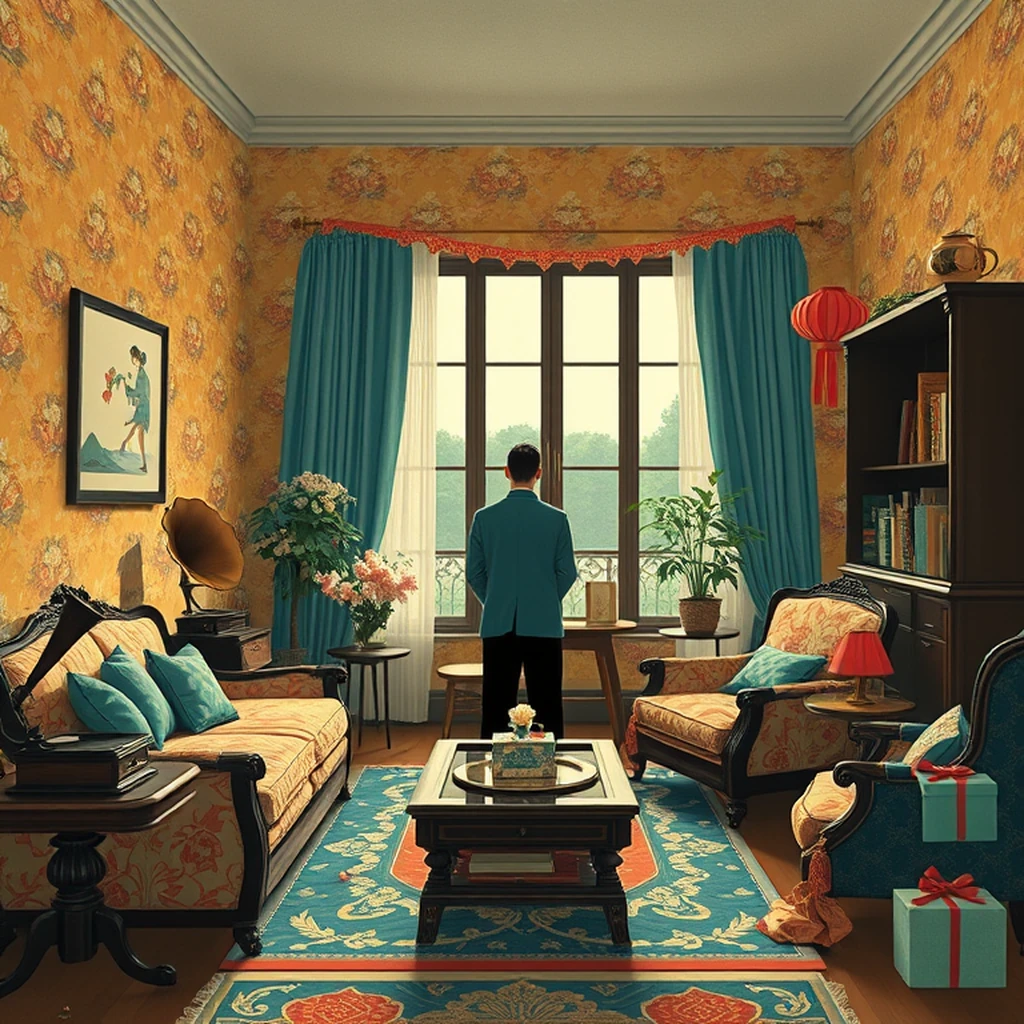
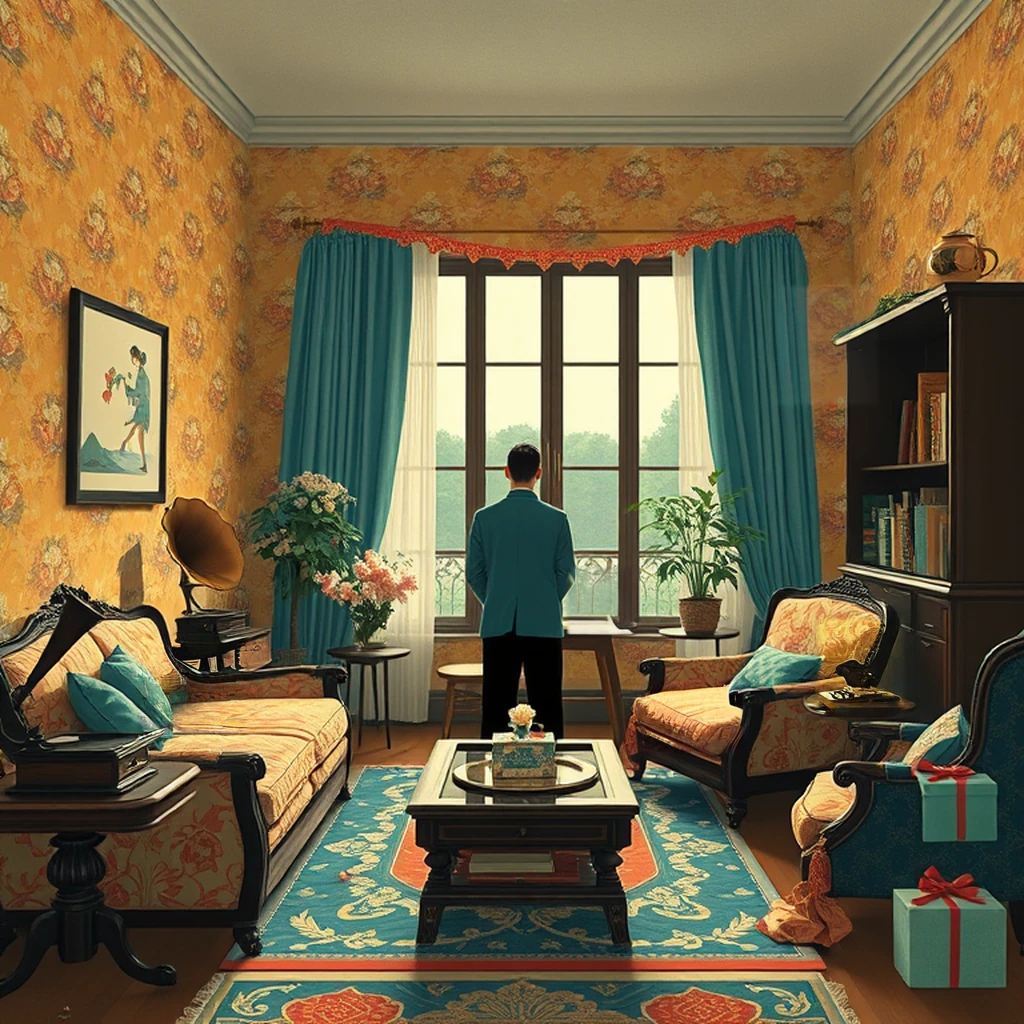
A festive celebration setup in mid-morning light inside a 1930s Dutch canal house living room, rendered in ukiyo-e woodblock print style. Spot the…
About this scene
A 1930s Dutch canal house living room rendered in the style of a ukiyo-e woodblock print, featuring flat colors and decorative outlines. The composition is set with a dramatic dutch tilt diagonal perspective. It's mid-morning and brightly lit, casting clear shadows on the intricate floral wallpaper that covers the walls in amber and deep teal hues. A single figure stands back-turned against the wall, setting up for what appears to be a festive celebration. In addition to the ornate furniture, small props include a delicate vase of blooming flowers, an antique gramophone, a colorful banner with paper lanterns, a box of wrapped gifts, and a scattering of confetti on the floor. The room is richly detailed from corner to corner in this flat yet decorative woodblock style.
The living room of a 1930s Dutch canal house bathed in morning light invites the eye into its intricate world, where every detail is rendered in the flat yet vivid style of a ukiyo-e woodblock print. The amber and deep teal hues of the floral wallpaper dance across the walls, casting delicate shadows that stretch diagonally with the dramatic tilt of the perspective. A single figure stands facing away from the viewer by the wall, perhaps preparing for an upcoming celebration, their silhouette stark against the bright backdrop. In this space, every object tells a story of elegance and tradition. An antique gramophone sits next to a delicate vase filled with blooming flowers, its vibrant colors contrasting sharply with the muted tones of the wallpaper. A colorful banner adorned with paper lanterns hangs from the ceiling, hinting at an imminent festivity. Scattered across the floor are small gifts wrapped in festive paper and confetti, adding splashes of color to the otherwise subdued setting. The room's rich textures come alive through this artistic lens: the smooth finish of the furniture against the intricate patterns of the wallpaper, each element harmoniously blending into a cohesive whole that exudes both warmth and sophistication. The ukiyo-e style captures not only the visual beauty but also the serene yet lively essence of the scene, making it a captivating space to explore. What makes this particular living room especially intriguing for a spot-the-difference puzzle is its blend of historical charm and artistic interpretation, inviting players to uncover subtle nuances that might be overlooked at first glance.
Background
The early twentieth century in the Netherlands was a time of cultural and artistic evolution, deeply influenced by the global trends and local traditions that shaped the nation's unique identity. The living room depicted here is set within a 1930s Dutch canal house, where elegance and functionality coexisted harmoniously with the rich heritage of the region. These canal houses were architectural marvels, reflecting the prosperity and style of their time through intricate details such as the floral wallpaper that adorns this space in amber and teal tones, reminiscent of a blooming garden. The artistic portrayal in ukiyo-e woodblock print style is notable for its flat colors and decorative outlines, which contrast with the European realism often seen during this period. Originating from Japan, ukiyo-e was brought to Europe by traders and artists who were captivated by its elegance and simplicity, influencing various aspects of Western art including interior design and fashion. This intersection of Eastern aesthetics and Western living spaces is a testament to the cultural exchanges that enriched both traditions. The room's festive atmosphere hints at celebrations common in Dutch society during this era, marking important occasions such as holidays or family gatherings with elaborate decorations like paper lanterns and banners, alongside more practical items such as an antique gramophone for music entertainment. Such elements not only served functional purposes but also elevated the social status of their owners through the display of cultural sophistication and aesthetic refinement.
Tips for this puzzle
Looking for those five differences in today's SpotDiff puzzle? Start by focusing on the vibrant floral wallpaper that covers every inch of the walls—details like these are perfect spots to hide subtle changes. Don’t forget about the shadows cast across the room; they can conceal small tweaks or additions, especially around the antique gramophone and under the colorful banner. The intricate patterns in a ukiyo-e style painting also make for tricky hiding places since shapes and lines blend seamlessly. Start your search at one corner of the room and move methodically along the walls to catch all these details. As you approach each piece of furniture, like the delicate vase or box of wrapped gifts, take a moment to really look closely—small items often have tiny differences tucked away within them. And remember, the festive atmosphere might mean additional elements are scattered around, so keep your eyes peeled for things that don’t quite fit in this 1930s Dutch canal house setting. Happy spotting!
How to play
- Two near-identical images are shown side by side.
- Tap or click on the differences before the countdown timer runs out.
- Wrong clicks subtract 5 seconds from the clock.
- Stuck? Spend a hint token to glow one remaining difference.
About this puzzle
This is one of 633+ hand-curated AI-generated spot-the-difference puzzles in the SpotDiff library. Each puzzle has multiple variants — the differences you see on your first play are different from the next. 3 variant(s) for this scene.
SpotDiff is free to play with no signup required, and the library grows daily — roughly 10-30 new puzzles added every day. Hint tokens are earned through daily login, streaks, and referrals — or buy a bundle if you want unlimited hints. Refunds are available within 7 days, prorated by the tokens you haven't used yet.