1930s berlin living room with vintage radio and gramophone
Explore a melancholy late-night scene in a 1930s Berlin living room with neon glow, vintage radio, and gramophone. Find the differences in this…
About this scene
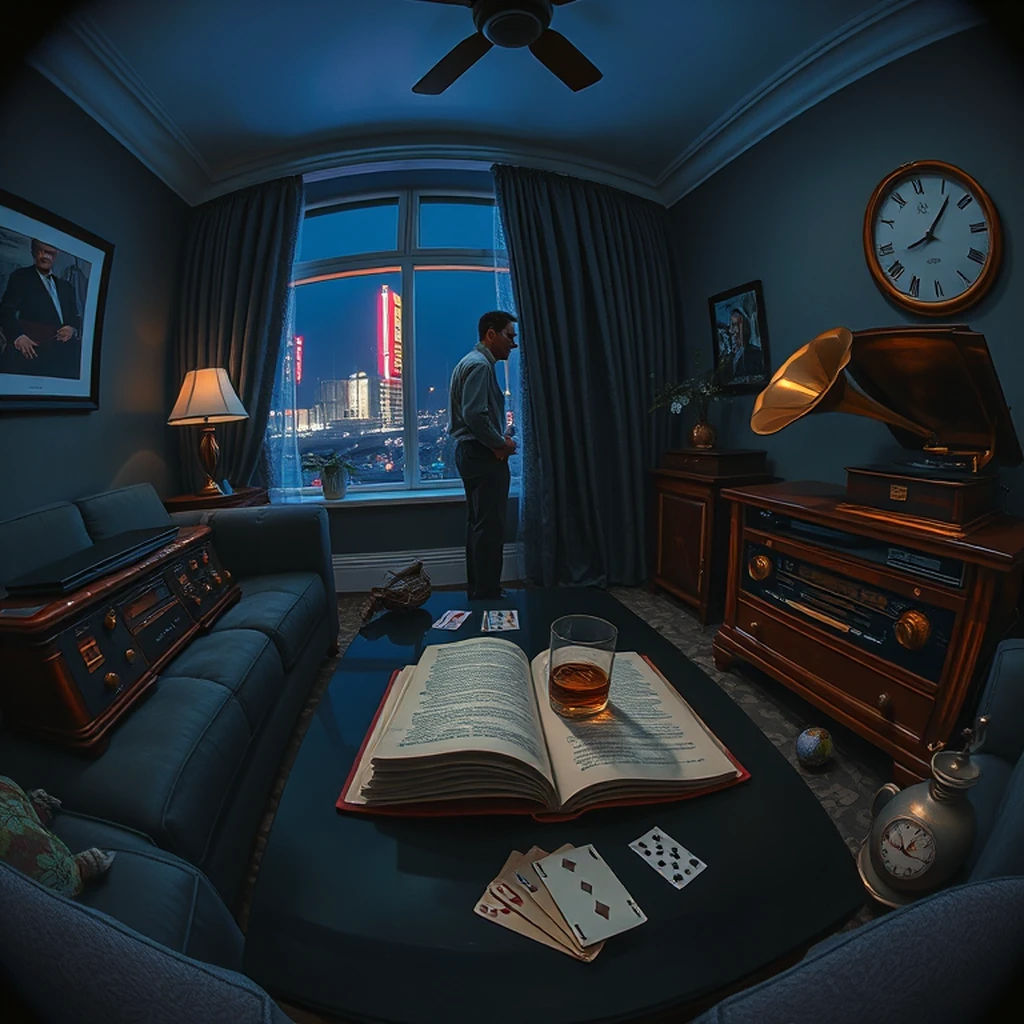
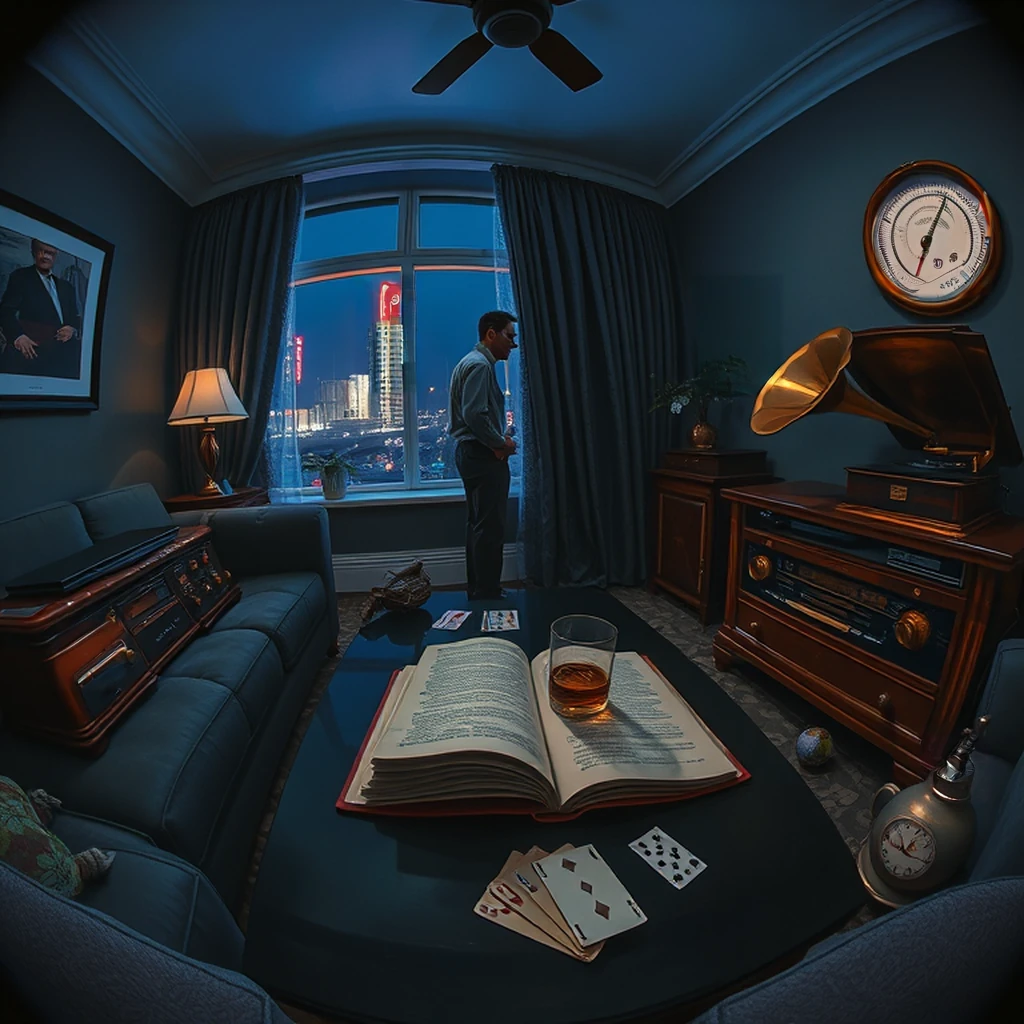
A dimly lit living room in 1930s Berlin at deep night, rendered as an opaque gouache illustration with saturated colors. The scene is framed through a fish-eye lens, capturing the wide-angle distortion typical of interior spaces. Neon lights from outside cast blue and pink hues onto the walls, while charcoal grey tones dominate the furniture and textiles. Copper accents highlight vintage items like the radio and gramophone, adding a touch of warmth. Two people are seen in conversation by a window, their figures slightly blurred due to the wide-angle view. The air is clear but dry, enhancing the melancholic atmosphere as Berlin winds down for the evening. Specific small props include an open book on the coffee table with crumpled pages, a half-empty glass of whiskey next to it, a vintage clock showing late hours, a few scattered playing cards, and a torn photograph on the mantelpiece.
The living room in 1930s Berlin is wrapped in a cloak of dim light, where the walls seem to absorb rather than reflect the little illumination they receive. The fish-eye lens distorts corners and edges, giving everything an exaggerated presence that feels both intimate and alienating. Neon lights from outside pierce through the window frames, casting eerie blue and pink hues onto the furniture, which is predominantly charcoal grey in a mix of velvety fabrics and coarse textiles. Copper accents on vintage items such as a radio and gramophone gleam softly in the low light, providing a warm contrast to the otherwise cool atmosphere. The two figures conversing by the window are just shadows under this wide-angle distortion, their presence felt but not fully seen. An open book with crumpled pages rests on the coffee table, alongside a half-empty glass of whiskey that reflects the dim glow from a nearby vintage clock showing late hours. A few playing cards lie scattered around, suggesting an interrupted evening of leisure or contemplation. On the mantelpiece, a torn photograph adds another layer of melancholy to the scene. The air is dry and still, carrying whispers of Berlin's night as it fades into early morning. Each object in the room tells its own story, contributing to a sense of history and nostalgia that permeates this dimly lit corner. The saturated colors and distorted perspective make this scene particularly intriguing for a spot-the-difference puzzle, challenging players to discern subtle details amidst rich textures and hues.
Background
The living room scene captures the essence of Berlin in the late 1930s, a period marked by political upheaval and cultural richness. As Germany was on the brink of World War II, life continued to thrive despite looming shadows. In this vintage setting, the furniture and decor reflect the Art Deco style that was popular during the era, characterized by its sleek lines and rich materials, which in Berlin often included exotic woods and luxurious textiles to show off wealth and status amidst economic uncertainty. The radio and gramophone stand out as pivotal objects of their time. Radios were a source of news and entertainment for many, connecting people to events beyond their immediate surroundings. In this room, the vintage radio would have been an essential piece of technology, keeping inhabitants informed about world affairs and local culture. Similarly, the gramophone was not just for music but also for storytelling through spoken word records, making it a vital social hub in pre-television era homes. The gouache illustration adds a nostalgic touch with its saturated colors and opaque finish, typical of mid-20th century painting styles that sought to capture idealized scenes. The fish-eye wide-angle distortion emphasizes the cozy yet expansive feel of the room, drawing attention inward despite the neon lights hinting at an active nightlife outside. The people conversing by the window could be seen as emblematic of Berlin's vibrant social life in those days, where intellectuals and artists gathered to discuss ideas over drinks. The whiskey glass next to the open book and scattered playing cards suggest a night of conversation and leisure, encapsulating the transient moments of joy amidst the impending storm.
Tips for this puzzle
When you're tackling this vintage Berlin living room scene from the '30s, look for those sneaky differences in spots where clutter might be hiding them. Think about areas with lots of small details like around the radio and gramophone or on the coffee table with its scattered items like a half-empty whiskey glass and an open book. Shadows cast by the neon lights can also play tricks on your eyes, so pay special attention to those dark corners near windows or behind furniture where differences might be cleverly tucked away. Given the fish-eye lens effect, you'll notice some distortion at the edges of the frame, which can make it harder to spot changes in patterns and textures that are stretched out there. To keep yourself on track, try scanning methodically from left to right across each element before moving onto the next one, making sure not to miss any subtle discrepancies amidst the richly detailed gouache artwork.
How to play
- Two near-identical images are shown side by side.
- Tap or click on the differences before the countdown timer runs out.
- Wrong clicks subtract 5 seconds from the clock.
- Stuck? Spend a hint token to glow one remaining difference.
About this puzzle
This is one of 696+ hand-curated AI-generated spot-the-difference puzzles in the SpotDiff library. Each puzzle has multiple variants — the differences you see on your first play are different from the next. 3 variant(s) for this scene.
SpotDiff is free to play with no signup required, and the library grows daily — roughly 10-30 new puzzles added every day. Hint tokens are earned through daily login, streaks, and referrals — or buy a bundle if you want unlimited hints. Refunds are available within 7 days, prorated by the tokens you haven't used yet.