1930s american small town library card catalog counter
Explore a cozy yet mysterious 1930s American library card catalog counter at night in this soft watercolor illustration. Embrace the secret…
About this scene
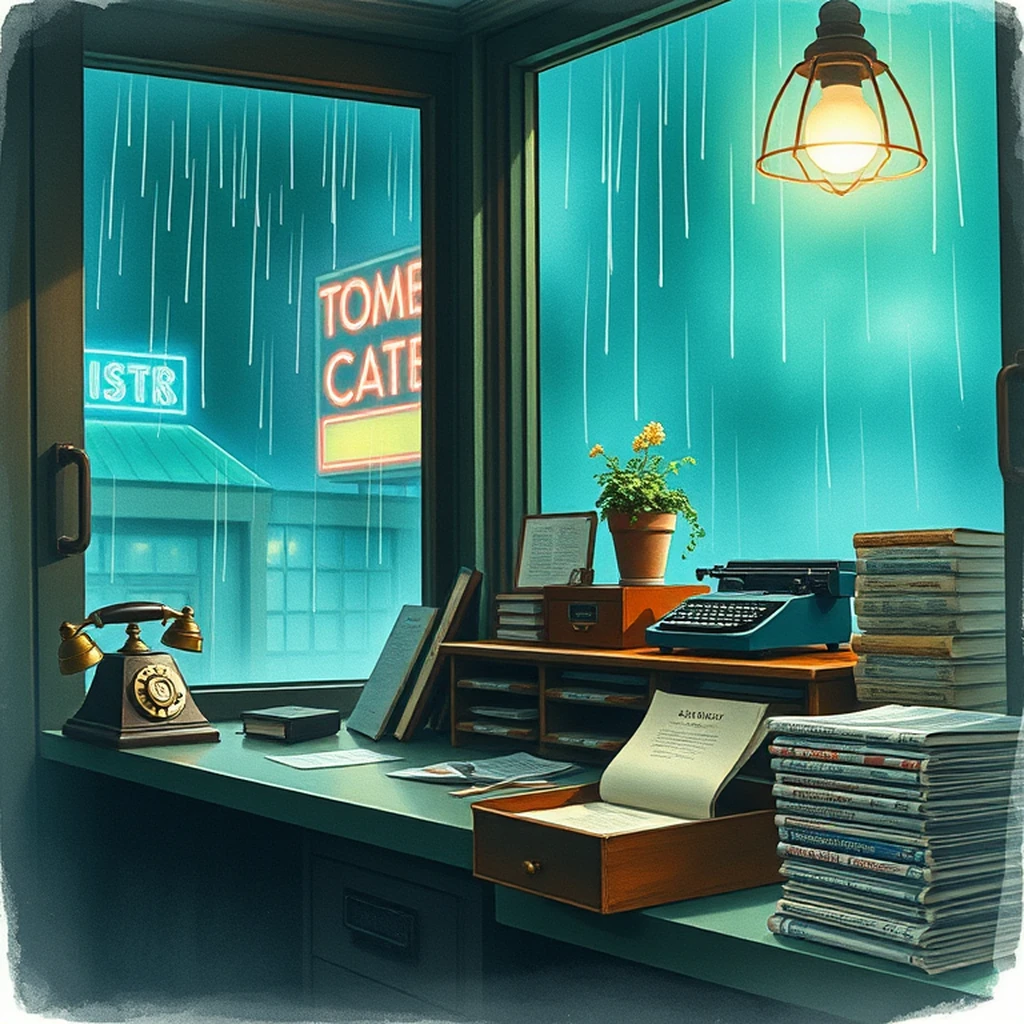
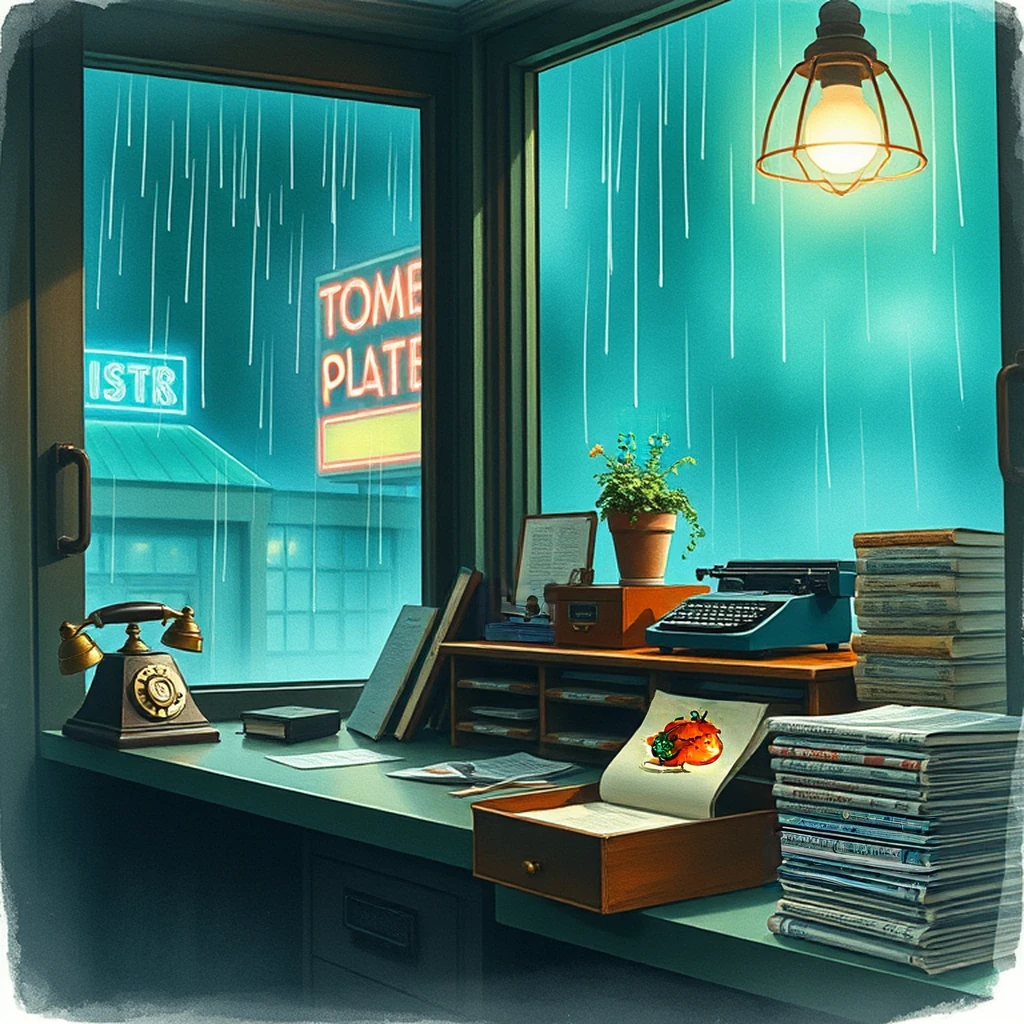
A dimly lit 1930s American small town library card catalog counter at night, bathed in an emerald glow from neon signs outside the window. The room is quiet and empty under a light drizzle that creates delicate streaks on the glass windows, reflecting the soft watercolor illustration style with a paper texture finish. The counter is cluttered with vintage artifacts such as old books, typewriters, and antique phones, contributing to an air of secrecy and tension. Specific props include a vintage telephone hanging by the window, a half-open card catalog drawer revealing faded cards, a brass bell on the counter, a small potted plant in a clay pot, and a stack of newspapers with dated headlines.
The dimly lit library card catalog counter at night exudes an aura of nostalgia and mystery, bathed in the soft emerald glow that seeps through the rain-streaked windows. The watercolor illustration captures the essence of 1930s America with its delicate brushstrokes and paper texture finish, casting a dreamlike quality over the scene. Shadows play across the cluttered counter, where old books lie open to yellowed pages, typewriters stand silent and dusty, and an antique telephone hangs on the wall beside a half-open card catalog drawer revealing faded library cards. The brass bell atop the counter gleams faintly in the dim light, hinting at long-forgotten duties and past patrons whispering secrets. A small potted plant in a clay pot adds a touch of life amidst the relics of time, its leaves slightly curled from age. Dated newspapers lie stacked nearby, their headlines faded but still bearing witness to bygone eras. The gentle patter of rain against glass creates an intimate backdrop for this quiet tableau, making the scene intriguing and inviting players to uncover subtle differences in a world rich with history and enigma.
Background
The early 1930s in American small towns was a period of profound cultural and economic transformation, marked by the lingering hardships of the Great Depression. Libraries like this one were essential community centers that offered refuge from the privations of daily life, serving as sanctuaries for learning and imagination. The watercolor style chosen to depict this library emphasizes its cozy, intimate atmosphere, with soft hues and delicate textures evoking a sense of nostalgia and quiet contemplation. The counter is laden with items emblematic of the era: old books, typewriters, and rotary phones that were once ubiquitous in American homes but now seem relics of a bygone age. These objects not only speak to the technological landscape of the time but also hint at the library's role as a hub for correspondence and information exchange. The vintage telephone hanging near the window suggests ongoing communication with the outside world despite the isolation felt within. The half-open card catalog drawer, revealing rows of faded index cards, is a tangible link to how libraries once meticulously organized their collections by hand—a laborious task that required both skill and dedication. A brass bell on the counter would have been used to announce arrivals or summon assistance, adding another layer of human interaction to this solitary scene. The small potted plant and stack of newspapers with dated headlines complete the tableau, grounding it firmly in its historical context, where even mundane elements like weather and news played crucial roles in daily life.
Tips for this puzzle
Finding those five differences in our cozy 1930s library scene is like solving a mystery from another era! Start by taking your time and really soaking up the ambiance – that soft watercolor glow and vintage clutter can be quite distracting but also full of clues. Look closely at the counter, where you’ll find all sorts of old-school items like phones, books, and even a brass bell that could hide tiny discrepancies. Shadows cast by the light drizzle on the window and the glow from outside might make it tricky to spot variations in the objects’ details or positioning. Don’t forget about those stacks of newspapers and the half-open card catalog drawer; these areas with intricate patterns are prime spots for subtle changes. To keep track, try scanning left to right, top to bottom, systematically checking each corner and shadowy nook until you uncover all five differences in this nostalgic setting. Happy sleuthing!
How to play
- Two near-identical images are shown side by side.
- Tap or click on the differences before the countdown timer runs out.
- Wrong clicks subtract 5 seconds from the clock.
- Stuck? Spend a hint token to glow one remaining difference.
About this puzzle
This is one of 633+ hand-curated AI-generated spot-the-difference puzzles in the SpotDiff library. Each puzzle has multiple variants — the differences you see on your first play are different from the next. 3 variant(s) for this scene.
SpotDiff is free to play with no signup required, and the library grows daily — roughly 10-30 new puzzles added every day. Hint tokens are earned through daily login, streaks, and referrals — or buy a bundle if you want unlimited hints. Refunds are available within 7 days, prorated by the tokens you haven't used yet.