1920s new york radio city music hall backstage area
Explore the abandoned backstage area at Radio City Music Hall during a drizzling afternoon in this spot-the-difference puzzle. Uncover hidden…
About this scene
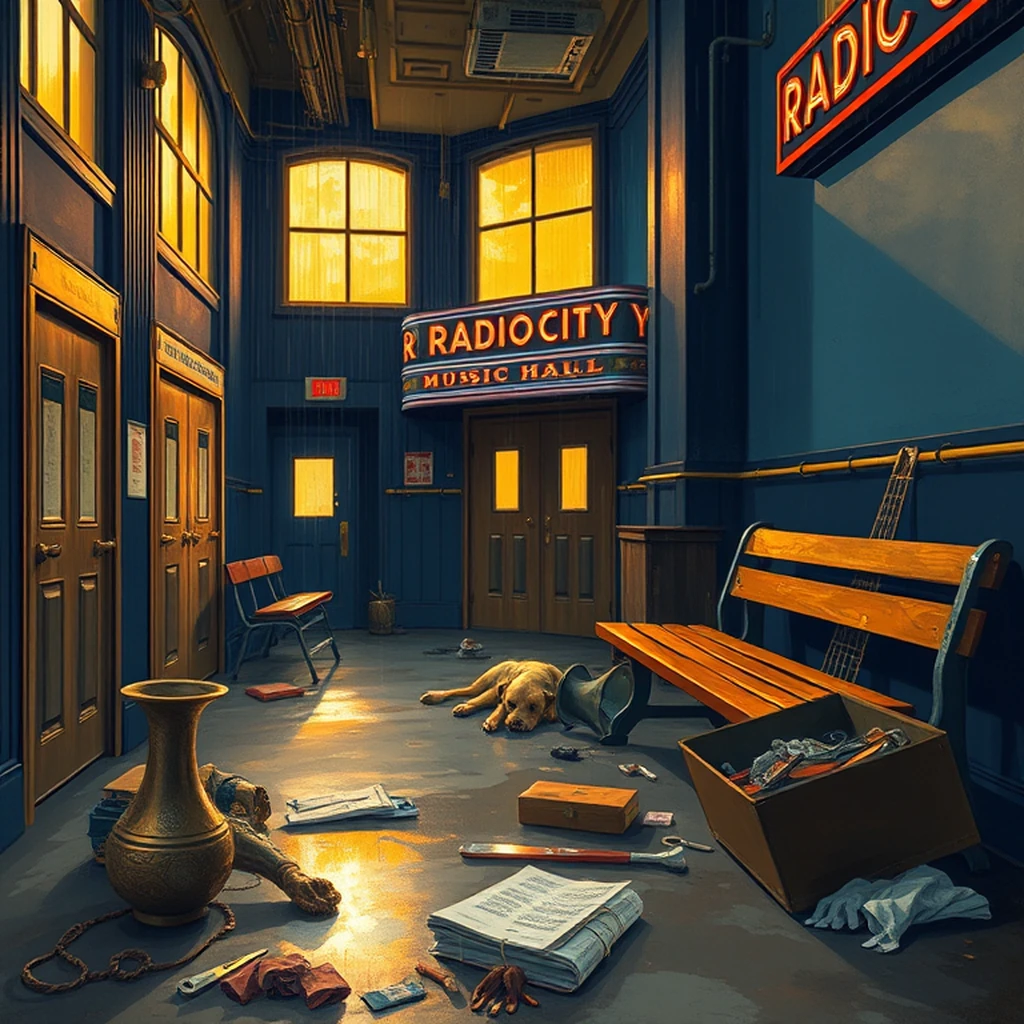
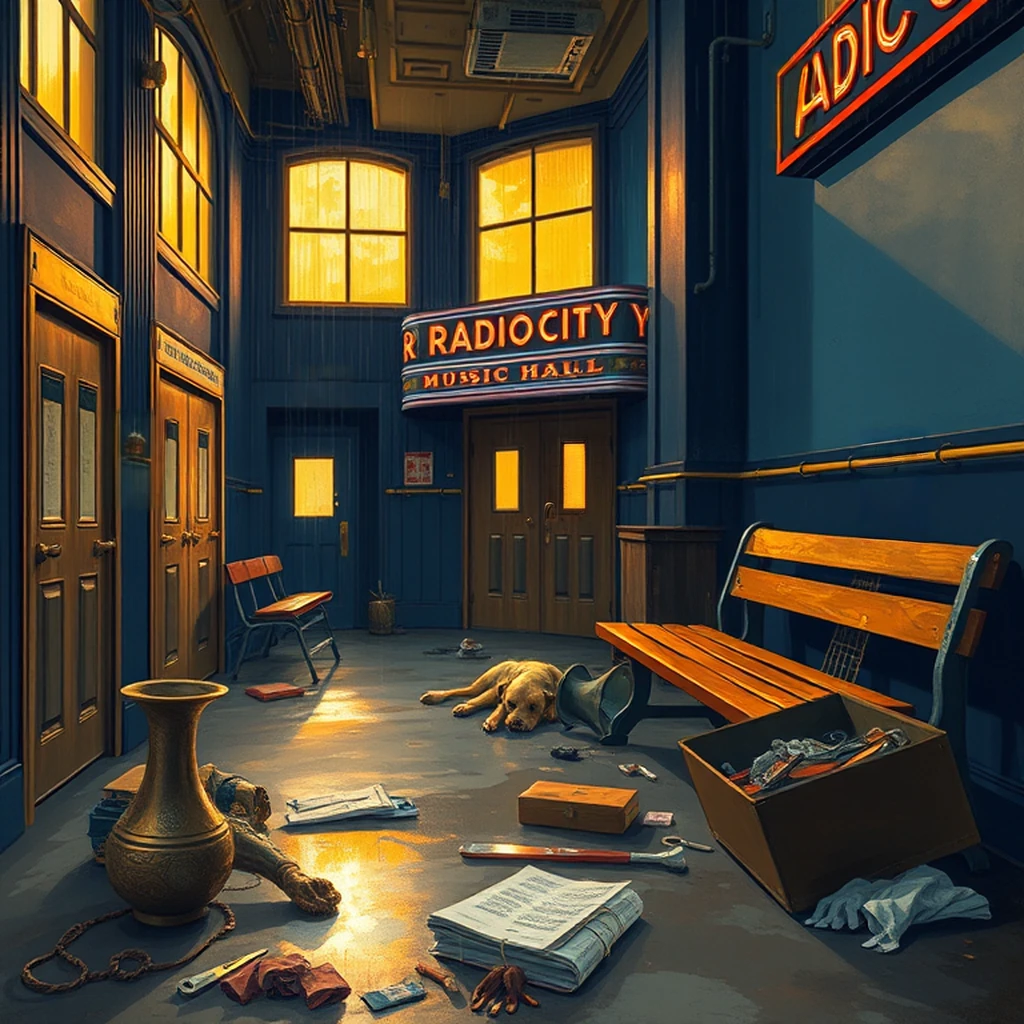
A deep diagonal corner view of Radio City Music Hall's backstage area in the late afternoon golden hour, drizzling rain creates a soft shimmer on the windows and puddles forming on the floor. The navy blue walls contrast sharply with brass fixtures and signage, adding a vintage charm to the scene. An abandoned aftermath mood is palpable as overturned items litter the ground, and a lone dog lies under a wooden bench. Small props include an old megaphone, a crumpled sheet music, a broken vase, a pair of discarded gloves, and an open toolbox with tools scattered around.
The late afternoon sun slants through the rain-streaked windows of Radio City Music Hall's backstage area, casting long shadows and pools of golden light that dance across the navy blue walls. The contrast between the deep indigo backdrop and the gleaming brass fixtures is striking, a visual testament to the elegance of an era long past. Raindrops tap rhythmically on the glass, creating a soothing melody amidst the abandoned props and scattered items littering the floor—a lonely megaphone with its polished surface dimmed by neglect, a crumpled sheet music page lying discarded like forgotten dreams, and a broken vase spilling ceramic shards into puddles that shimmer in the fading light. The air is thick with the scent of wet wood and old paper, mingling with the faint echo of laughter or applause from another time. A lone dog rests beneath a wooden bench, its fur matted but eyes watchful, as if guarding secrets from years gone by. Tools scattered around an open toolbox hint at repairs once needed, now left undone, while discarded gloves beside them speak to hurried departures and untold stories. The scene exudes a bittersweet melancholy, evoking the transient nature of performance and celebrity. What makes this specific setting intriguing for a spot-the-difference puzzle is its rich tapestry of textures and emotions, inviting players to explore every corner for clues buried within the layers of history and nostalgia.
Background
The scene captured in this deep diagonal corner view of Radio City Music Hall's backstage area during the late afternoon golden hour is a poignant glimpse into the glamour and grit of New York City in the 1920s. This era marked the Jazz Age, a time of cultural liberation and artistic innovation that saw the rise of jazz music as an influential force in American culture. Radio City Music Hall, one of the largest and most opulent venues for entertainment during this period, was not just a showplace but also a symbol of the city's ambition to become the epicenter of modernity and progress. The backstage area depicted here exudes an atmosphere that is both nostalgic and melancholic, reflecting the transient nature of the performing arts in the early 20th century. The navy blue walls adorned with brass fixtures are characteristic of Art Deco design, a movement that flourished during this period and was defined by its use of geometric shapes, streamlined forms, and luxurious materials to express the optimism of technological progress and economic growth. The abandoned props scattered around—the megaphone, crumpled sheet music, broken vase, discarded gloves, and open toolbox—tell stories of performers who have come and gone, leaving behind a trail of artifacts that are now relics of a bygone era. The setting also evokes the sense of community among those who work in the shadow of such grandeur, where dreams are chased and realities set in. The presence of these objects provides a tangible link to the cultural history of the time, offering a window into the lives of artists, technicians, and staff who contributed to the vibrant nightlife and entertainment industry that defined New York City during the Roaring Twenties.
Tips for this puzzle
When you're tackling this spot-the-difference puzzle set in the backstage area of Radio City Music Hall during the 1920s, take your time and keep an eye out for those sneaky differences hidden in the shadows or among the clutter. Since the scene is set up with a deep diagonal view, you'll want to pay extra attention to the corners and edges where objects might be partially obscured by other elements like benches or shelves. Look closely at the intricate details of the brass fixtures and signage; sometimes tiny changes are tucked away in these areas. As you scan through the image, try moving from left to right and top to bottom in a grid pattern to ensure you don't miss anything. Don’t forget to double-check those puddles on the floor or the reflections in the windows—they can often hide subtle differences that might be easy to overlook at first glance. Keep an eye out for things like overturned items, such as the crumpled sheet music and the broken vase—these are often great places where artists like to conceal their changes.
How to play
- Two near-identical images are shown side by side.
- Tap or click on the differences before the countdown timer runs out.
- Wrong clicks subtract 5 seconds from the clock.
- Stuck? Spend a hint token to glow one remaining difference.
About this puzzle
This is one of 633+ hand-curated AI-generated spot-the-difference puzzles in the SpotDiff library. Each puzzle has multiple variants — the differences you see on your first play are different from the next. 3 variant(s) for this scene.
SpotDiff is free to play with no signup required, and the library grows daily — roughly 10-30 new puzzles added every day. Hint tokens are earned through daily login, streaks, and referrals — or buy a bundle if you want unlimited hints. Refunds are available within 7 days, prorated by the tokens you haven't used yet.