1920s japanese countryside teahouse interior for quiet contemplation
Quiet pre-opening preparation in a magenta-lit Japanese countryside teahouse at night, with drizzling rain outside.
About this scene
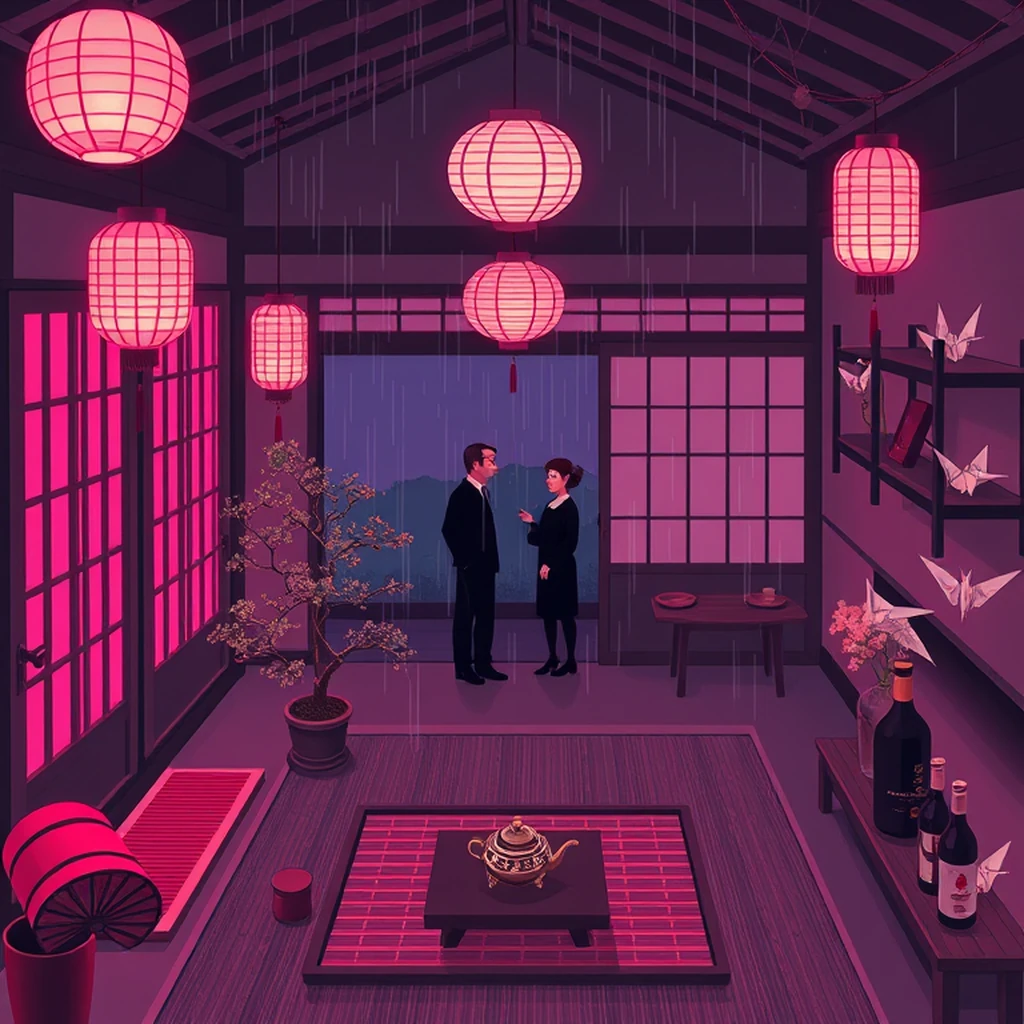
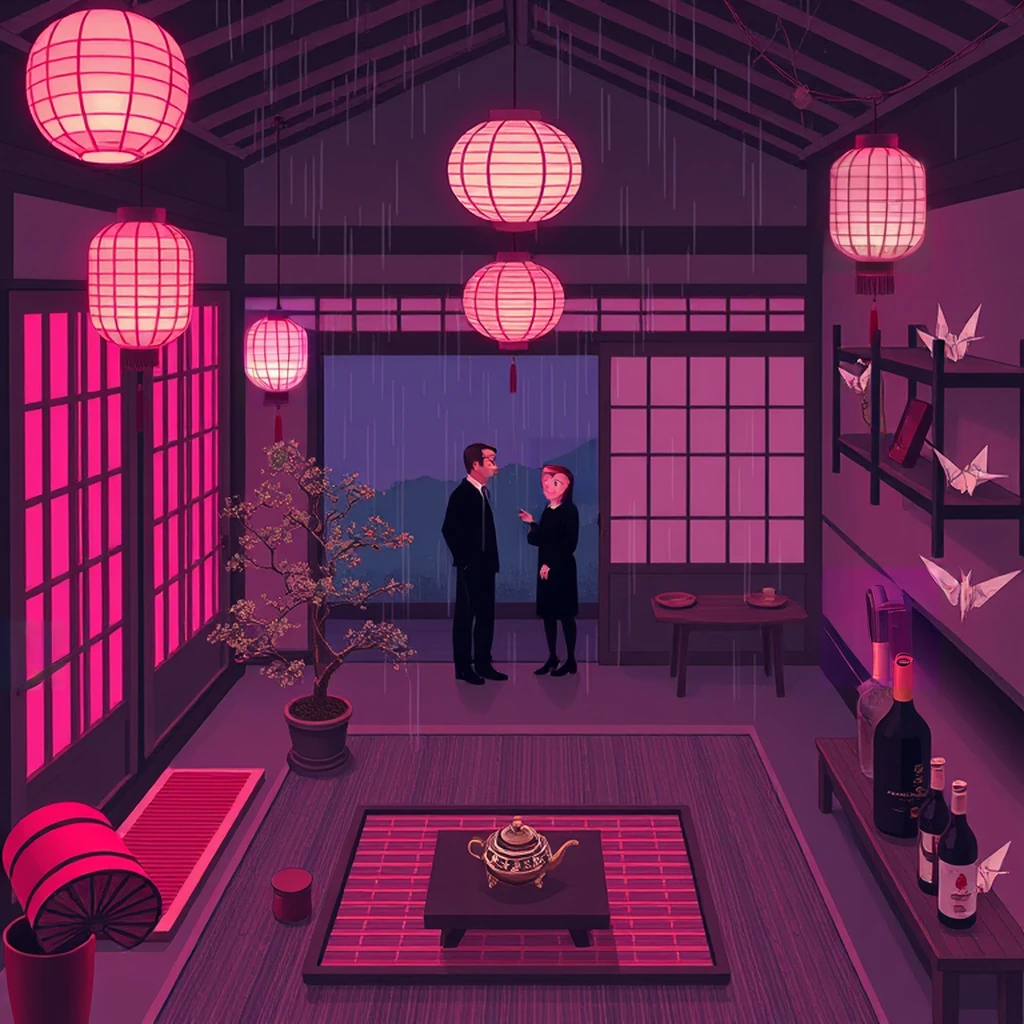
A flat vector illustration of the interior of a 1920s Japanese countryside teahouse at night, lit softly by magenta neon lights glowing through drizzling rain on the windows. The scene is dominated by magenta and slate gray tones with clean shapes and no gradients. Two people are conversing quietly in the background as preparations for opening begin. Props include a bamboo mat, small bonsai tree, traditional paper lanterns hanging from the ceiling, an ornate teapot, sake bottles on a low table, and delicate origami cranes adorning shelves. Soft flat vector illustration with clean shapes.
The interior of the 1920s Japanese countryside teahouse is cloaked in an ethereal twilight, illuminated softly by magenta neon lights that flicker gently behind raindrops clinging to windowpanes. The serene atmosphere is imbued with a sense of quiet contemplation, as two figures whisper conspiratorially in the background while preparations for the evening’s opening commence. The space exudes a minimalist charm, characterized by clean lines and flat vector illustrations devoid of gradients or excessive detail, allowing each element within the room to stand out distinctly against the backdrop of magenta and slate gray hues. A bamboo mat lies peacefully on the floor, its natural texture contrasting subtly with the smooth surfaces around it, while a small bonsai tree stands quietly in one corner, its delicate branches reaching upwards as if in silent prayer. Traditional paper lanterns hang from the ceiling, casting soft shadows that dance gracefully across the walls and furnishings below. An ornate teapot rests serenely on an elevated platform near the entrance, inviting patrons to partake in a ceremonial tea ceremony once the doors open. On a low table nearby, sake bottles nestle together like old friends, their labels glinting softly under the diffused light filtering through the paper windows. Delicate origami cranes adorn shelves along one wall, their paper wings fluttering gently as if caught in an unseen breeze. This tranquil setting, with its rich tapestry of textures and meticulously arranged props, offers a serene backdrop for a spot-the-difference puzzle, challenging players to unravel the subtle contrasts hidden within this peaceful haven.
Background
The flat vector illustration captures an interior scene of a teahouse from the early 1920s in rural Japan during nighttime preparation hours. This period was marked by significant cultural and social changes as Japan rapidly modernized while retaining its traditional customs. The countryside teahouse, known for offering a tranquil setting away from bustling cities, represents an enduring aspect of Japanese culture that values contemplation and quiet reflection amidst natural beauty. Teahouses have long been integral to Japanese aesthetics and philosophy, embodying principles of harmony, respect, purity, and tranquility through meticulous design and daily rituals. The scene features elements typical of this era such as traditional paper lanterns hanging from the ceiling, a bamboo mat on the floor, and delicate origami cranes symbolizing longevity and good fortune. These items not only serve functional purposes but also convey deep cultural meanings. The soft magenta neon lights glowing through raindrops on the windows add an ethereal quality to the illustration, reflecting how modern technologies were integrated into traditional settings during this era of rapid change. This blend of old and new is evident in the juxtaposition between the ornate teapot and sake bottles on a low table, alongside contemporary lighting fixtures. The flat vector style with clean shapes emphasizes the minimalist aesthetic that gained prominence in Japanese design around this time, influenced by both traditional ukiyo-e woodblock prints and emerging modernist trends. This approach underscores the simplicity and clarity found in Japanese culture, where less is often considered more in terms of beauty and expression.
Tips for this puzzle
When you're searching for differences in a scene like this tranquil Japanese teahouse interior from the 1920s, take your time and look closely at every element of the flat vector illustration. Since it’s an overhead view, pay extra attention to cluttered areas such as the shelves filled with delicate origami cranes or the low tables where sake bottles are arranged. Shadows cast by hanging paper lanterns can also hide subtle differences in objects placed directly underneath them. Intricate patterns on traditional items like the bamboo mat and bonsai tree might have slight variations that could be easy to miss at first glance. To make sure you don't overlook anything, start from one corner of the room and work your way across systematically, checking each area carefully before moving on to the next. Remember, finding those five differences can be a calming experience in itself, much like enjoying a quiet moment in this serene teahouse setting.
How to play
- Two near-identical images are shown side by side.
- Tap or click on the differences before the countdown timer runs out.
- Wrong clicks subtract 5 seconds from the clock.
- Stuck? Spend a hint token to glow one remaining difference.
About this puzzle
This is one of 633+ hand-curated AI-generated spot-the-difference puzzles in the SpotDiff library. Each puzzle has multiple variants — the differences you see on your first play are different from the next. 3 variant(s) for this scene.
SpotDiff is free to play with no signup required, and the library grows daily — roughly 10-30 new puzzles added every day. Hint tokens are earned through daily login, streaks, and referrals — or buy a bundle if you want unlimited hints. Refunds are available within 7 days, prorated by the tokens you haven't used yet.