1920s chinese countryside teahouse interior for winter tea gatherings
Early morning fog shrouds a winter teahouse in rural China, waiting for guests to arrive. An empty yet anticipatory scene captures the serene…
About this scene
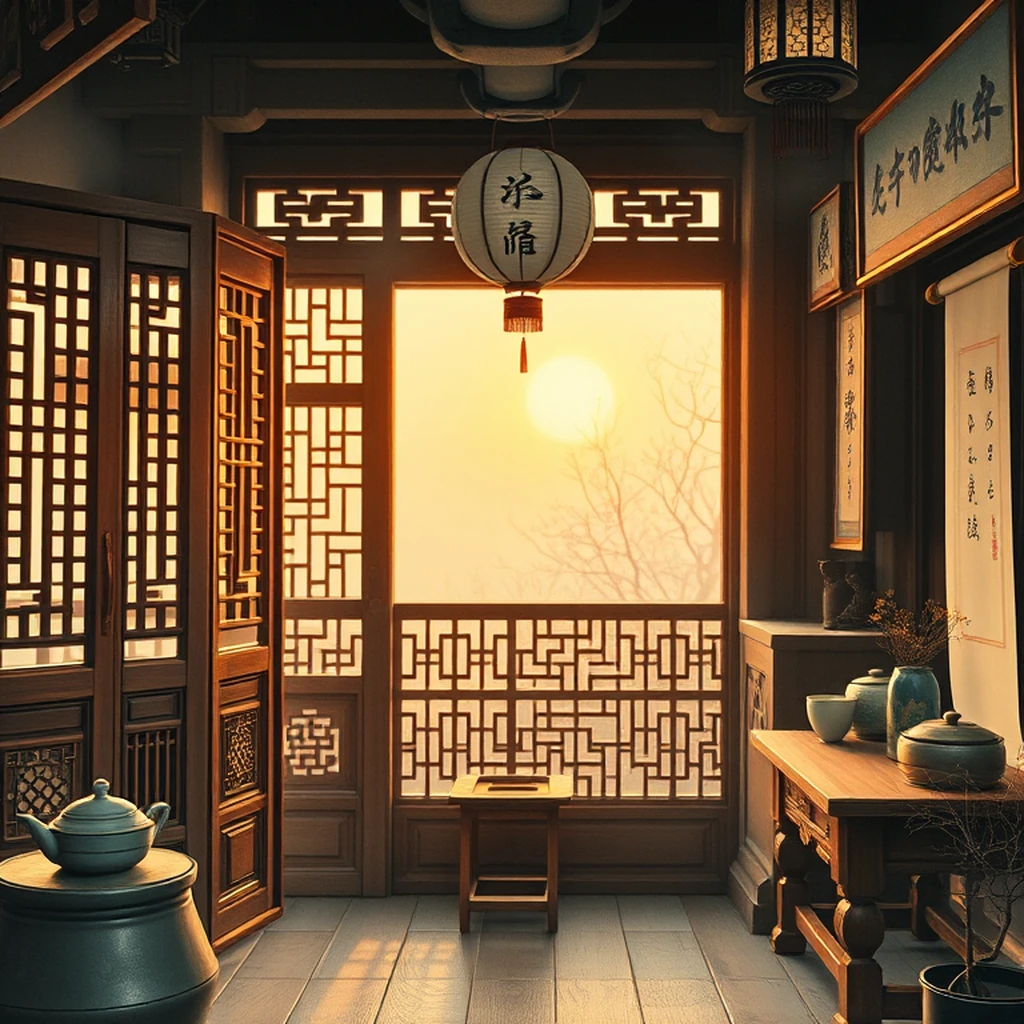
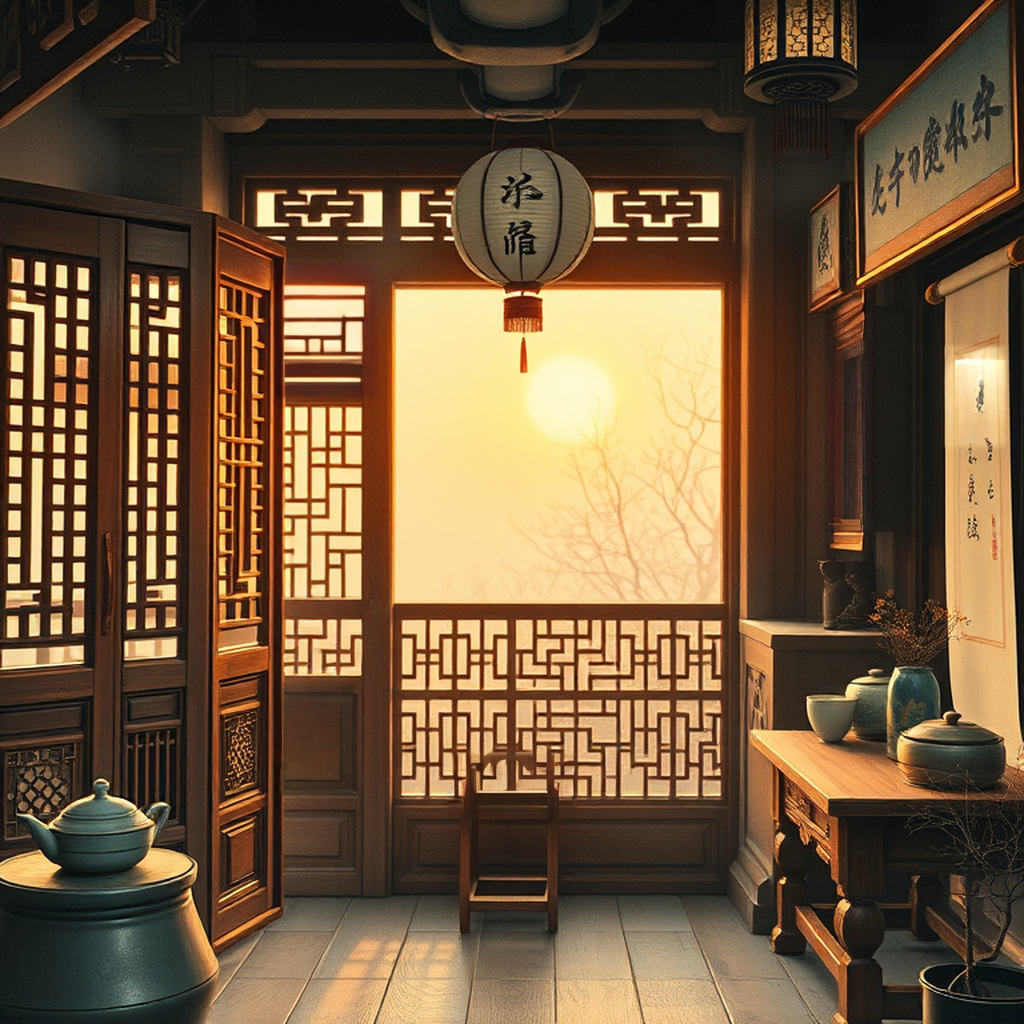
A photorealistic photo captures the early morning soft sunrise at a winter teahouse in the Chinese countryside during the 1920s. The scene is bathed in a thin layer of morning fog, giving it an ethereal quality with ultramarine and sulfur yellow hues dominating the color palette. An extreme close-up cropped composition highlights intricate wooden details of the teahouse's interior, such as the ornate door panels and delicate lattice work, with no people present but the anticipation is palpable in the quiet atmosphere just before a gathering begins. Secondary props include a small ceramic tea pot, bamboo steamers, a decorative paper lantern hanging above the counter, an intricately carved wooden signboard, and traditional Chinese calligraphy scrolls adorning the walls. The scene is soft watercolor illustration with a realistic photorealistic style.
The early morning light filters through the thin veil of winter fog, casting an ethereal glow over the rustic teahouse in the Chinese countryside. The ultramarine and sulfur yellow hues paint a serene backdrop that hints at the warmth to come as the sun ascends higher into the sky. The air is crisp with anticipation as one gazes upon the intricate wooden details of the teahouse's interior, where each grain and knot tells its own story of craftsmanship and time. Ornate door panels adorned with delicate lattice work frame the scene, their shadows dancing gently on the walls in the soft light. A small ceramic tea pot sits quietly beside bamboo steamers waiting to be filled, while a decorative paper lantern hangs above the counter, promising warmth and comfort for the gathering that lies ahead. Traditional Chinese calligraphy scrolls hang gracefully along the walls, adding an air of cultural richness and reverence to the space. The textures in this teahouse are as varied as they are inviting—the smooth surfaces of the ceramic tea set contrast with the rough, weathered wood of the lattice work and door panels, creating a symphony of tactile sensations. This early morning quietness is filled with promise, setting the stage for an intimate gathering where stories will be shared over steaming cups of tea. What makes this scene particularly intriguing for a spot-the-difference puzzle is the subtle interplay between these rich textures and historical details, challenging viewers to uncover the nuanced differences that define each element's character in this tranquil winter setting.
Background
Set in rural China during the early 1920s, this scene captures a momentous era that was both rich with cultural heritage and on the cusp of significant social changes. The Chinese countryside, particularly teahouses like the one depicted here, played an important role as community hubs where locals would gather to discuss news, trade goods, or simply enjoy each other’s company over steaming cups of tea. Winter gatherings were especially cherished for their warmth and coziness during the chilly season. The teahouse interior is rendered in a photorealistic style that highlights its intricate wooden details, such as ornate door panels and delicate lattice work, which are characteristic of traditional Chinese architecture from this period. Each element serves not only functional purposes but also carries symbolic meanings deeply rooted in Chinese culture and philosophy. For instance, the decorative paper lantern hanging above the counter and the intricately carved wooden signboard with calligraphy scrolls on the walls embody the aesthetic principles of balance and harmony that are central to traditional Chinese design. These elements reflect the teahouse's status as a cultural sanctuary where conversations could flow freely amidst the soothing ambiance created by the morning light filtering through the misty air. The early morning setting, just before the gathering starts, evokes a sense of anticipation and tranquility, encapsulating the essence of rural life in 1920s China.
Tips for this puzzle
When you're hunting for those five differences in this charming scene from a 1920s Chinese countryside teahouse, start by taking your time and scanning the intricate details carefully. With an extreme close-up composition focusing on wooden door panels and lattice work, look out for subtle variations hidden within these complex patterns. Shadows cast by decorative items like the paper lantern or calligraphy scrolls can also be a great place to spot differences. Don't overlook any small props such as the ceramic tea pot or bamboo steamers—they might just hold a clue in their minute details or placement. To keep track of what you've seen and ensure nothing slips through, try scanning methodically from top left to bottom right, checking each area thoroughly before moving on. Remember, sometimes the difference is so slight that it can be easily missed, so pay attention to every little mark or hue variation in the woodwork or decorations.
How to play
- Two near-identical images are shown side by side.
- Tap or click on the differences before the countdown timer runs out.
- Wrong clicks subtract 5 seconds from the clock.
- Stuck? Spend a hint token to glow one remaining difference.
About this puzzle
This is one of 696+ hand-curated AI-generated spot-the-difference puzzles in the SpotDiff library. Each puzzle has multiple variants — the differences you see on your first play are different from the next. 3 variant(s) for this scene.
SpotDiff is free to play with no signup required, and the library grows daily — roughly 10-30 new puzzles added every day. Hint tokens are earned through daily login, streaks, and referrals — or buy a bundle if you want unlimited hints. Refunds are available within 7 days, prorated by the tokens you haven't used yet.